How to Clean Leather Car Seats: 7 Easy, Safe Steps
Leather car seats elevate a vehicle's interior, offering a touch of luxury and comfort. However, they demand regular attention to maintain their appearance and prevent lasting damage. Over time, daily use can lead to a build-up of dirt, grime, and spills. If left unaddressed, this accumulation can cause wear, discoloration, and even premature cracking.
Keeping your leather seats pristine is achievable. By understanding the right techniques and choosing suitable products for cleaning and conditioning, you can preserve their beauty and extend their life. Discover everything you need to know, from safe cleaning practices to tackling tough stains and ensuring proper aftercare.
Cleaning Leather Car Seats Safely
Cleaning your leather car seats is a straightforward process with a careful, systematic approach that removes dirt without harming the leather's delicate finish. Think of it as a spa day for your car's interior—gentle, effective, and rewarding.
How to Clean Leather Car Seats at Home
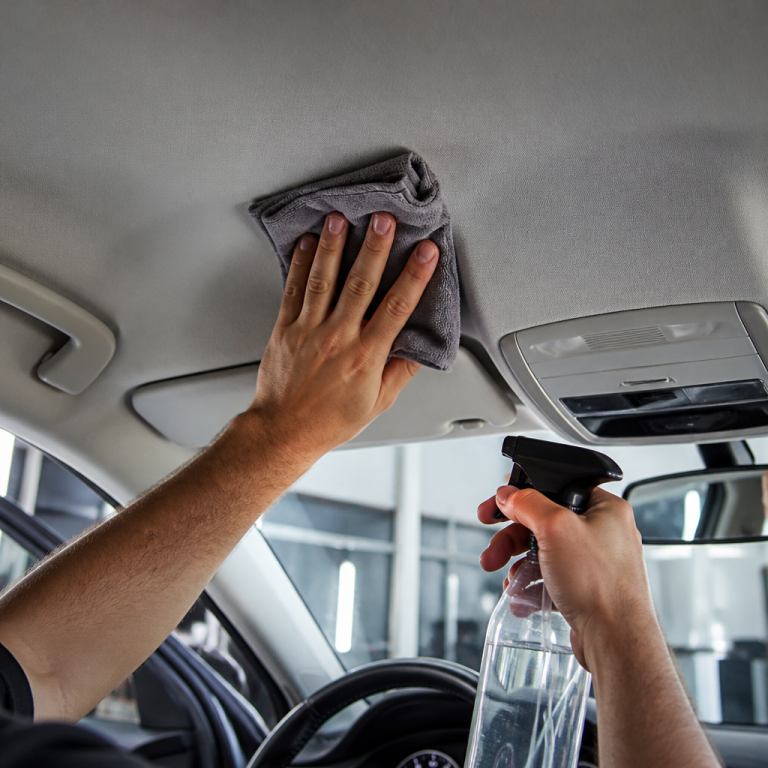
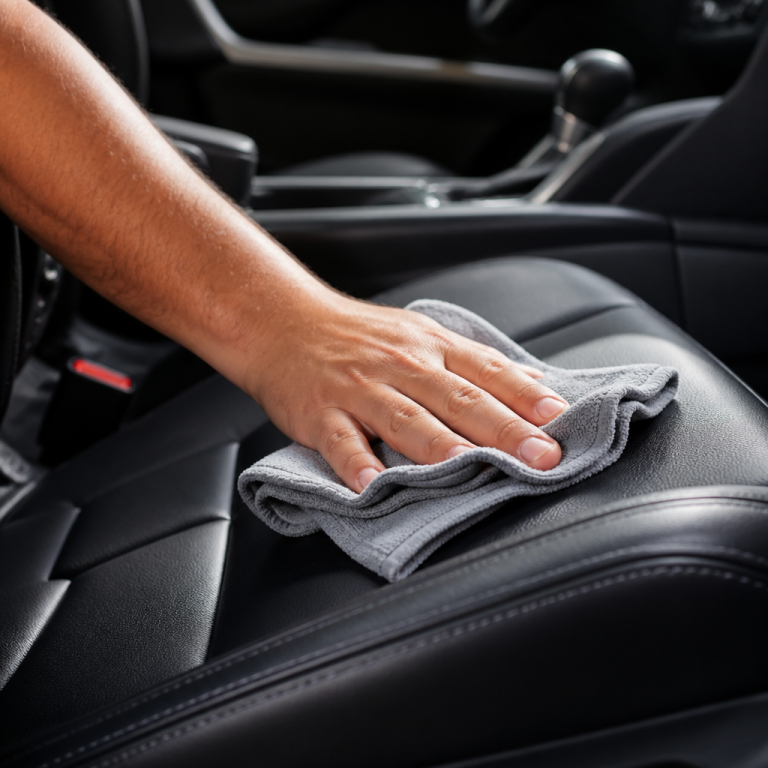
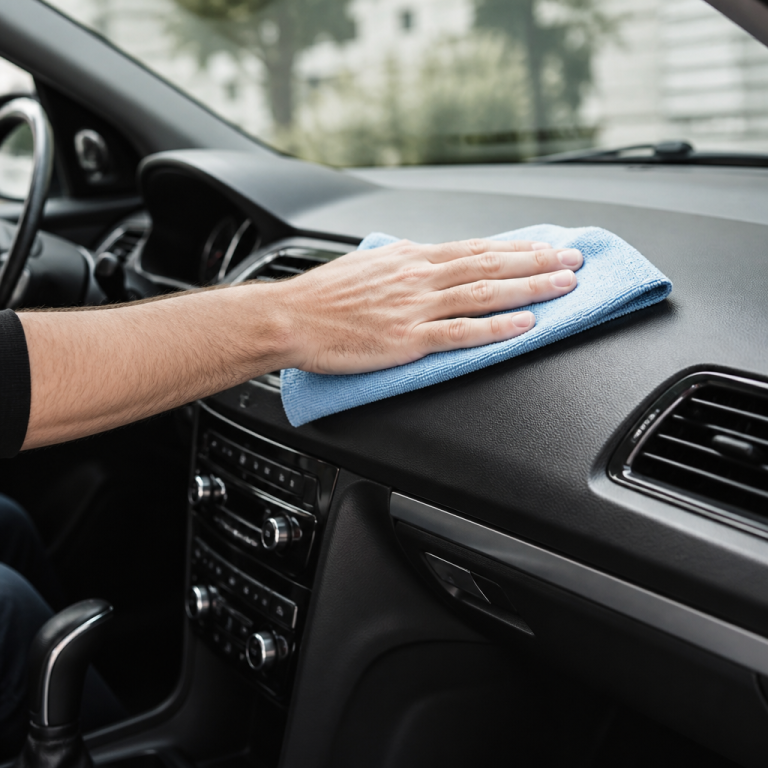
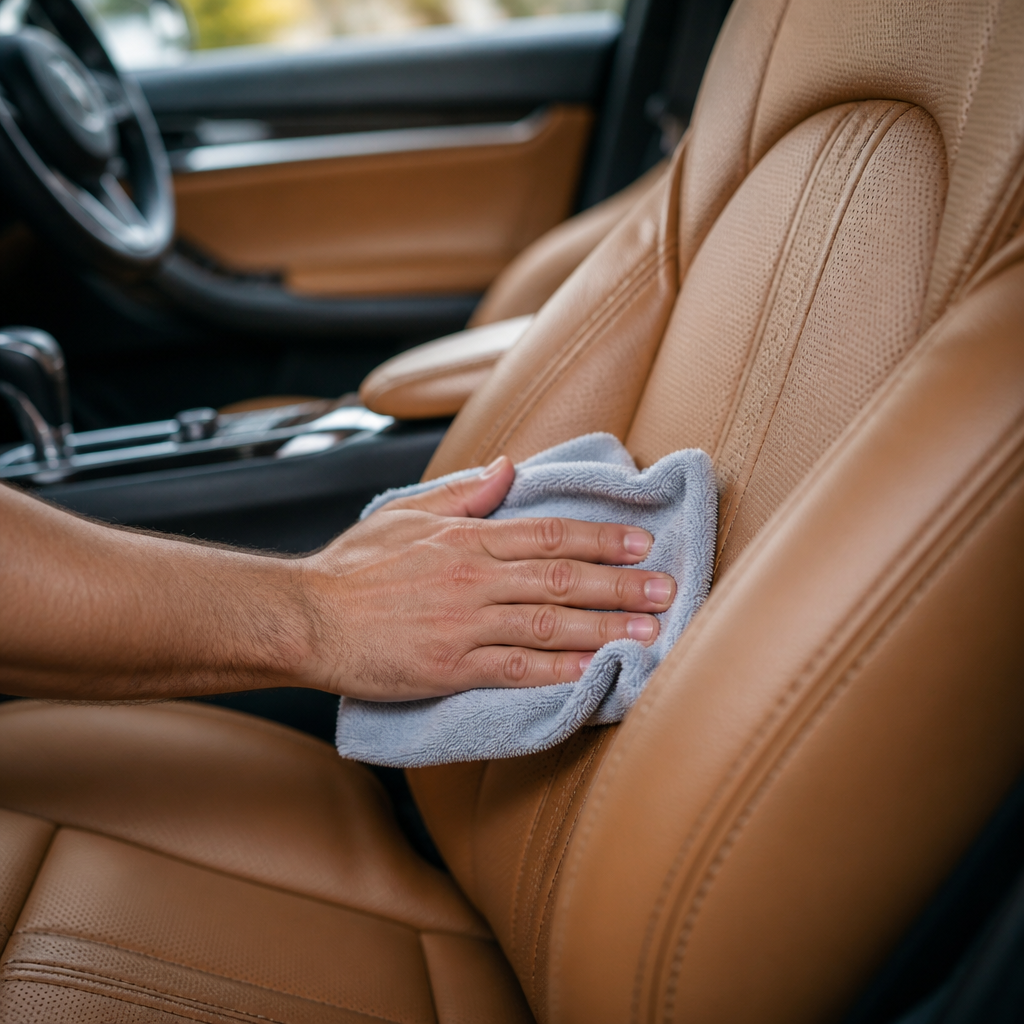
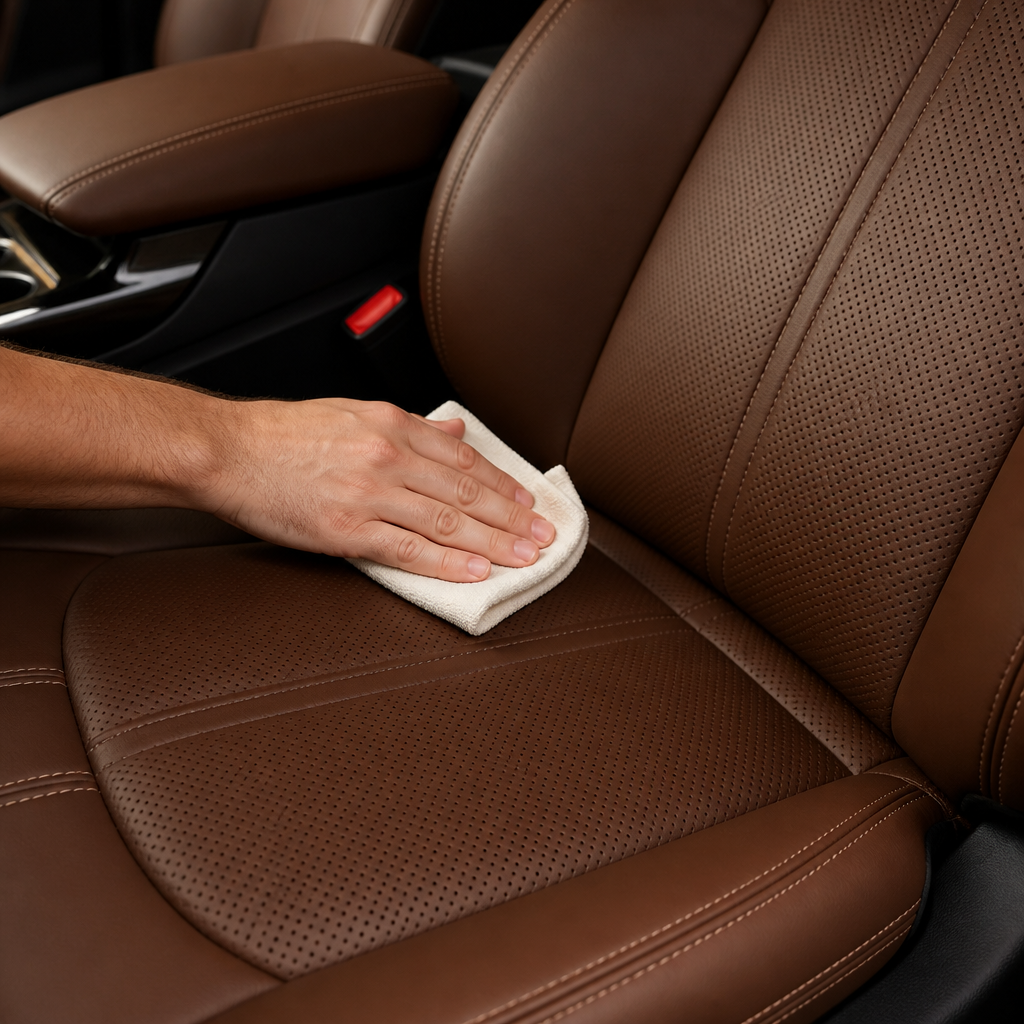
Cleaning your leather car seats at home is an achievable task when you follow a few simple steps. First, thoroughly vacuum your seats to pick up loose crumbs, dust, or debris that might become abrasive during cleaning. Next, use a pH-balanced leather cleaner. A "pH-balanced" cleaner is designed to be gentle and match the natural balance of your leather. Apply a small amount to a clean microfiber cloth and gently work it into the surface using soft, circular motions.
After cleaning a section, use a separate, slightly damp cloth to wipe away any cleaner residue. Immediately dry the seats with a clean, soft towel. This step is critical, as professional detailer Larry Kosilla advises:
"use minimal moisture—your cloth should be damp, not wet."
He explains that excessive water can seep into the stitching and lead to mold growth in the foam padding underneath. Leather car seats generally benefit from a thorough cleaning every three to six months. However, if your car sees frequent use by passengers, kids, or pets, cleaning them every one to three months may be necessary to prevent dirt buildup.
Before applying any new cleaning solution, always test it on a small, hidden area of the seat to check for discoloration or damage. This simple step can prevent costly damage. For the best results, clean your leather seats in a shaded area when the temperature is moderate, ideally between 50-75°F (10-24°C).
To make the job easier, you'll want a few essential tools:
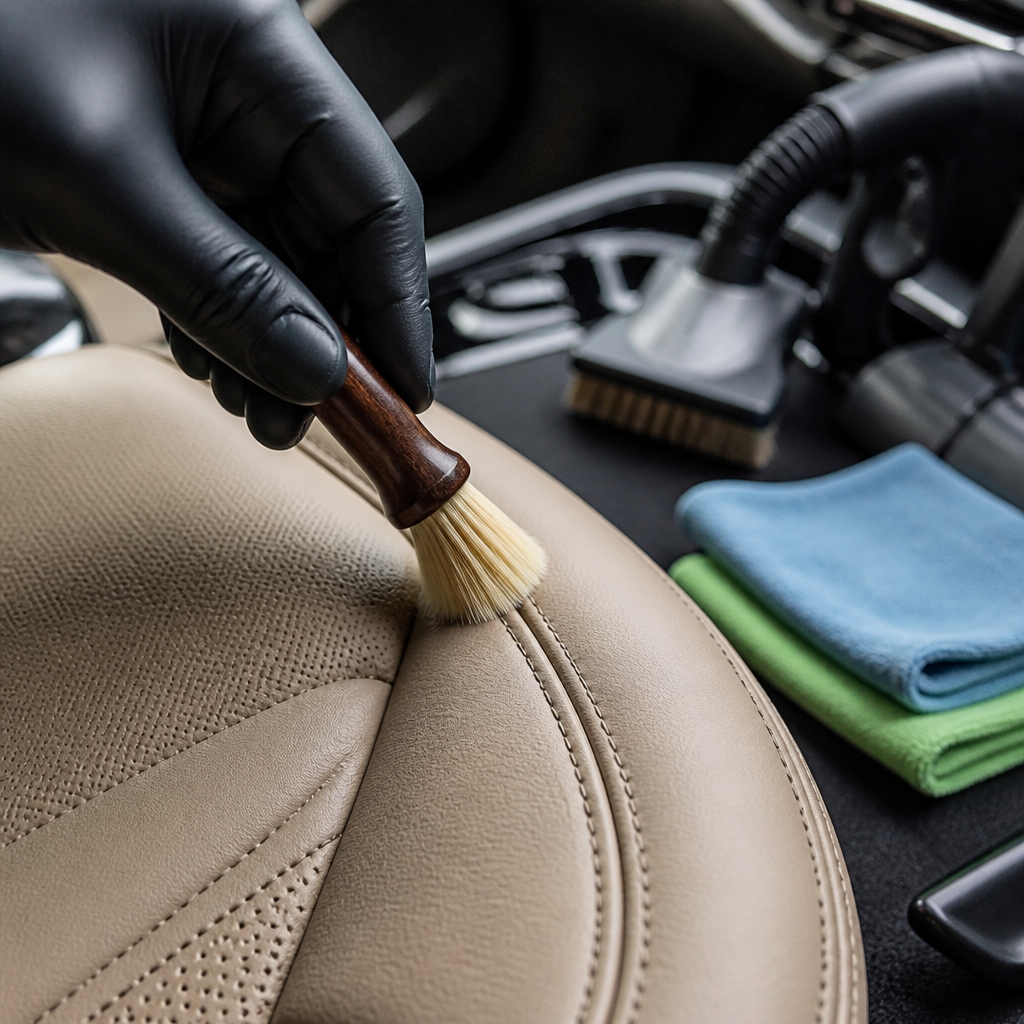
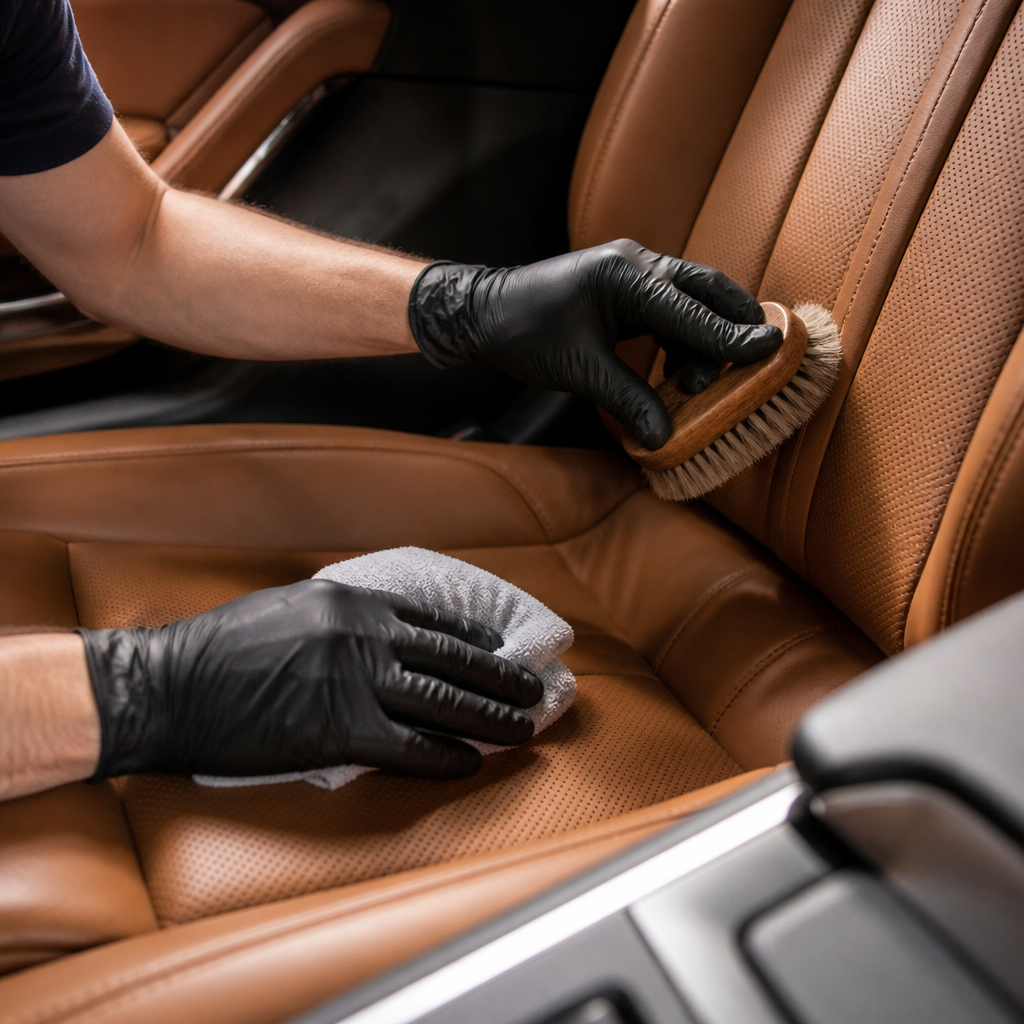
- A soft-bristle brush: Ideal for gently cleaning perforations and seams.
- Two microfiber cloths: One for applying the cleaner and another for buffing and drying.
- A vacuum with a brush attachment: For removing loose dirt and debris.
- A separate applicator: Specifically for your leather conditioner.
How to Clean Leather Car Seats Without Damaging Them
Protecting your leather seats during cleaning is crucial to preserve their natural oils and protective finish. This means avoiding harsh chemicals, excessive moisture, and rough scrubbing. Automotive leather requires pH-balanced cleaners, as products that are too alkaline or acidic can cause significant harm.
Using a cleaner that is not pH-balanced can strip away the leather's natural oils, causing it to dry out, crack, and become stiff. Mike Phillips, a certified detailing instructor, notes that factory leather has a delicate protective topcoat. He strongly advises against using household items like all-purpose cleaners or dish soap, as these can break down that finish, leaving your leather vulnerable. When cleaning, limit the amount of water you use to prevent saturation.
_Even common baby wipes should be avoided, as many contain ingredients that can degrade the leather's protective finish over time._ Never use household cleaners containing the chemicals listed below.
| Harmful Chemical | Why It Should Be Avoided |
|---|---|
| Ammonia | Strips away protective layers and dries out leather. |
| Bleach | Causes discoloration and damages leather fibers. |
| Petroleum Distillates | Dry out leather over time, making it brittle. |
| Silicone Oils | Create an artificial shine that attracts dust. |
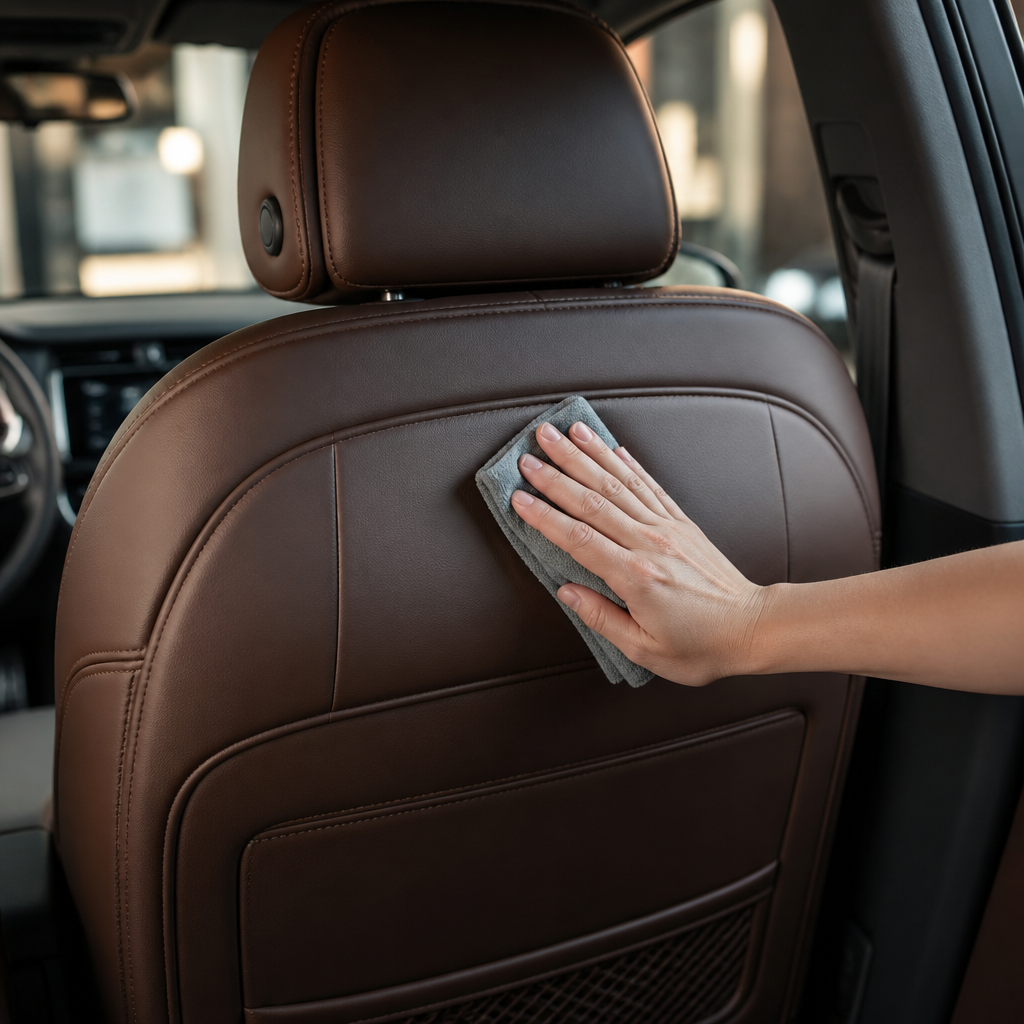
To avoid scratching, always use soft-bristle brushes and microfiber cloths with gentle, circular motions.
How to Clean Leather Car Seats With Household Products
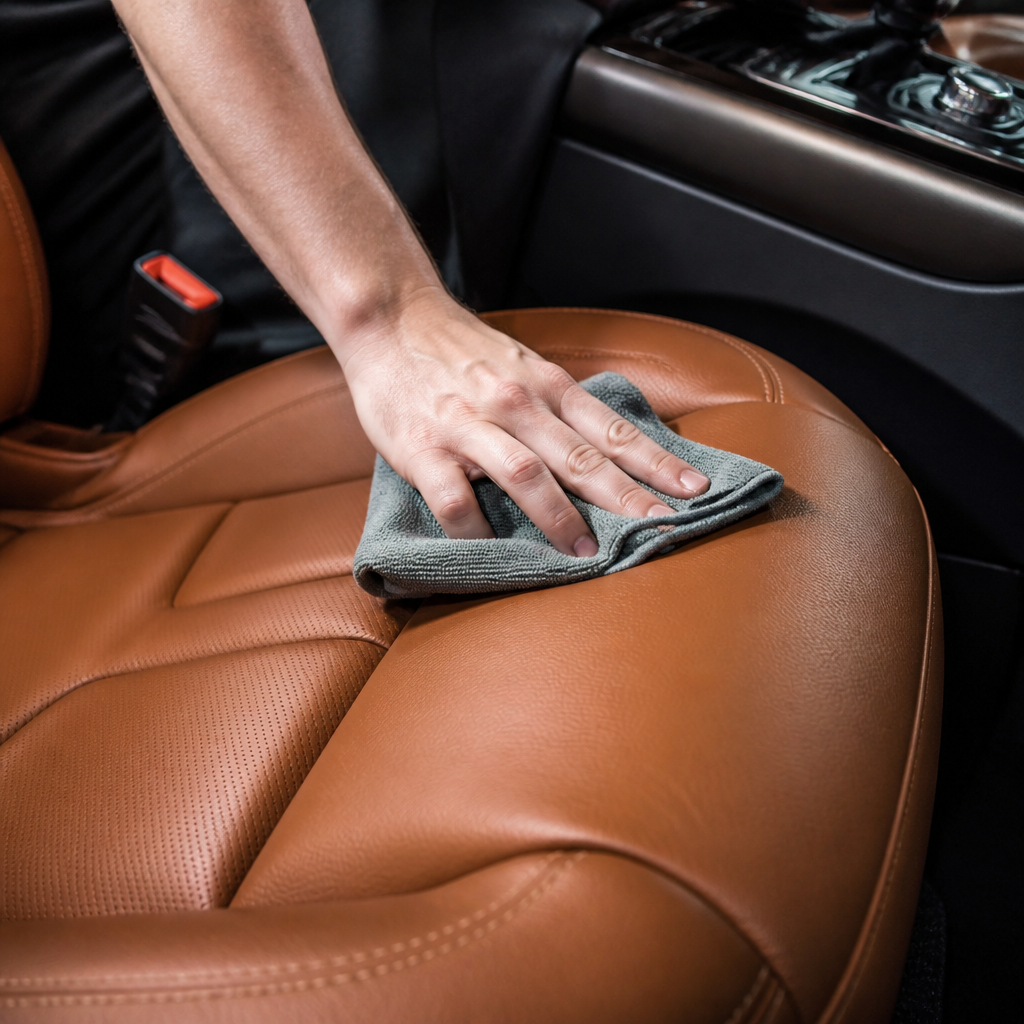
While dedicated leather cleaning products are the best choice, common household items can work as alternatives for light dirt in a pinch. A simple solution of 2-3 drops of a gentle liquid soap (like Castile soap) in one cup of distilled water can tackle light grime. A 1:1 solution of white vinegar and water can also cut through dirt, but it must be diluted carefully and wiped off with a damp cloth immediately to neutralize the acid.
Kevin Brown, an automotive leather specialist, notes that while household products can be useful in an emergency, they are not formulated for automotive leather's specific needs. They lack the conditioning agents and protective ingredients found in purpose-made products. For occasional use, they are fine, but for regular maintenance, investing in a proper leather cleaner is a worthwhile decision.
Removing Stains and Treating Problem Areas
Sometimes, general cleaning isn't enough for specific discolorations that need special attention. The best method depends on the stain type, its age, and your leather's finish.
Common automotive leather stains include:
- Protein-based: Food spills, milk, or blood.
- Oil-based: Grease, cosmetics, or lotions.
- Dye transfer: From dark jeans or newspaper ink.
- Tannin-based: Coffee, tea, or wine.
How to Remove Stains from Leather Car Seats
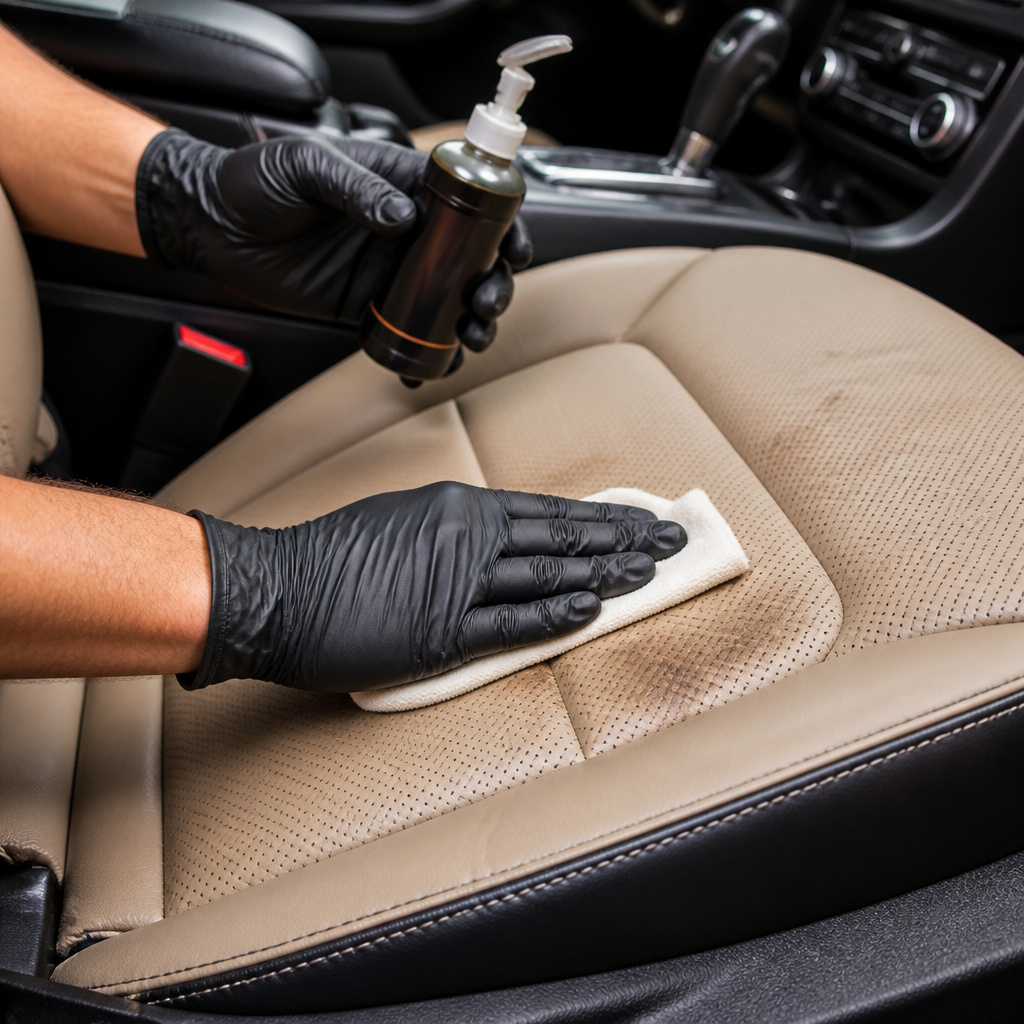
For ink stains, gently dab the spot with 70% isopropyl alcohol on a cotton swab, working from the outside in to prevent spreading. For grease or oil stains, blot the excess oil, then sprinkle cornstarch or baking soda on the stain. Let it sit for several hours to absorb the oil, then vacuum it up.
Fresh dye transfer can often be removed with a dedicated leather cleaner on a cotton pad, but always test it on an inconspicuous area first. For coffee or wine spills, blot the liquid immediately. A solution of equal parts water and white vinegar applied with a damp cloth can be effective on fresh stains. The success rate for stain removal is significantly higher if you treat stains immediately.
_When treating protein-based stains like blood, never use hot water, as heat can cause them to set permanently._ Use a small amount of mild soap with cold water and apply it with a blotting motion.
Never use harsh products like hairspray, acetone-based removers, or Magic Erasers on leather, as they can cause irreversible damage. These products are too abrasive and will strip away the leather's protective finish.
Products and Aftercare for Leather Car Seats
After careful cleaning, choosing the right products and following up with proper aftercare are essential for maintaining the health and suppleness of your leather car seats.
Best Products to Clean Leather Car Seats
Commercial formulations are specifically engineered for automotive leather. They are evaluated on cleaning power, pH balance, compatibility, and protective additives.
Some of the cleaners recognized by industry professionals include:
- Lexol Leather Cleaner: Known for being pH-balanced and non-toxic.
- Chemical Guys Leather Cleaner: Provides a foaming action for lifting deep dirt.
- Meguiar's Gold Class Rich Leather Cleaner: Contains aloe to help moisturize.
- Mothers Leather Cleaner: A convenient spray application for quick cleanups.
Quality leather cleaners are carefully formulated to be pH-balanced, minimizing the risk of damage. Mid-range products like Lexol and Meguiar's offer excellent value. For the best results, avoid all-in-one cleaning and conditioning products and use separate, dedicated formulas for each step. Specialized formulations also exist for different leather types, such as low-foam cleaners for perforated leather.
How to Condition Leather Car Seats After Cleaning
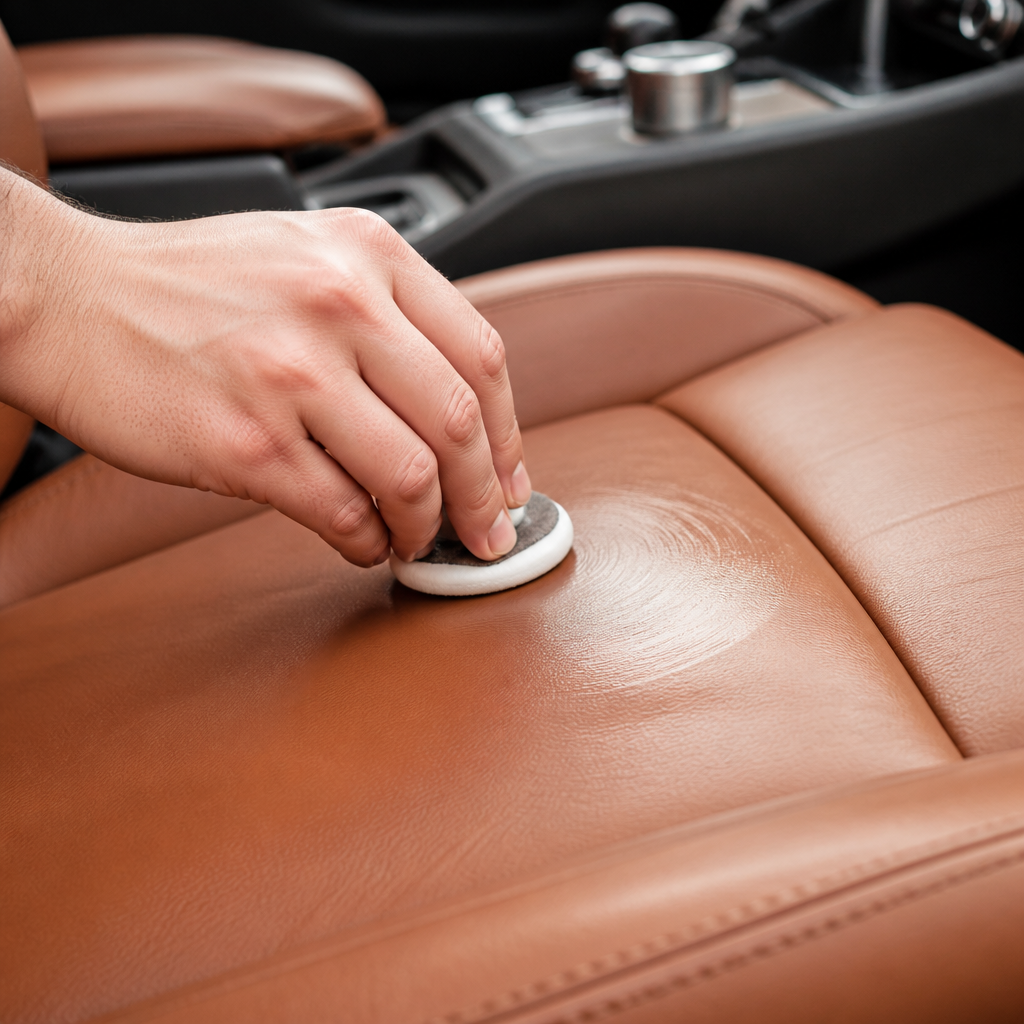
After cleaning, applying a specialized conditioner is vital to restore the leather's natural oils, maintain its softness, and provide a protective barrier. This process helps prevent drying, cracking, and premature aging. It is best to apply conditioner within 24 hours of cleaning.
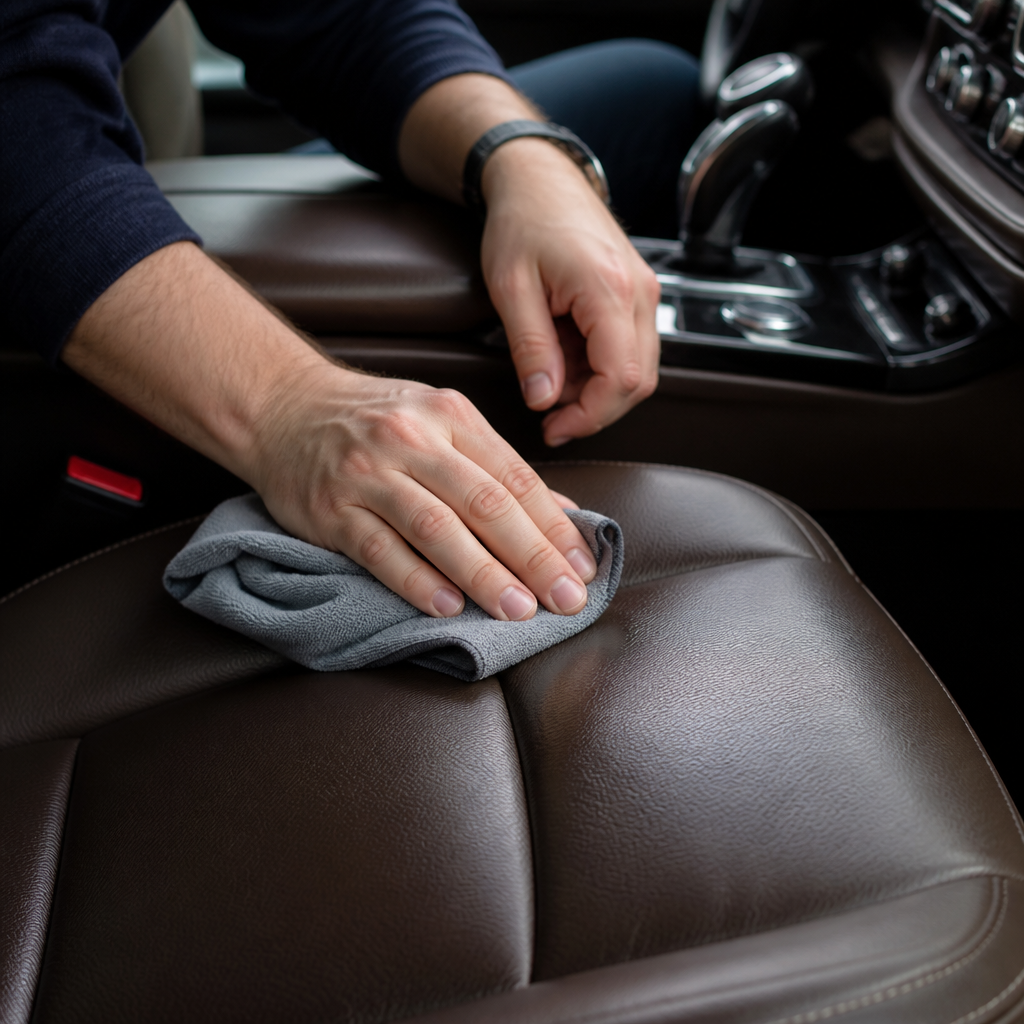
Apply a small, dime-sized amount of conditioner onto an applicator pad and work it into the leather using gentle circular motions. Allow it to absorb for 15-20 minutes, then take a separate clean, dry cloth and gently buff off any excess. Highly-rated conditioners that are well-regarded include Leather Honey Conditioner, Lexol Conditioner, and Chemical Guys Leather Conditioner.
Leather should be conditioned every 3-6 months. However, in vehicles exposed to high UV levels or extreme climates, more frequent conditioning may be needed. Applying too much conditioner or applying it too often can saturate the leather, creating a sticky surface that attracts dirt.
_Be aware that some natural oil-based conditioners may slightly darken lighter-colored leather._ Quality conditioners contain UV inhibitors to reduce sun damage, which is critical for vehicles parked outdoors. By following these guidelines, you can ensure your car's interior remains in excellent condition.
FAQ
Q1. How often should I clean my leather car seats?
A1. Under normal use, it is generally recommended to clean leather car seats every 3-6 months. For vehicles with high traffic or frequent use, more frequent cleaning may be beneficial to prevent dirt accumulation and premature cracking.
Q2. Can I use household products to clean my leather car seats?
A2. Mild household products like a diluted gentle soap solution (2-3 drops per cup of distilled water) or a 1:1 white vinegar and water solution can be used for occasional emergency cleaning. However, these lack the specialized ingredients (like conditioning agents or UV inhibitors) found in purpose-made automotive leather cleaners, which are generally recommended for regular maintenance.
Q3. What kind of products should I avoid using on leather car seats?
A3. You should avoid harsh chemicals such as all-purpose cleaners, dish soap, bleach-based products, ammonia, petroleum distillates, silicone oils, and baby wipes (due to propylene glycol). Also, never use abrasive tools like stiff brushes or Magic Erasers, or methods like hairspray or acetone-based removers for stains.
Q4. What is the importance of conditioning leather car seats after cleaning?
A4. Conditioning is crucial for restoring the leather's natural oils, maintaining its suppleness, and providing a protective barrier. This helps prevent the leather from drying out, cracking, and showing signs of premature aging. It is best to apply conditioner within 24 hours of cleaning.
Q5. How do I remove specific stains like ink or grease from leather car seats?
A5. For ink stains, dab with 70% isopropyl alcohol on a cotton swab, working from the outside in, then clean and condition. For grease or oil stains, blot immediately, then sprinkle cornstarch or baking soda to absorb the oil for several hours before vacuuming and cleaning. Always test stain removers on an inconspicuous area first.

Jake Morrison writes about DIY car care at CarCareNote. He’s been detailing cars in his Ohio driveway for over a decade and shares what actually works at home.