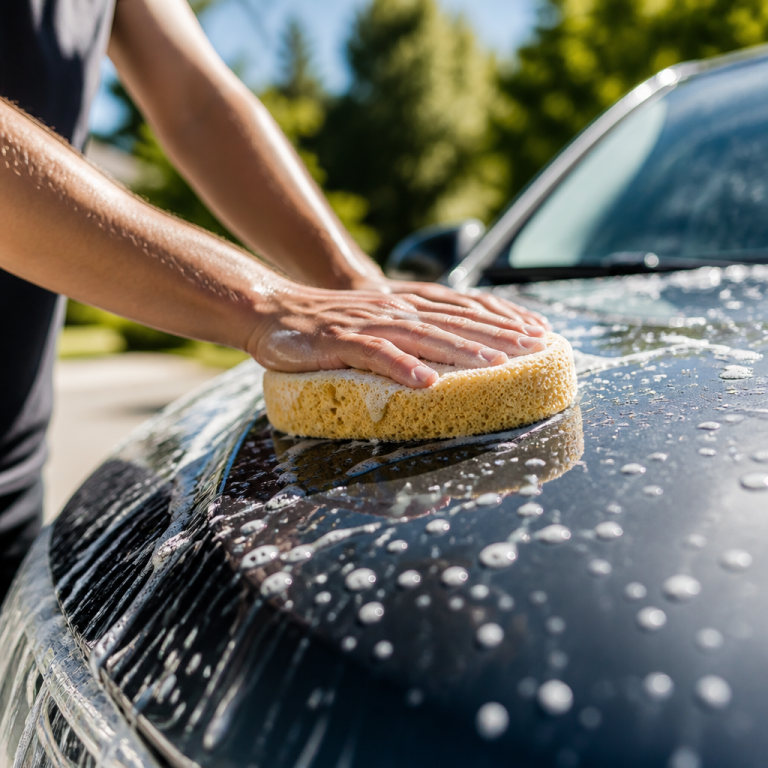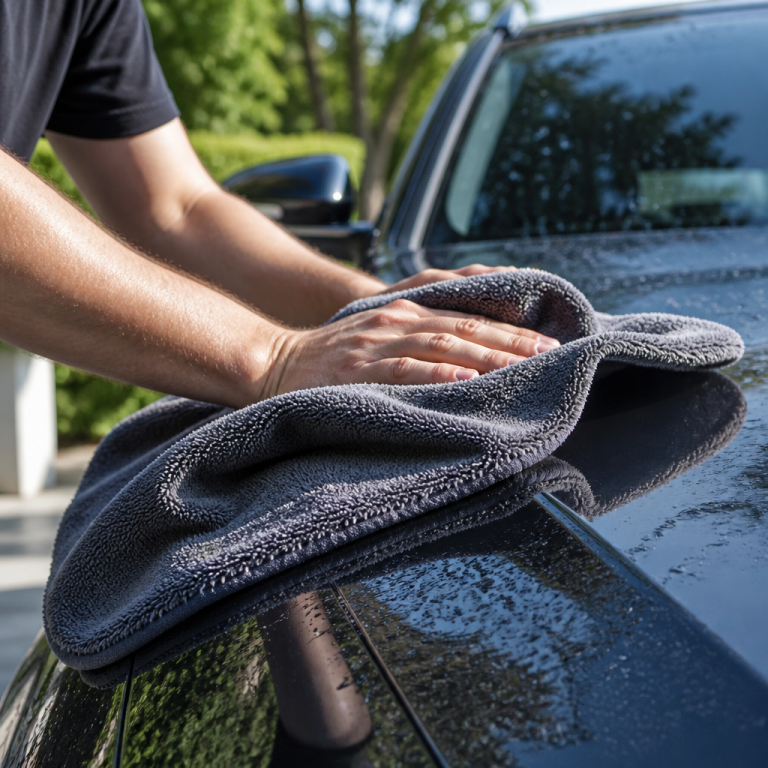
can you wash a car with dish soap: 7 Shocking Risks
Many car owners wonder if common household products like dish soap can be used to clean their vehicle. While dish soap undeniably cuts through grease and grime on kitchenware, its chemical composition and intended purpose differ fundamentally from automotive cleaning products. Discover why this common shortcut could be costing you more in the long run. Understanding these critical differences is crucial for maintaining your car’s exterior and preserving its finish for years to come.
Using dish soap to wash a car refers to employing common household dishwashing detergents instead of products made specifically for cars. This idea often surfaces because dish soap is convenient and seems cheaper. However, dish soap is made with strong “surfactants” and “degreasers” that work best at high pH levels. Car wash soaps, on the other hand, are formulated to be much gentler, with a pH closer to neutral. This basic difference in their chemical makeup means that while dish soap might seem to clean a car effectively, it can lead to unintended and negative consequences for your car’s paint and protective layers.
Professional detailers and automotive experts almost universally advise against using dish soap for washing cars.
Dish soap will strip wax, sealants, and can even begin to dull clear coats with repeated use because it’s designed to remove oils—and automotive protection products are oil-based. It’s not formulated for automotive paint care.
— Larry Kosilla, professional detailer and founder of AMMO NYC
The main job of dish soap is to remove oils and fats, which are the core ingredients of many car waxes and sealants. Using dish soap undoes the effort and money put into protecting a car’s paint. While a single wash might not cause immediate, visible damage, it will leave the surface completely unprotected and vulnerable to harsh environmental elements. This lack of protection can lead to faster wear on the clear coat, the outermost, shiny layer of your car’s paint.
Effects of Dish Soap on Your Car
Using dish soap on your car might seem like a quick and easy cleaning solution, but it can lead to several adverse effects on your vehicle’s exterior. The strong chemical properties of dish soap, while excellent for kitchen grease, are not compatible with the delicate nature of automotive paint and its protective layers.
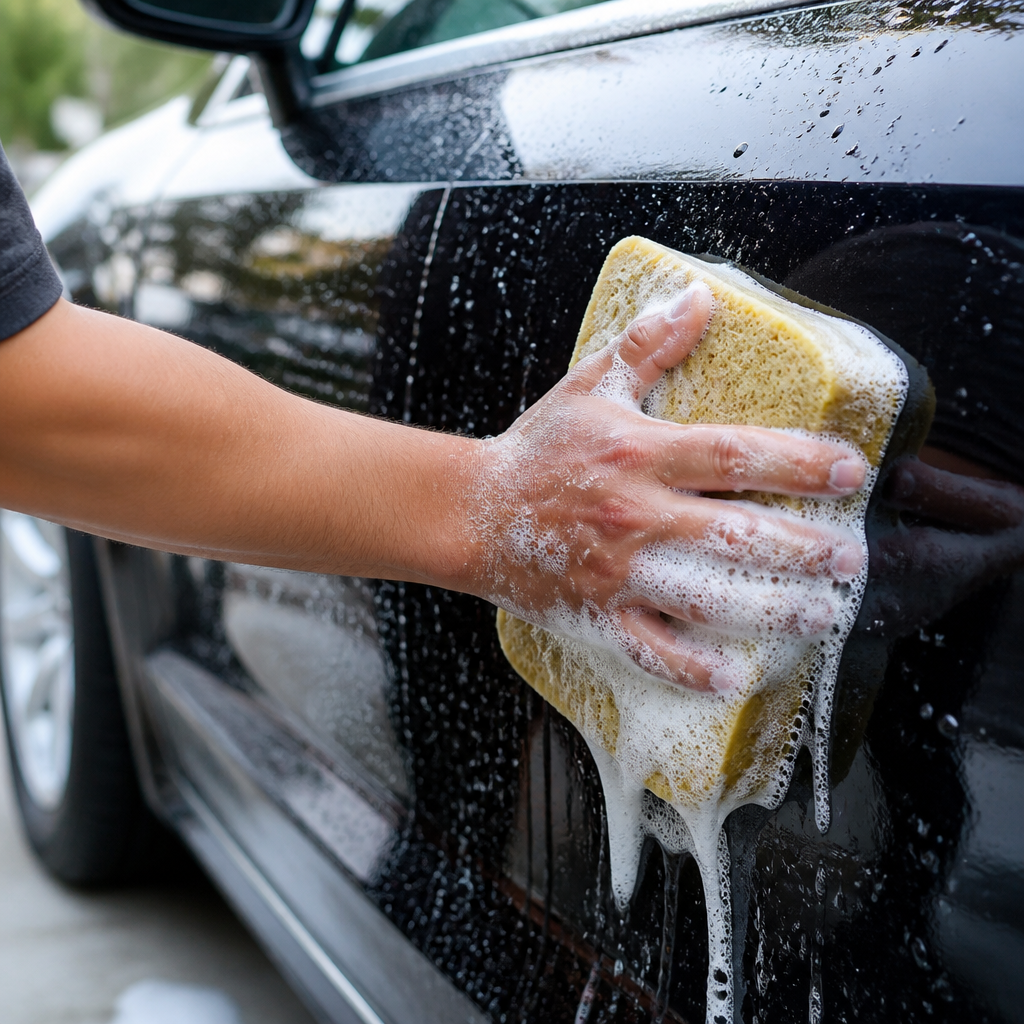
What Happens When You Wash a Car with Dish Soap
Washing a car with dish soap immediately removes dirt, grime, and, most importantly, all protective coatings. This occurs because of the soap’s aggressive degreasing properties and its alkaline pH levels. Unlike specialized car wash soaps that lift dirt without harming underlying protection, dish soap’s primary function is to strip away oils and fats. Since automotive waxes, sealants, and ceramic coatings are largely oil-based, these crucial protective layers are easily dissolved and washed away, leaving your car’s paint exposed and vulnerable.
Once these protective wax layers are stripped, which can happen after just one wash with dish soap, the paint is left completely unprotected against various environmental contaminants. These include harmful UV radiation from the sun, which can lead to fading and oxidation. It also leaves paint open to corrosive substances like acid rain, bird droppings, and tree sap. Without a sacrificial layer of wax, these contaminants can directly impact the clear coat, potentially causing etching, staining, and premature wear. A 2022 study in the Journal of Coatings Technology and Research showed that repeated exposure to alkaline detergents (like most dish soaps) caused measurable clear coat degradation compared to pH-neutral car wash solutions.
Beyond the paint, dish soap can also negatively affect other exterior parts. It can cause rubber seals, trim pieces, and other plastic components to dry out and crack over time. This happens because dish soap removes the essential oils and plasticizers that maintain the flexibility and integrity of these materials. Over time, this can lead to brittle rubber, faded plastic trim, and potentially compromised seals.
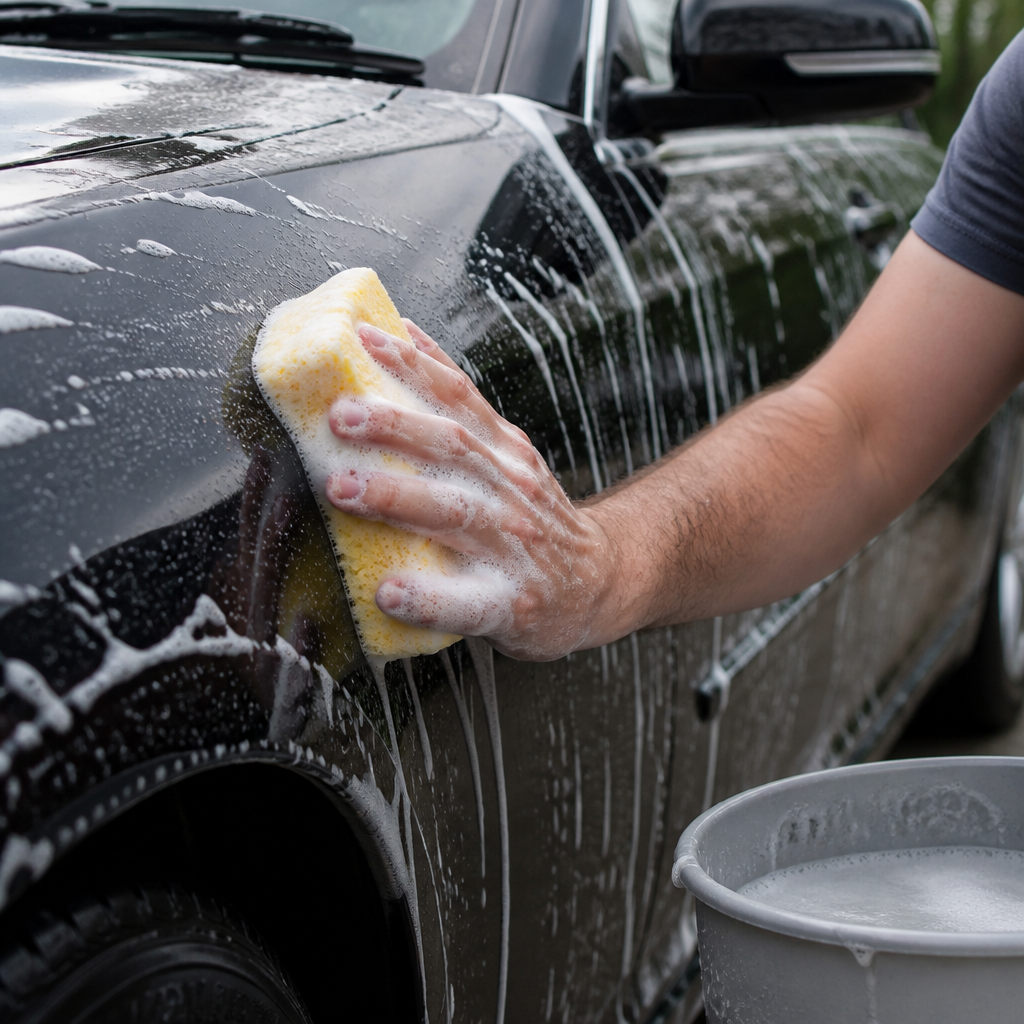
Can You Wash a Car with Dish Soap Without Damaging Paint
The question of whether it is possible to wash a car with dish soap without damaging the paint is complex. While a single wash is unlikely to cause visible, immediate paint damage, it will almost certainly remove all protective wax and sealant layers. The paint itself consists of multiple durable layers, but dish soap primarily affects the clear coat and any applied protection rather than the base paint during short-term use.
Experts acknowledge that in emergency situations, or for very specific purposes, dish soap might be used with extreme caution.
If you absolutely must use dish soap in an emergency, dilute it heavily—about 1 tablespoon per gallon of water—and plan to immediately reapply wax or sealant. _But this should never be a regular practice._
— Mike Phillips, Director of Training at Autogeek
This highlights that any use of dish soap should be immediately followed by reapplying protection to mitigate the stripping effects. This “strip wash” technique is sometimes employed by professional detailers or experienced enthusiasts before applying a new, long-lasting protective coating. Its goal is to create a completely bare paint surface for the new coating to bond to. However, for routine washing, its use is strongly discouraged due to its detrimental effects on paint protection.
Does Dish Soap Remove Car Wax
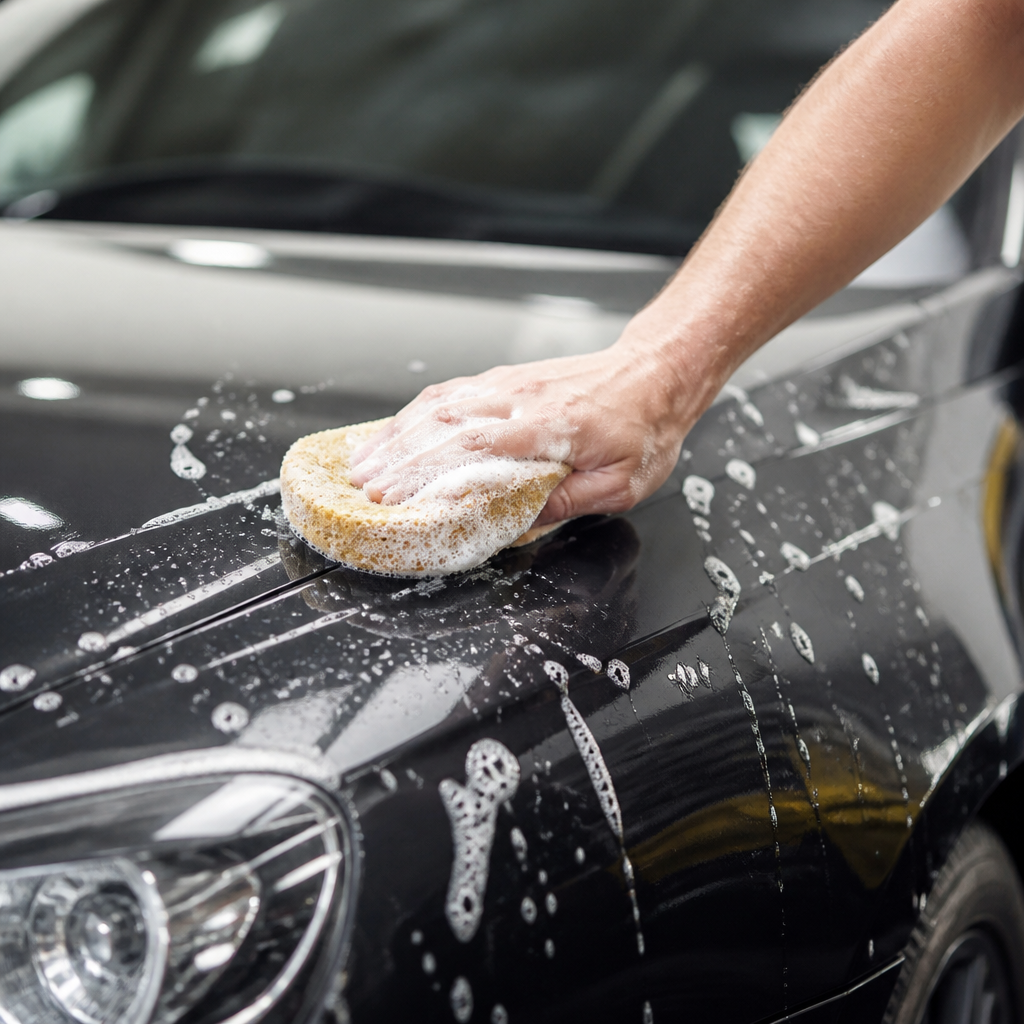
One of the most significant effects of using dish soap on a car is its ability to remove car wax. The answer to whether it removes protective coatings is a resounding yes: dish soap is highly effective at removing car wax.
The reason lies in its chemical formulation. Dish soap is designed with a high concentration of powerful degreasing agents engineered to break down oils and lipids. Automotive waxes, whether natural carnauba or synthetic polymers, are primarily composed of oils and similar hydrophobic compounds. When dish soap contacts these layers, its surfactants aggressively emulsify them, lifting them from the paint and effectively dissolving the wax. This process is so efficient that dish soap can remove car wax completely in a single wash.
Scientific evidence supports this. Laboratory testing conducted by Consumer Reports in 2021 demonstrated that dish soap effectively removed carnauba wax protection in one application. In contrast, dedicated car wash soap retained most of its wax protection after the same wash procedure. This comparison highlights the fundamental difference between the two cleaners. Car wash soaps are formulated to be gentle on wax, while dish soaps are formulated for maximum grease removal, making them inherently incompatible with wax and sealant layers.
Choosing the Right Soap for Your Car
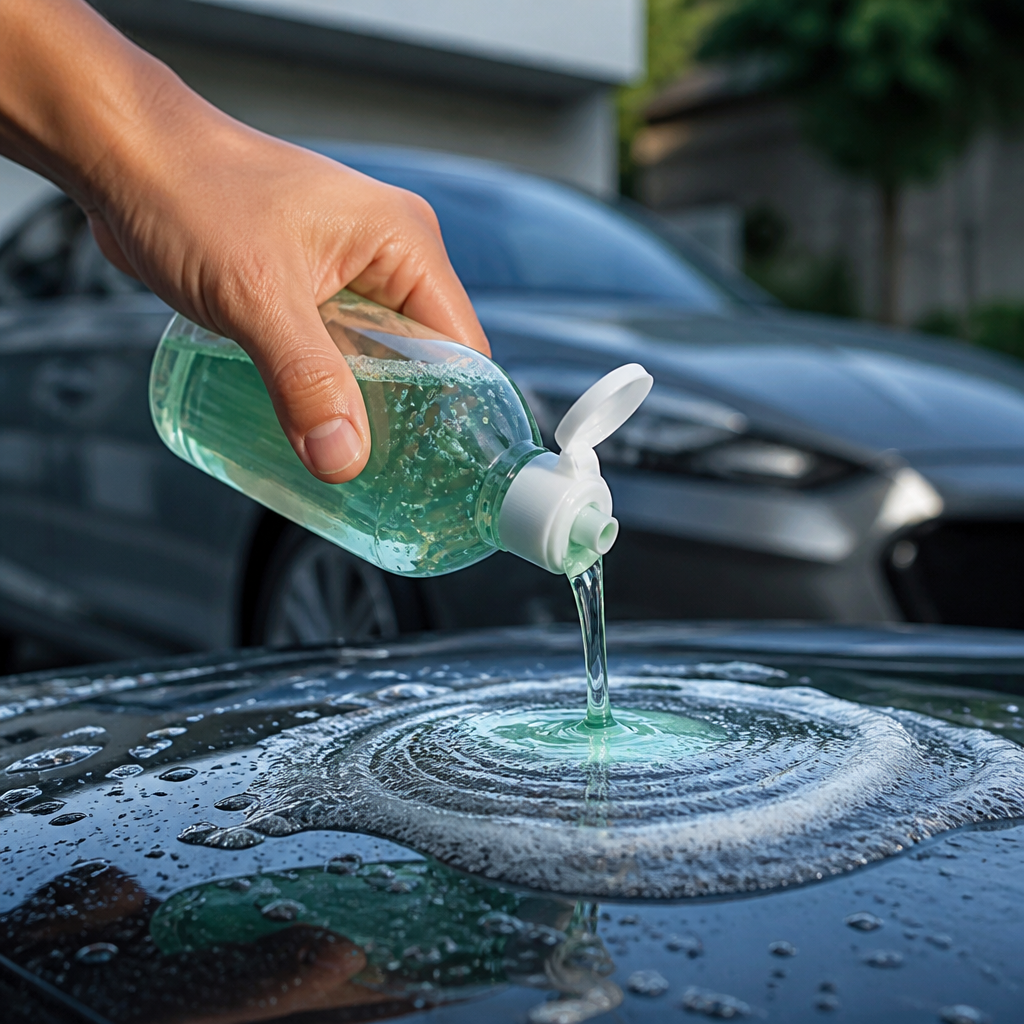
Selecting the appropriate soap for washing your car is a critical decision that directly impacts the longevity and appearance of your vehicle’s paint. Understanding the differences between household detergents and specialized automotive formulas is key to making the best choice.
Dish Soap vs Car Wash Soap
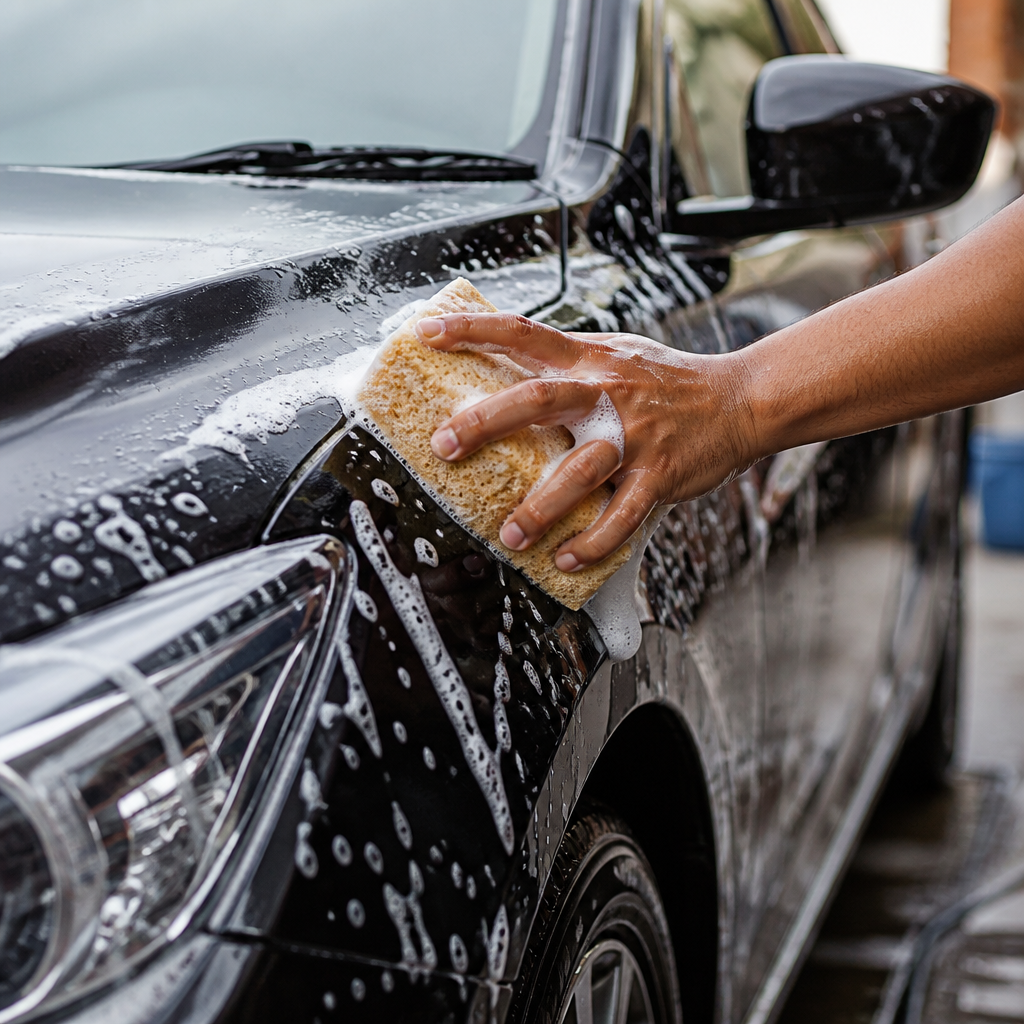
The comparison between dish soap and car wash soap reveals fundamental differences in their chemical makeup, pH levels, and intended purpose. Car wash soaps are specifically formulated to be pH-balanced and contain special lubricants and polymers. These ingredients are designed to clean your car’s surface effectively without stripping away protective coatings like wax. The pH-neutral nature ensures the soap is gentle, while lubricants help the wash mitt glide smoothly over the surface, minimizing the risk of scratches and swirl marks.
In stark contrast, dish soaps use aggressive alkaline (higher pH) formulas, typically ranging from 7-10, which are optimized for breaking down and removing food grease and oils. Their high concentration of surfactants is excellent for kitchen duties but detrimental to automotive finishes. Dish soaps contain no protective additives, focusing solely on powerful degreasing.
| Feature | Dish Soap | Car Wash Soap |
|---|---|---|
| pH Level | 7-10 (alkaline) | 6-7 (neutral) |
| Surfactant Concentration | 10-25% | Lower (typically <10%) |
| Wax-Safe | No | Yes |
| Lubrication | Minimal | High |
| Cost per Wash | $0.05-0.10 | $0.50-2.00 |
| Clear Coat Safe (repeated use) | No | Yes |
Best Soap to Wash a Car
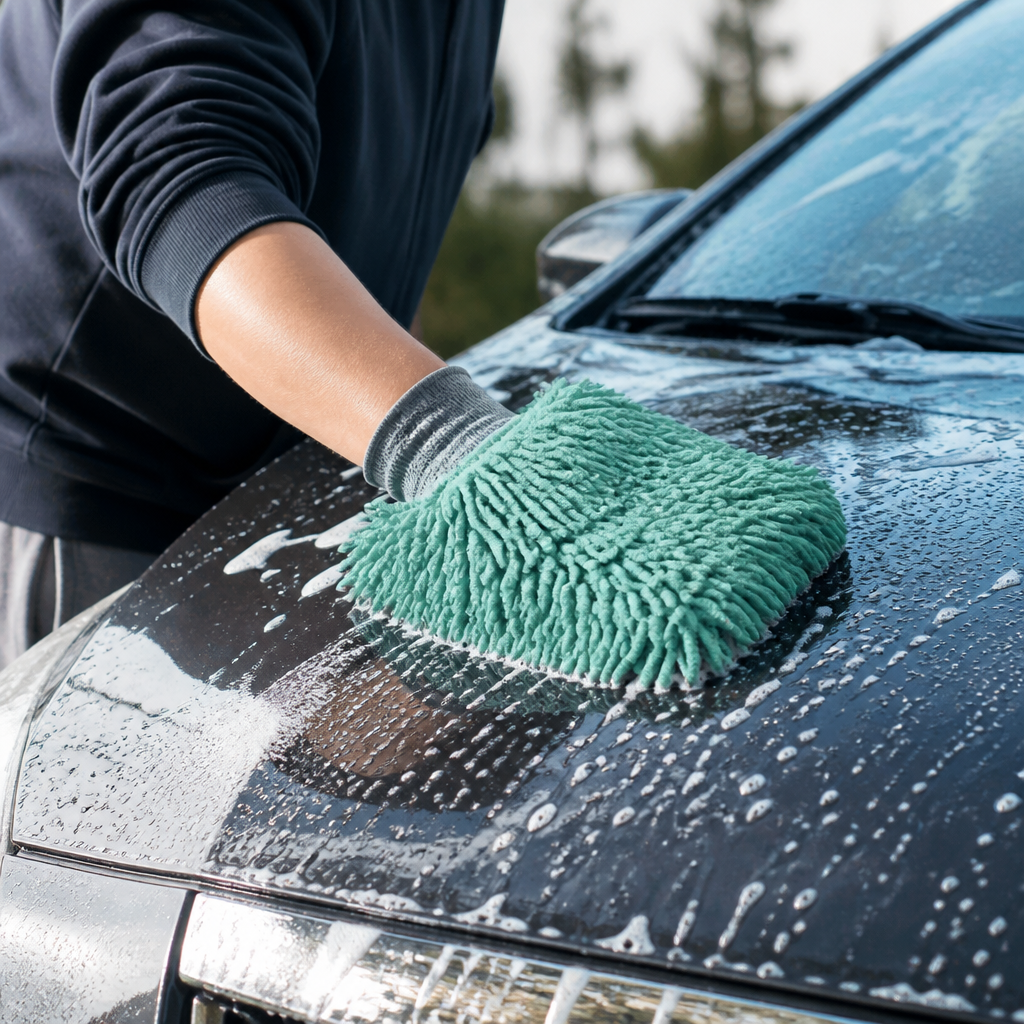
The best soap to wash a car is one specifically formulated to safely remove dirt while preserving paint protection. These products are evaluated based on their pH balance, lubricity, cleaning power, and ability to preserve existing protection. Choosing a high-quality car wash soap is an investment in your vehicle’s long-term appearance and paint integrity.
Top-rated car wash soaps recommended by detailing experts are designed to be pH-neutral, ensuring they do not strip existing waxes or sealants. They offer excellent lubricity, which is crucial for allowing the wash mitt to glide smoothly over the paint, encapsulating dirt particles and minimizing the risk of scratching. Here are some popular and highly-rated options:
- Meguiar’s Gold Class: pH of 6.5, known for high foam and being wax-safe.
- Chemical Guys Mr. Pink: pH of 6.0, provides very high foam and is wax-safe.
- Griot’s Garage Brilliant Finish: pH of 6.8, a premium option that is wax-safe with high foam.
- Mother’s California Gold: pH of 6.7, a reliable choice that is wax-safe.
- Turtle Wax Ice: pH of 6.5, offers high foam and is safe for protective coatings.
While the initial cost of professional-grade car wash soaps might seem higher than dish soap, they are highly concentrated and cost-effective in the long run. This is especially true when considering the potential damage and subsequent repair costs associated with using inappropriate cleaners.
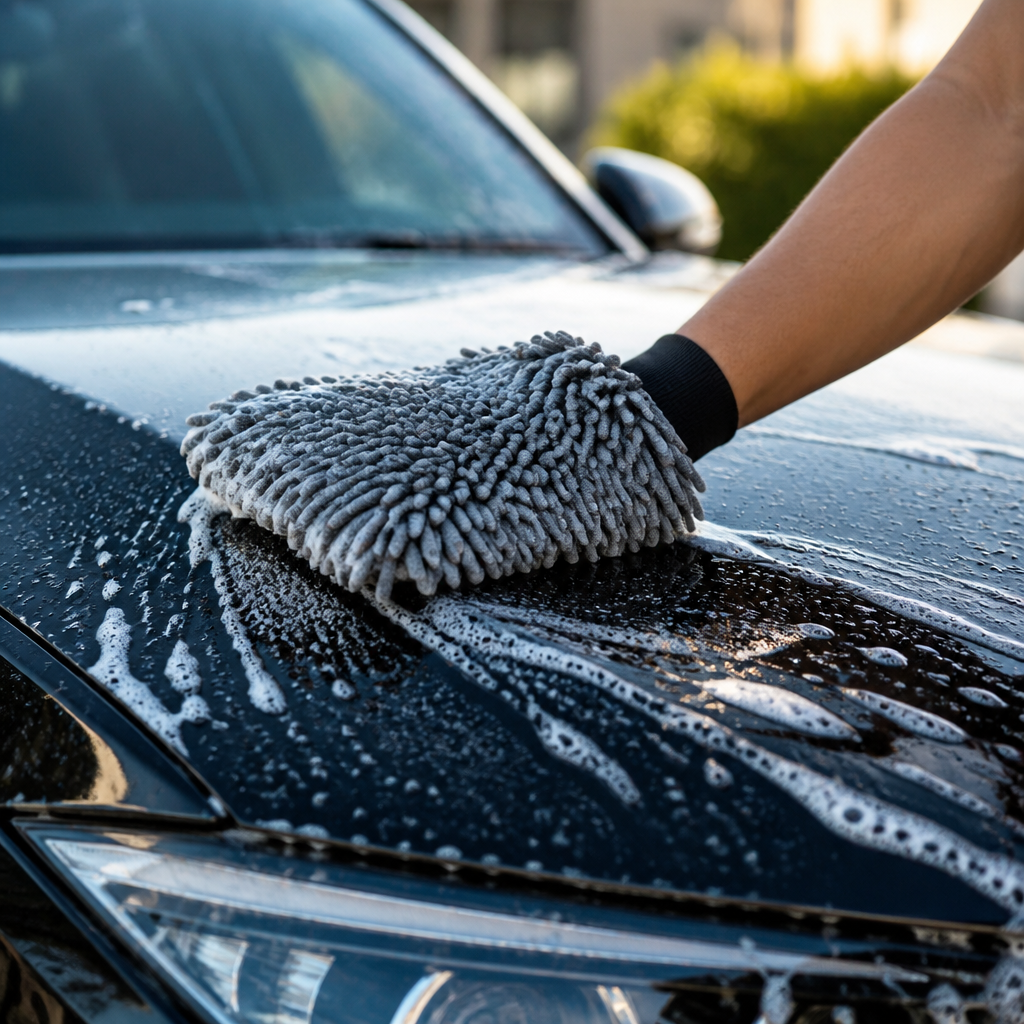
How to Wash a Car Properly at Home
Washing a car properly at home involves a systematic process using correct techniques and appropriate products to achieve cleanliness while preventing paint damage. This methodical approach is crucial for maintaining your car’s appearance and protecting its finish.
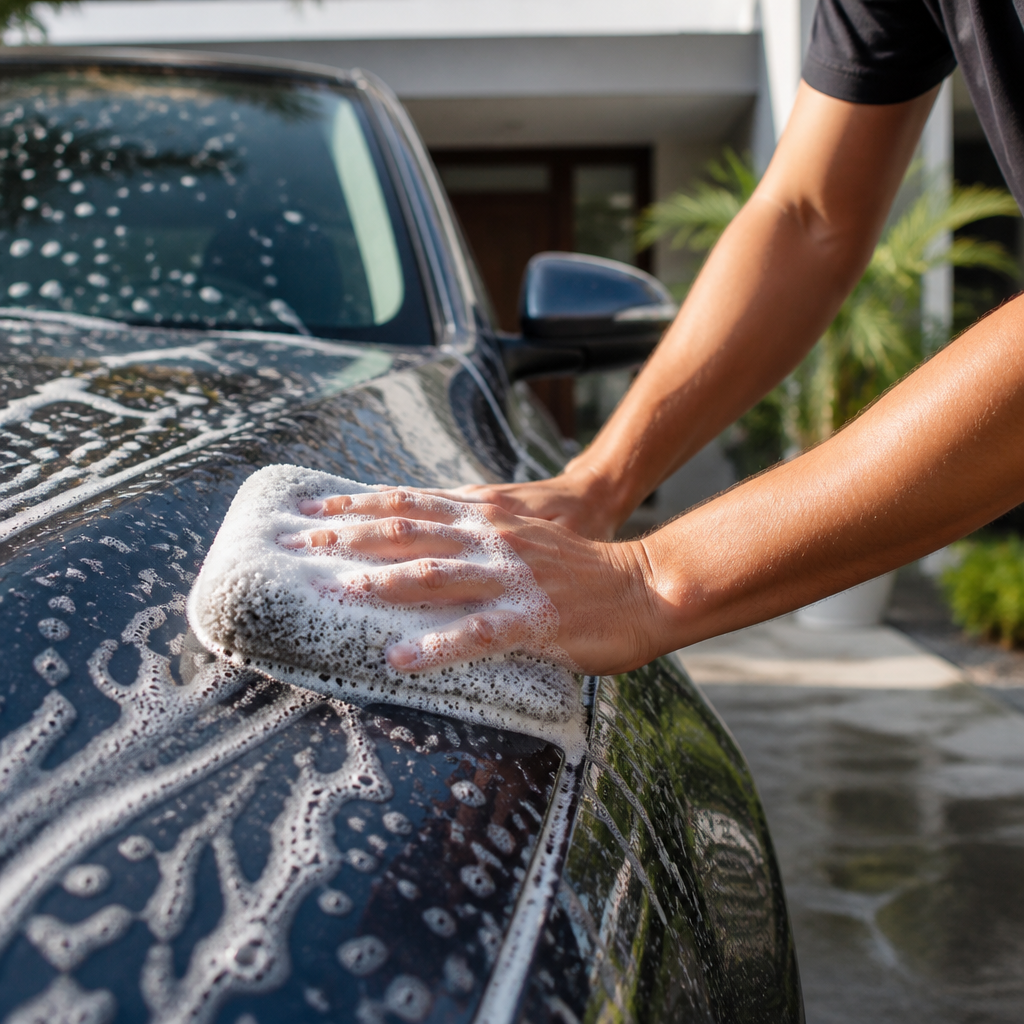
How to Wash a Car Properly at Home
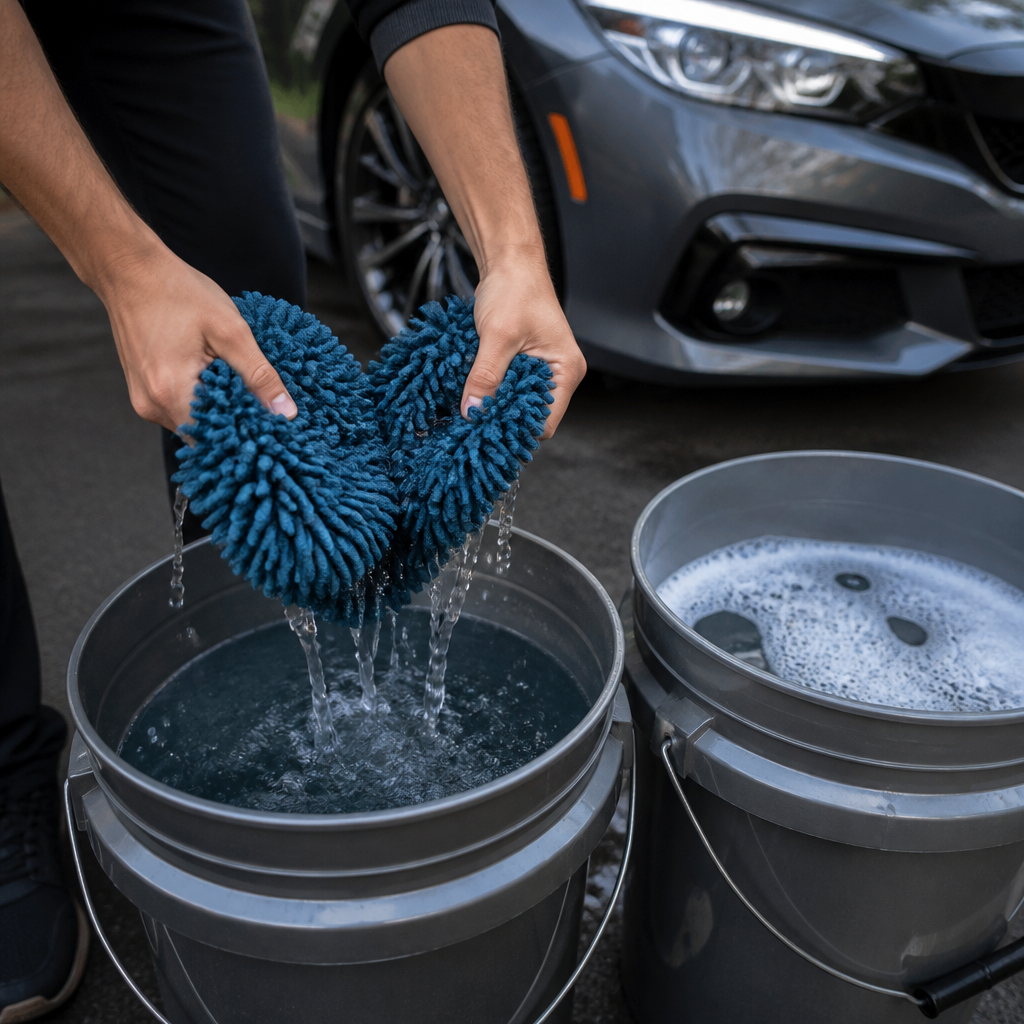
The industry-standard technique recommended by professional detailers is the “two-bucket method.” This method involves using one bucket for your car wash soap solution and a second bucket with clean rinse water. After washing a section, the wash mitt is rinsed in the clean water bucket to remove trapped dirt before being reloaded with soapy water. Mastering the two-bucket method is the single most important technique for a scratch-free wash.
Here is a step-by-step process for washing a car properly:
- Pre-rinse: Thoroughly spray the entire vehicle with water to remove loose dirt and debris.
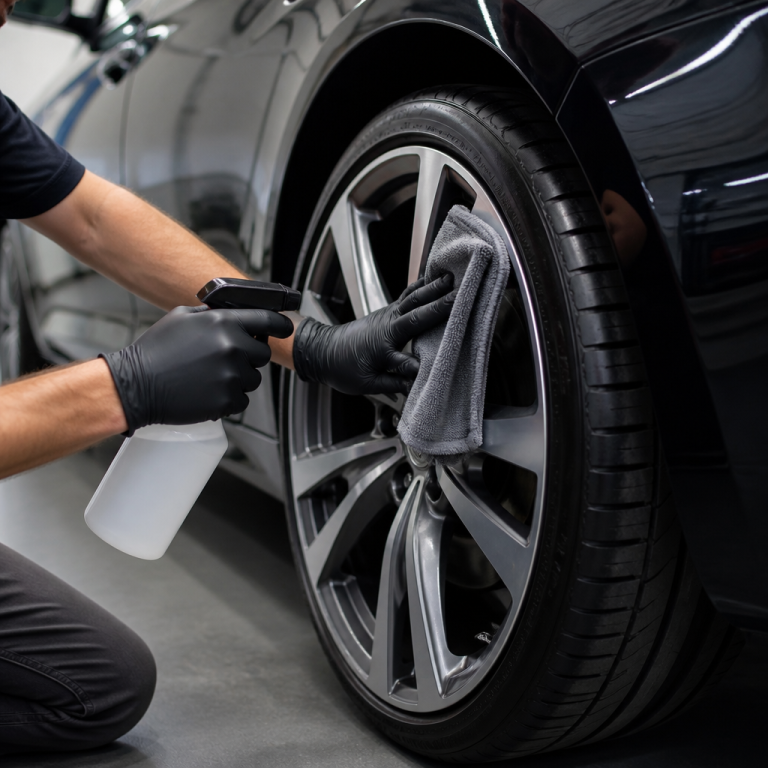
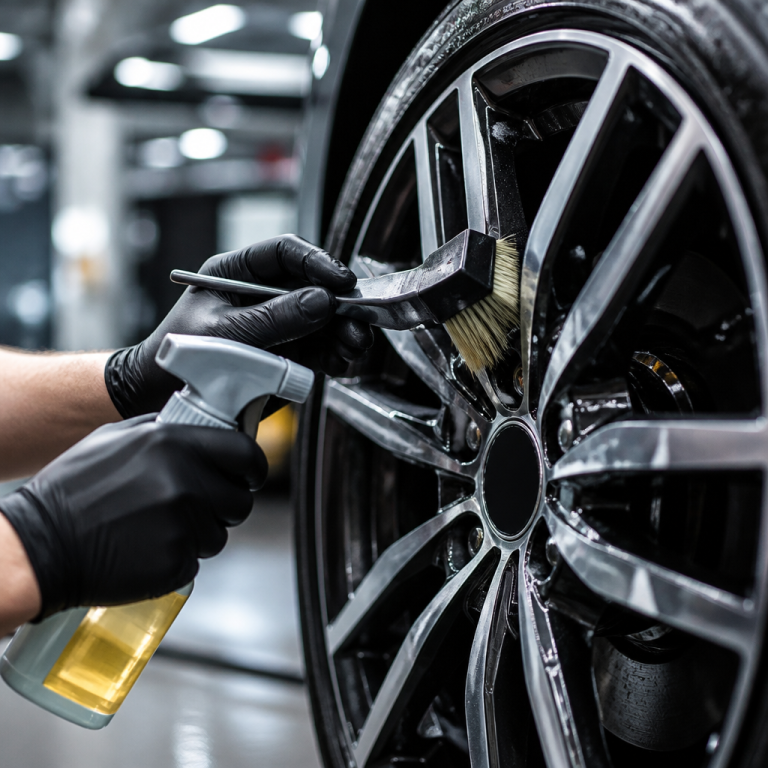
- Wheels first: Clean the wheels and wheel wells separately before washing the car’s body to prevent brake dust and grime from contaminating clean panels.
- Two-bucket wash: Set up one bucket with a pH-neutral car wash soap solution and the other with clean rinse water. Use a high-quality microfiber wash mitt.
- Top-to-bottom: Wash the car starting from the roof and working your way down. Wash in straight lines and rinse your mitt frequently in the clean water bucket.
- Rinse thoroughly: Rinse all soap residue from the car with clean water.
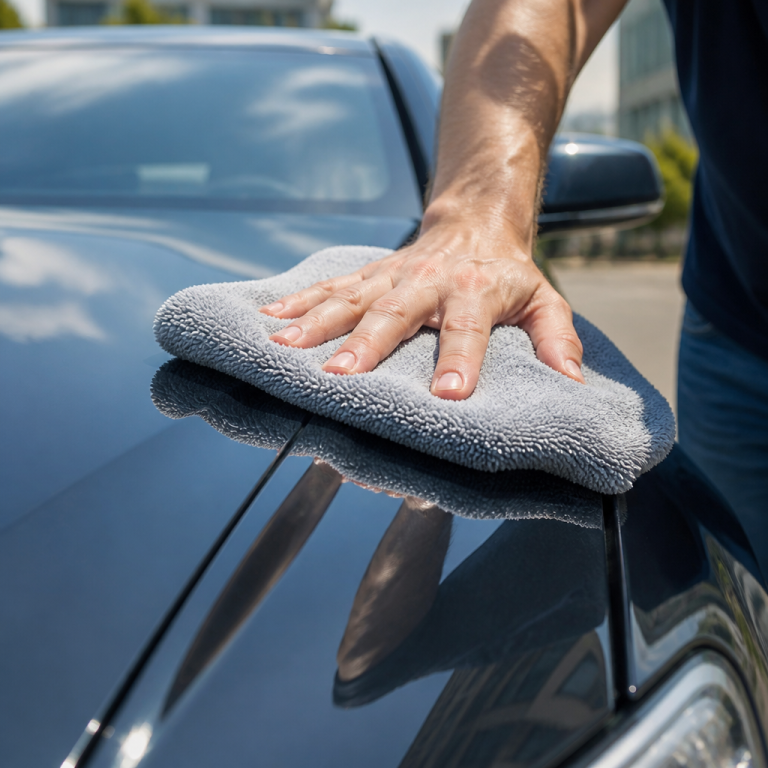
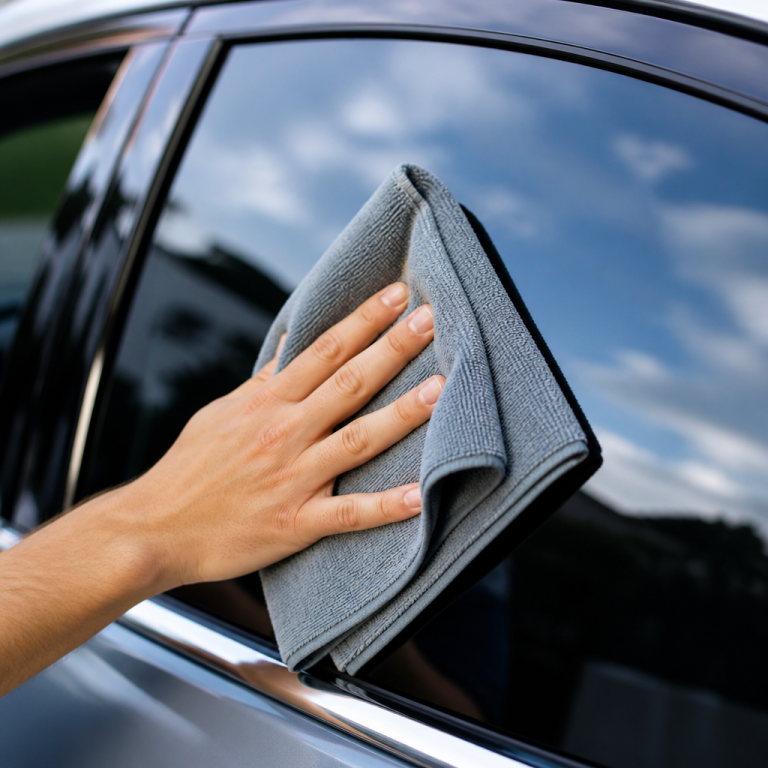
- Dry properly: Immediately dry the vehicle using soft, absorbent microfiber drying towels to prevent water spots.
A common mistake is washing in direct sunlight. Washing in direct sunlight or on hot surfaces (above 85°F/29°C) causes soap and water to dry too quickly, leading to stubborn water spots and streaking that can etch into the clear coat. Always work in the shade on a cool surface for the best results. Investing in quality microfiber is also crucial, as it is the difference between a scratch-free finish and years of swirl marks. A quality microfiber mitt will cause zero damage _if used correctly with the two-bucket method._
Essential Equipment and Costs
| Item | Purpose | Cost Range |
|---|---|---|
| pH-neutral car wash soap | Safe cleaning | $15-30/bottle |
| Two 3-5 gallon buckets | Two-bucket method | $10-20 total |
| Microfiber wash mitt | Scratch-free washing | $8-15 each |
| Grit guards (2) | Trap dirt in buckets | $8-12 each |
| Microfiber drying towels | Spot-free drying | $15-30 for 2-3 |
| Wheel brush | Wheel cleaning | $10-20 |
| Garden hose with nozzle | Rinsing | $20-40 |
In conclusion, while dish soap may offer a temporary solution, its chemical properties are incompatible with automotive paint. The aggressive degreasers and high pH levels strip the waxes and sealants that shield your car’s finish. Opting for a pH-neutral, lubricated car wash soap, combined with proper techniques like the two-bucket method, is a safer approach to maintaining your car’s appearance.
FAQ
Q1: Why is dish soap not recommended for washing cars?
A1: Dish soap isn’t recommended because it contains strong degreasers and has a high alkaline pH (7-10), designed to break down food oils. These properties strip away protective wax, sealants, and ceramic coatings from your car’s paint, leaving it vulnerable to UV damage, oxidation, and environmental contaminants.
Q2: Can using dish soap damage my car’s paint in the long term?
A2: While a single wash with dish soap is unlikely to cause immediate, visible damage to the paint itself, repeated use can lead to long-term issues. It strips away the clear coat’s protection, making it susceptible to degradation, dulling, and increased surface roughness over time. It can also dry out and crack rubber seals and plastic trim.
Q3: Does dish soap remove car wax and sealants?
A3: Yes, dish soap is highly effective at removing car wax, sealants, and even ceramic coatings. Its high concentration of surfactants is specifically designed to break down oil-based compounds, which are the primary components of these protective layers. Consumer Reports testing has demonstrated that dish soap removes carnauba wax protection in a single application.
Q4: What are the key differences between dish soap and car wash soap?
A4: Car wash soaps are pH-balanced (6-7), contain lower surfactant concentrations, and include lubricants and gloss enhancers to clean without stripping protection. Dish soaps are alkaline (pH 7-10), have higher surfactant concentrations, and lack protective additives, making them aggressive degreasers that remove waxes and can harm automotive finishes.
Q5: What is the proper way to wash a car at home to avoid damage?
A5: The proper way involves using the two-bucket method, a pH-neutral car wash soap, and microfiber wash mitts and drying towels. Start with a pre-rinse, clean wheels first, wash from top-to-bottom, rinse thoroughly, and dry immediately in the shade to prevent water spots. Avoid washing in direct sunlight or using dish soap.

Jake Morrison writes about DIY car care at CarCareNote. He’s been detailing cars in his Ohio driveway for over a decade and shares what actually works at home.