How to Clean Brake Dust: 8 Safe, Proven Tips That Work
Brake dust is a common annoyance for car owners, appearing as a dark, gritty film on your wheels and sometimes even on your car's paint. Discover how to remove it correctly to maintain your car's appearance and protect its surfaces from damage. This stubborn residue is mainly composed of tiny iron particles (around 92%) from your brake rotors, along with carbon and sticky compounds from the brake pad material. A typical car can generate about 7 to 10 grams of this dust per wheel for every 1,000 miles driven.
How to Clean Brake Dust from Different Surfaces
Removing brake dust isn't a one-size-fits-all task; the method must adapt to where the dust has accumulated. Each area—whether it's your shiny rims, the actual brake components, tough baked-on marks, or your car's delicate paint—requires specific tools and products to ensure effective cleaning without causing scratches or damage.
How to Clean Brake Dust Off Rims
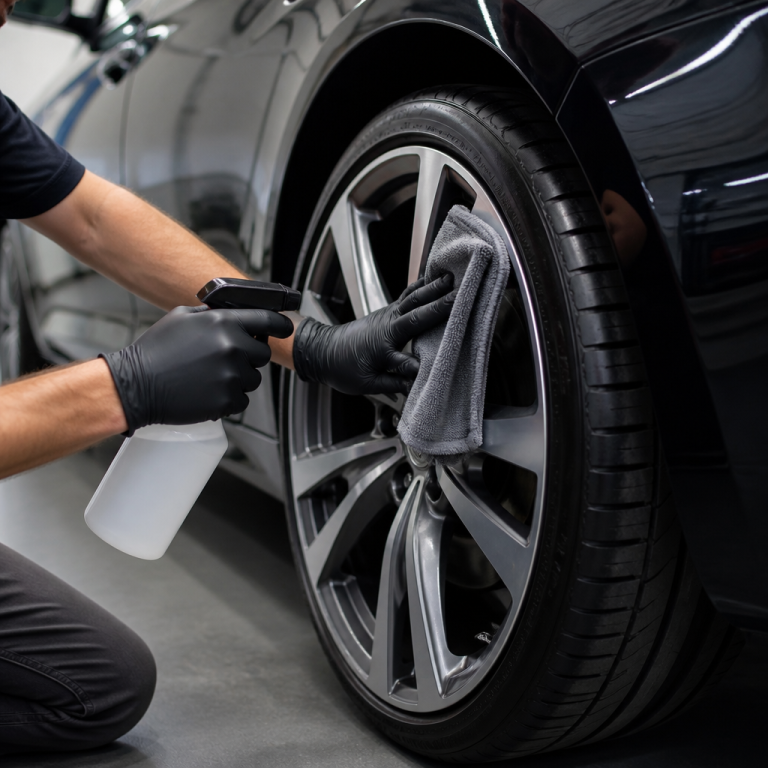
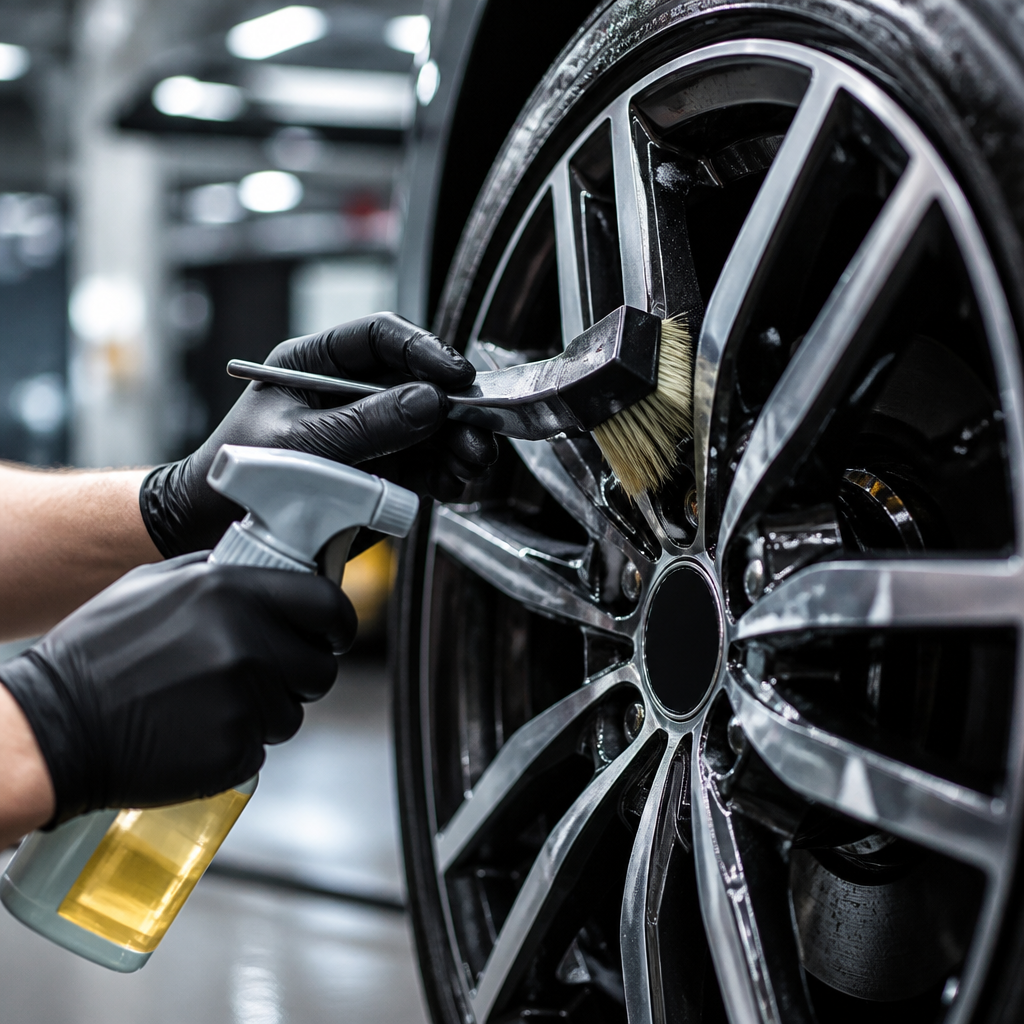
When cleaning your car's rims, it's best to use a pH-balanced wheel cleaner (between pH 7 and 10). This gentle, neutral formula won't harm your wheel's finish.
Follow these simple steps for the best results:
- Ensure your wheels are cool and dry before starting.
- Spray the cleaner evenly across the wheel and let it sit for about 3 to 5 minutes. _This "dwell time" is crucial; it allows the cleaner to chemically break down the iron particles in the brake dust._
- Use a soft-bristle brush to gently scrub the surface in circular motions.
- Rinse the wheels thoroughly with water, using a hose with good pressure (40-60 PSI) to wash away the loosened grime.
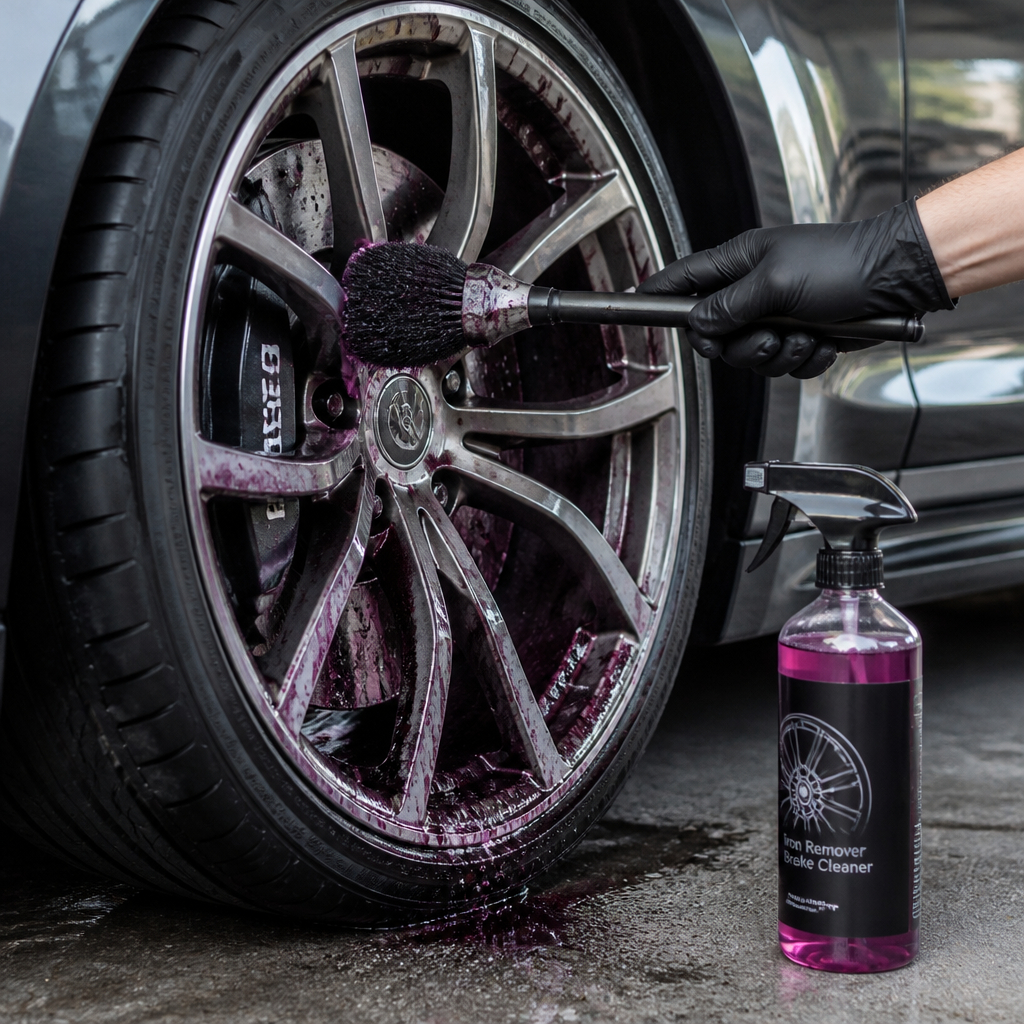
Many effective iron-removing cleaners contain chemicals like thioglycolic acid, which bond with the iron particles. You'll often see the cleaner turn purple or red as it reacts, a clear sign it's working. These products perform best between 50 and 80°F. Remember that this residue can contain heavy metals, so always work in a well-ventilated area and wear protective gloves.
As Dr. Michael Chen, a Materials Science Professor at MIT, advises, sticking to pH-neutral cleaners and avoiding highly acidic ones (below pH 5) is vital. Harsh acidic cleaners can damage clear coat finishes and, over time, may even create small pits in aluminum alloy wheels.
How to Clean Brake Dust Off Wheels Without Scratching
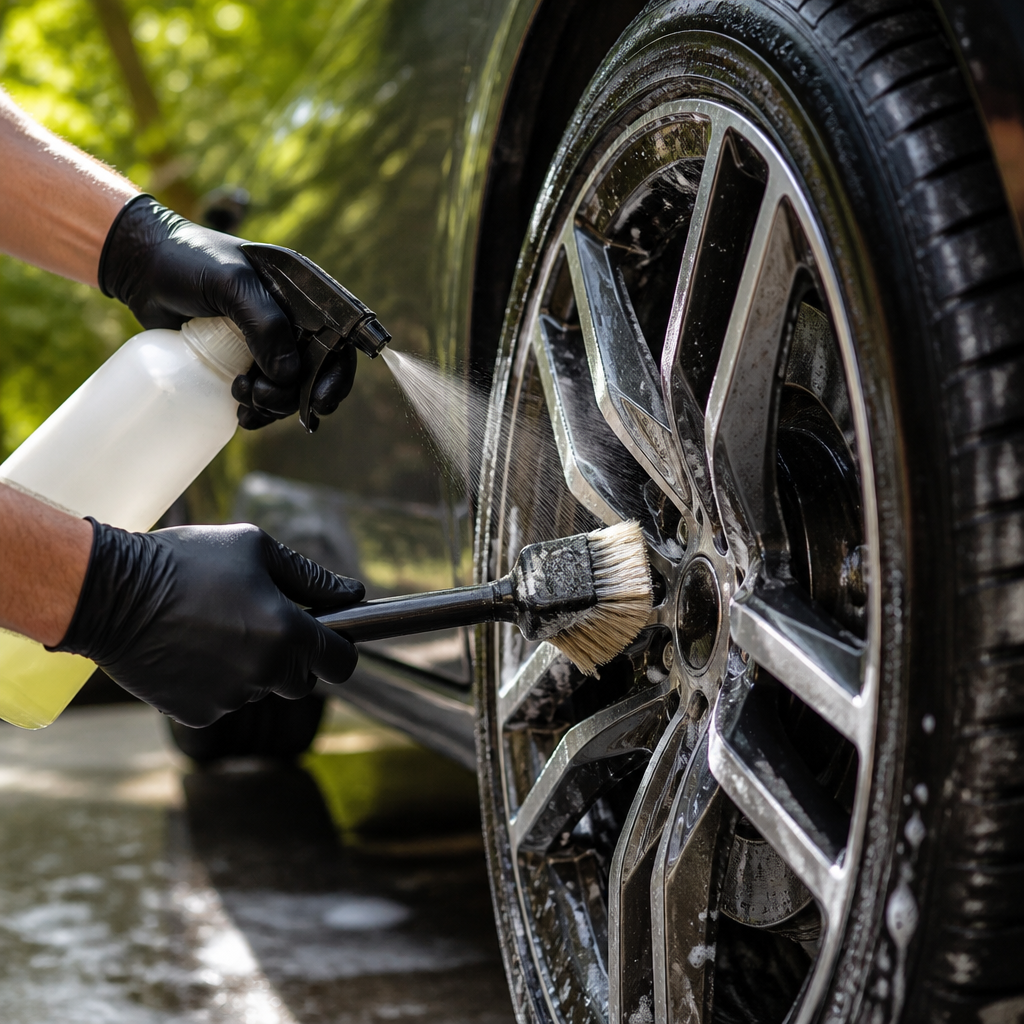
Cleaning your wheels without causing tiny scratches or "marring" relies on using the right tools and technique. Use soft tools like microfiber wash mitts or natural boar's hair brushes, which have fine bristles (0.1-0.2mm thick) that are gentle on surfaces. Apply cleaner by spraying it onto the wheel rather than wiping, which can drag abrasive particles across the finish. While scrubbing, use very light pressure (less than 2 PSI) to prevent scratches.
The International Detailing Association suggests the "two-bucket method" with "grit guards." One bucket holds soapy water and the other holds clean rinse water, while the guards trap dirt at the bottom. This method can reduce the risk of scratches by about 85%. Different wheel finishes require different care; for instance, chrome wheels do best with pH 7-9 cleaners, while more durable powder-coated wheels can handle a wider pH range of 6-11. Polished aluminum is very delicate and requires special non-acidic products.
How to Clean Brake Dust Off Brakes
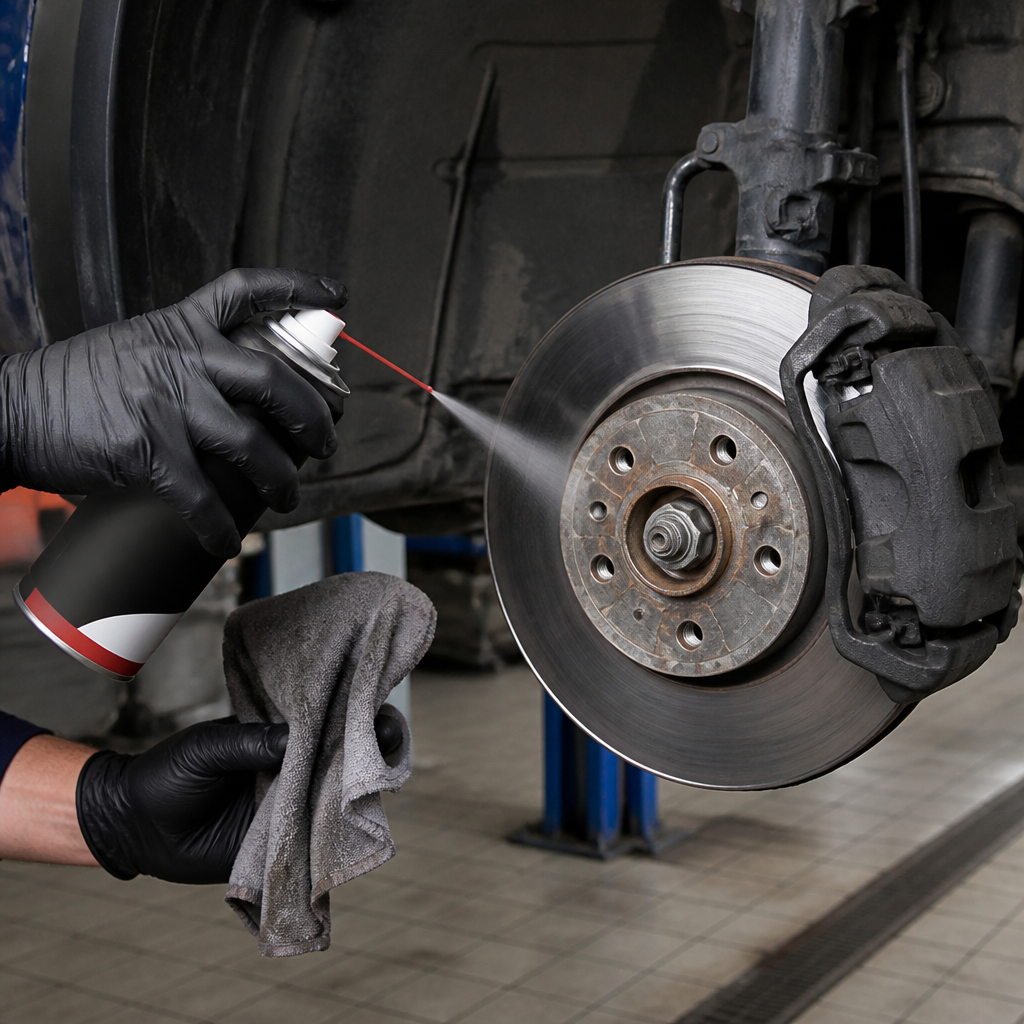
Cleaning the actual brake components—rotors, calipers, and pads—is different from cleaning wheel surfaces and requires specific brake cleaner sprays that evaporate without leaving residue.
First, remove your wheels. Then, spray an aerosol brake cleaner containing a solvent like acetone, toluene, or methanol onto the brake rotors and calipers to dissolve and flush away accumulated particles. Allow the components to air-dry for 5 to 10 minutes before reinstalling the wheels.
The EPA classifies most brake cleaners as "volatile organic compounds" (VOCs). _That's why it's crucial to use them in a very well-ventilated area, like outdoors, and wear respiratory protection._ Many experts prefer non-chlorinated formulas to avoid the risk of producing dangerous phosgene gas if exposed to high heat. An accumulation of brake dust on your brake pads can reduce their grip by up to 10%, adding 5-8 feet to your stopping distance at 60 mph.
James Rodriguez, an ASE Master Certified Technician, strongly advises against using water-based cleaners or pressure washers directly on brake components. Why? Because moisture can interfere with the friction material of the brake pads and cause "temporary brake fade," where your brakes temporarily lose some stopping power.
How to Clean Baked-On Brake Dust
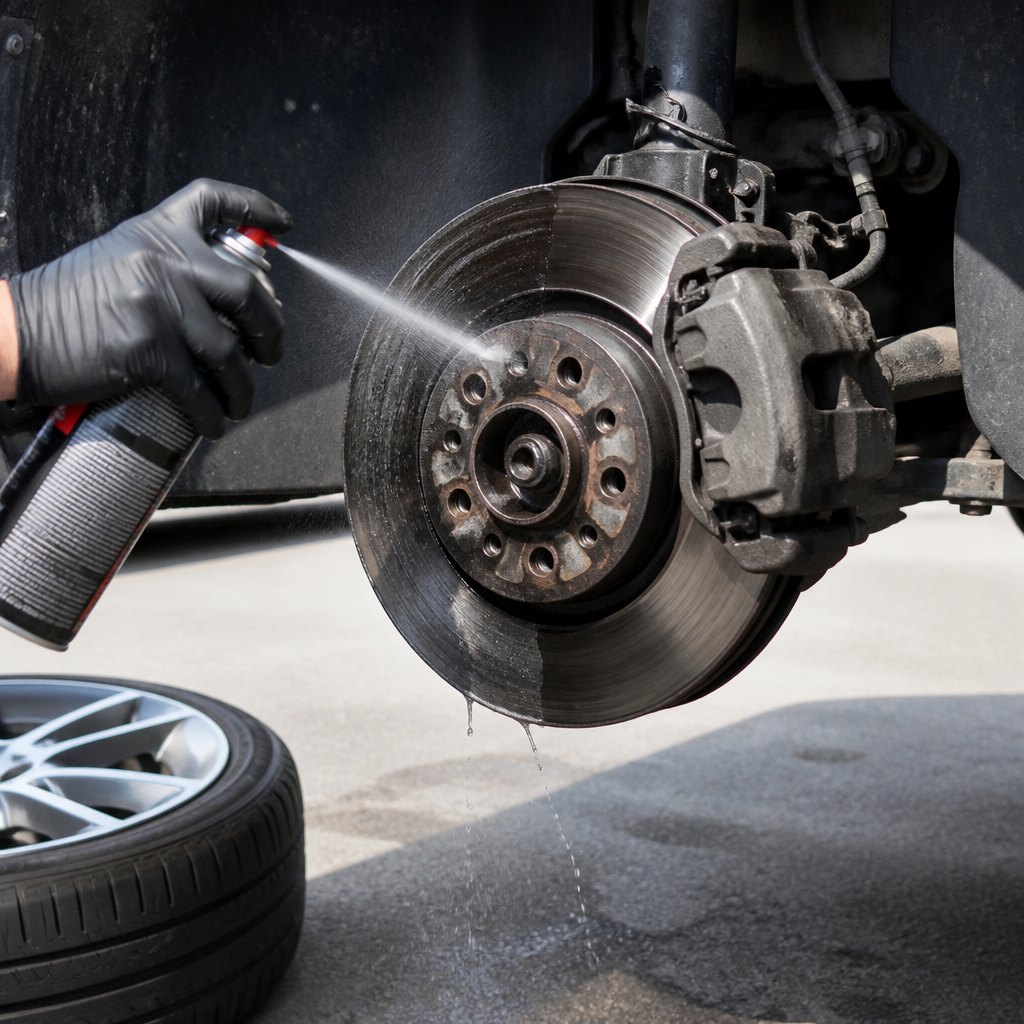
Baked-on brake dust is formed when the dust is repeatedly heated and cooled, causing it to chemically bond to your wheel surfaces. Research from the Automotive Research Center found that grime exposed to temperatures above 400°F undergoes "thermal bonding," increasing its grip by 300-400%.
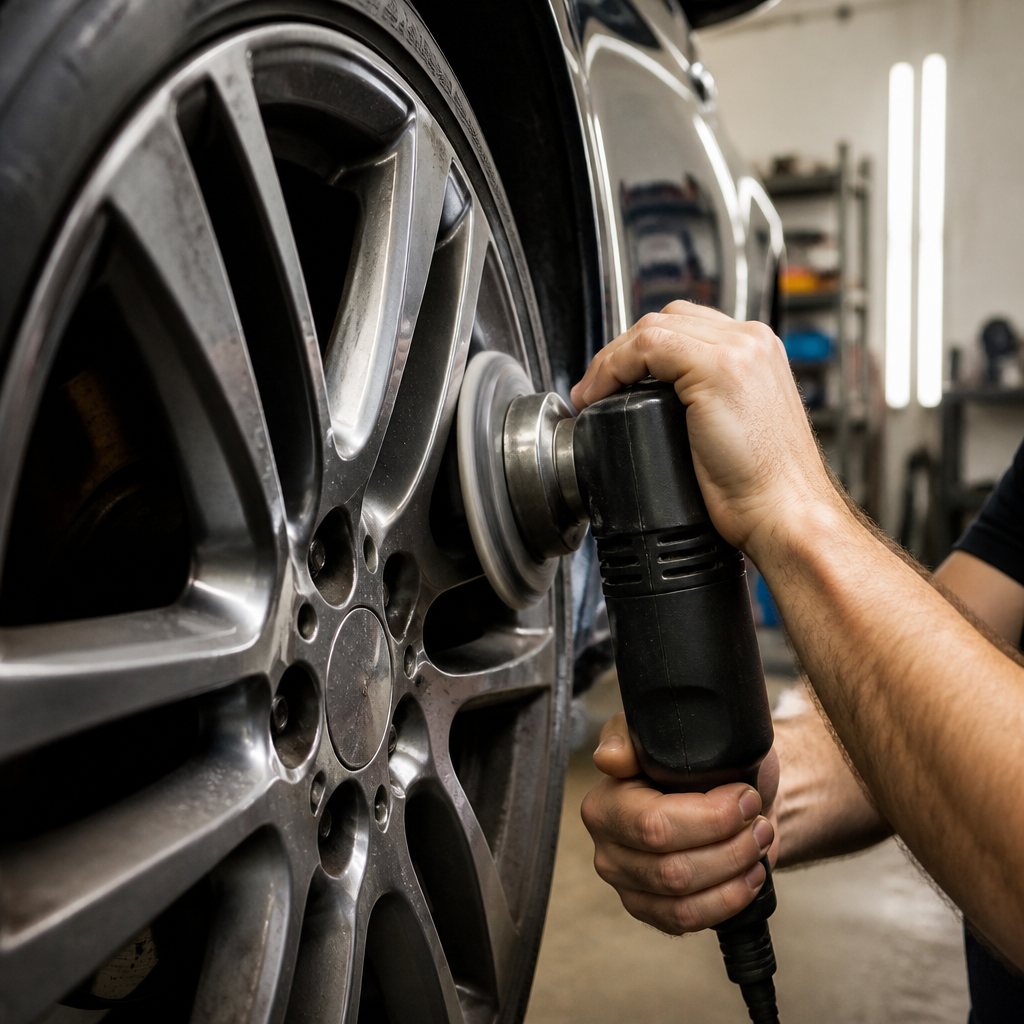
For this stubborn, baked-on residue, you need a more intensive approach. Apply an iron remover or "fallout remover" and let it dwell for 5 to 10 minutes to penetrate the bond. After the chemical treatment, a clay bar can physically lift embedded particles. For the most persistent cases, polishing with a fine-grade compound and a dual-action polisher (at 3000-4000 OPM) can mechanically remove the bonded layer without damaging the wheel. To prevent baked-on dust, apply a wheel sealant or ceramic coating to create a protective barrier.
How to Clean Brake Dust Off Car Paint
Brake dust can also land on your car's body panels, particularly lower doors and rear sections. Over time, these airborne particles can embed themselves into the clear coat. The International Carwash Association reports that these particles (2-10 microns) can penetrate the clear coat within 48-72 hours.
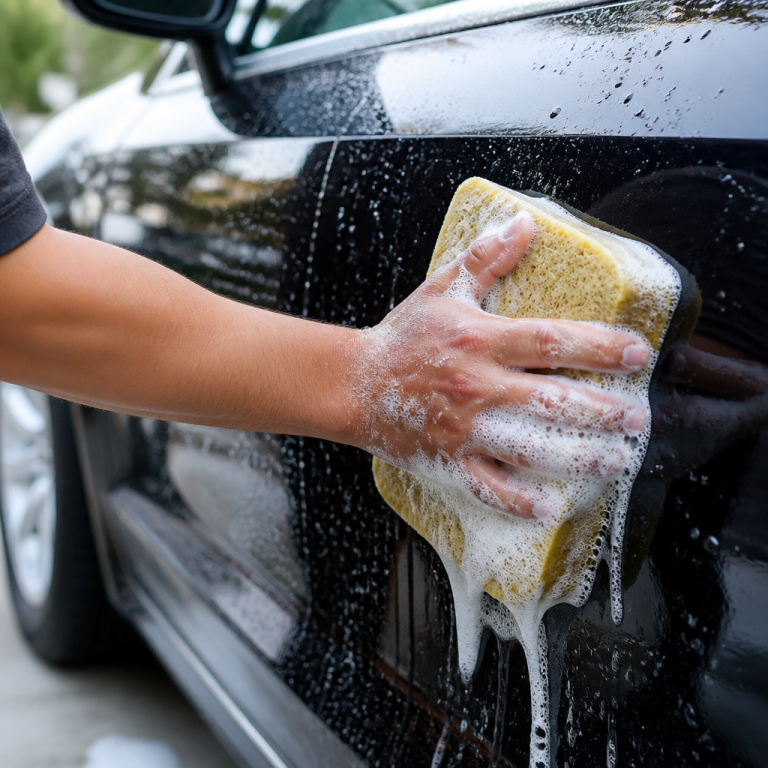
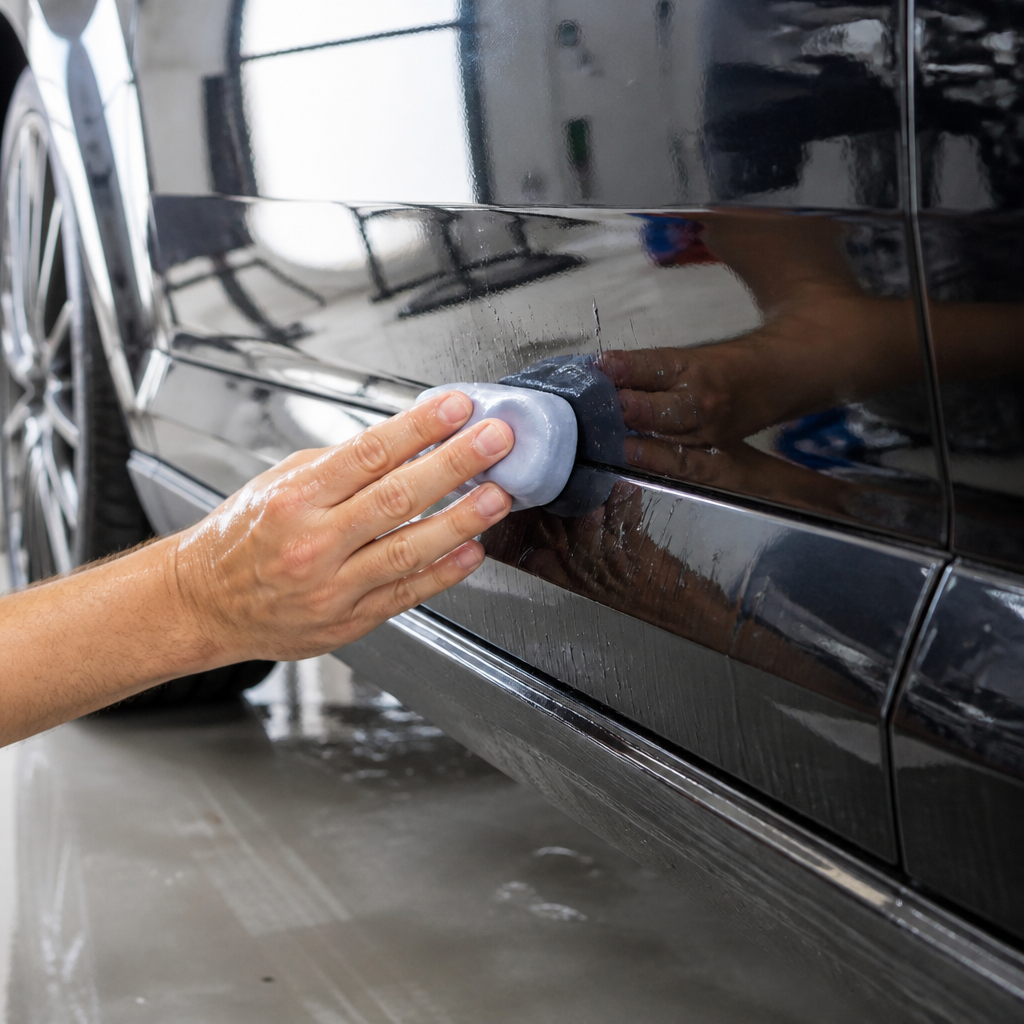
To address this contamination on your car's paint, wash the affected areas with a pH-neutral car shampoo. Follow up with a medium-grade clay bar and lubricant to gently lift embedded particles. If you still feel specks, you may need a fine-grade polish with a dual-action polisher. Finally, seal the paint with a synthetic polymer sealant or carnauba wax. Paint-safe iron removers typically have a lower concentration of active ingredients (2-5%) than wheel formulas (8-12%). Sarah Mitchell, a Certified Detailing Specialist, emphasizes that this contamination on paint needs prompt attention, as the iron particles can rust and cause permanent stains within a week.
Best Products and Prevention for Brake Dust
Choosing the right products and taking preventative steps can make managing this common car care task much simpler.
Best Products to Clean Brake Dust
Several products are highly effective for cleaning brake dust. Iron removers, pH-neutral wheel shampoos, and brake cleaner solvents are all excellent choices depending on the surface you are cleaning. Consumer Reports tested these in 2024 and found that iron-removing cleaners were incredibly effective, removing 87-94% of brake dust in a single application!
| Product Type | Active Ingredient/pH Level | Best For | Average Price (16 oz) |
|---|---|---|---|
| Iron Remover | 3-10% Thioglycolic Acid | Wheels with stubborn, embedded iron particles. | $15 – $25 |
| pH-Neutral Shampoo | pH 7-9 | All wheel finishes, for regular maintenance. | $12 – $20 |
| Brake Cleaner Solvent | Acetone, Toluene, etc. | Direct cleaning of brake rotors and calipers. | $4 – $10 (14 oz can) |
A good tool kit is invaluable. This should include a long-handle barrel brush for inner wheels, a short-handle detail brush for tight spots like lug nuts, and a microfiber wash mitt for wheel faces. David Thompson, a Chemical Engineer, suggests combining a pH-neutral pre-wash, an iron remover, and a protective sealant can cut subsequent cleaning times by about 60%.
How to Prevent Brake Dust Buildup
Preventing brake dust buildup can save you significant time and effort. Here are two excellent strategies:
- Apply Wheel Sealants or Ceramic Coatings: These products create a clear, hydrophobic barrier that makes it much harder for brake dust to stick to the wheel. Reapplying a sealant every 3-6 months can reduce cleaning frequency by 70-80%. Spray-on sealants contain SiO2 (silicon dioxide) and provide 3-4 months of protection. _Simply spray them onto clean, dry wheels in thin, even coats and allow them to 'cure' (harden) for 12-24 hours before they get wet._ Ceramic coatings offer 1-2 years of protection but often require professional application.
- Upgrade to Low-Dust Brake Pads: Ceramic or special semi-metallic brake pads can generate 40-60% less dust than standard organic pads. Ceramic pads produce a lighter-colored dust that is less visible and corrosive. The Brake Manufacturers Council reports that ceramic pads reduce dust generation from 10 grams to just 4-6 grams per 1,000 miles while maintaining excellent stopping power.
Robert Chen, an Automotive Engineer, suggests that combining ceramic brake pads with a quality wheel sealant is a very smart, cost-effective prevention strategy. However, Dr. Lisa Anderson, a Mechanical Engineering Professor, notes that while ceramic pads reduce visible dust, their harder compound might cause slightly more rotor wear (about 10-15% more). It's a balance to consider based on your driving habits.
Dealing effectively with brake dust involves understanding what it is, using the appropriate cleaning methods for all the different surfaces on your car, and planning ahead with preventative measures. By following these guidelines, you can definitely help maintain your vehicle's appearance and protect its surfaces from the corrosive effects of brake dust.

Jake Morrison writes about DIY car care at CarCareNote. He’s been detailing cars in his Ohio driveway for over a decade and shares what actually works at home.