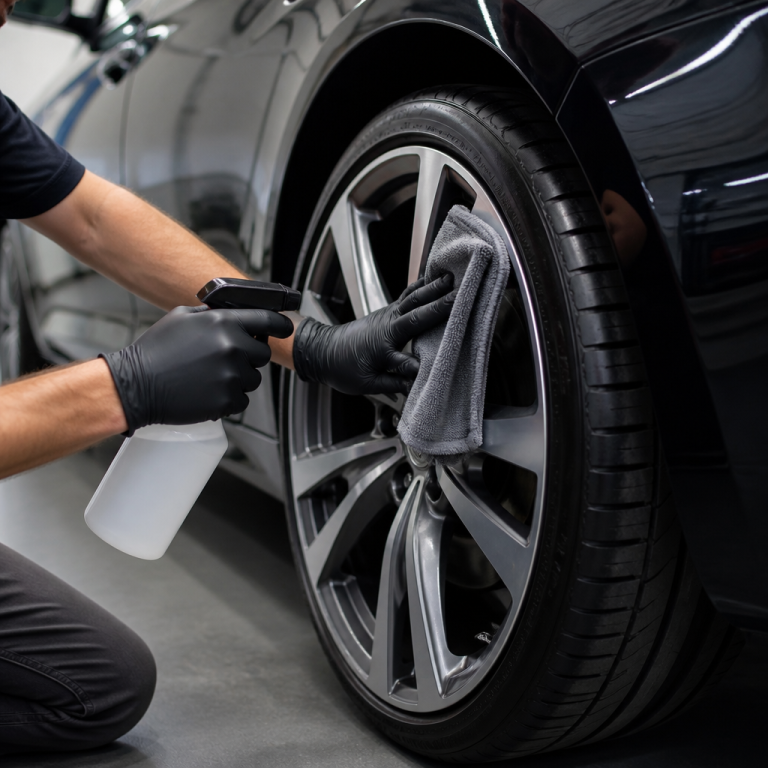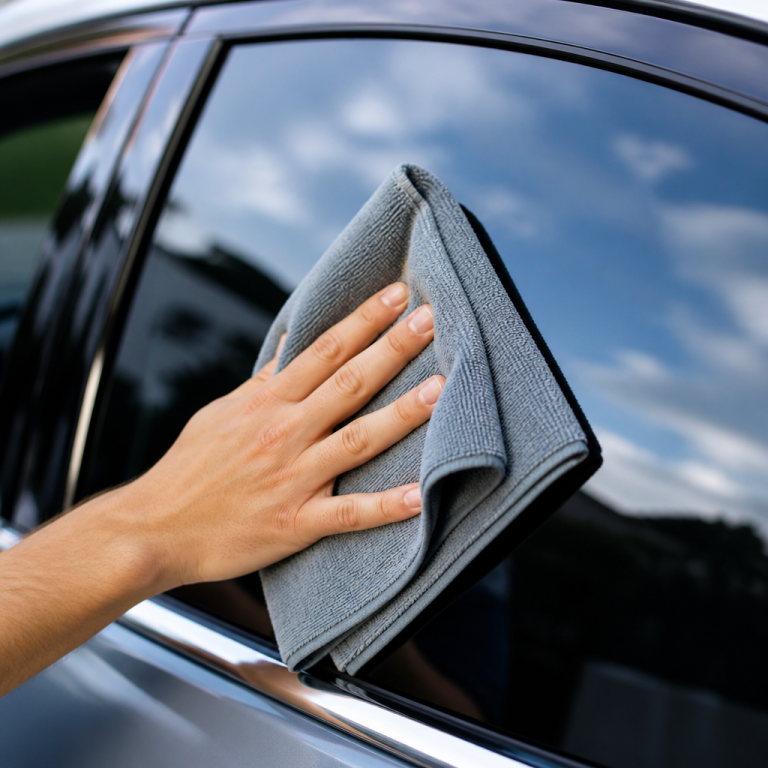
how to dry a car after washing: 7 Pro Tips, Spotless Shine
I still vividly remember the first time I thought I'd given my dad's trusty old Honda Accord a perfect wash. It was a scorching August afternoon, and I’d spent hours scrubbing and rinsing. Feeling proud, I stepped back, expecting a gleaming finish. Instead, the car was covered in a mosaic of white, crusty water spots. That frustrating experience taught me a crucial lesson: washing is only half the battle. Discovering that drying your car after a wash isn't just about getting rid of water; it's the critical final step in keeping its paint looking new and preventing those ugly mineral deposits. Without proper drying, all that hard work you put into washing can literally evaporate, leaving behind frustrating spots and even damage.
Those pesky water spots are a common issue. They happen when water, especially tap water containing minerals like calcium and magnesium, dries up on your car's surface (2). When the water disappears, those minerals are left behind, creating visible, chalky rings. Over time, these mineral deposits can "etch" into your car's clear coat—that thin, transparent, protective layer on top of the paint—causing permanent damage that’s hard to fix. But it's not just about spots. If you dry your car incorrectly, like by rubbing dirt particles across the surface, you can cause tiny scratches called "swirl marks" (3). These fine, spiderweb-like scratches build up, making your car's paint look dull and flat. Preventing these issues is much easier and cheaper than fixing them later.
Larry Kosilla, founder of AMMO NYC and a professional detailer with over 15 years of experience, states, "The drying process is just as important as the washing process. Using the wrong materials or techniques can undo all the work you've done to clean your car and potentially damage the paint" (4).
This perfectly highlights why you need to pay close attention to drying. To stop water spots from forming, you should start drying right after you finish rinsing, especially when it’s warm out because water evaporates much faster. I usually aim to start drying within 5-10 minutes of the final rinse (5).
Another important idea, similar to how you wash your car, is avoiding "cross-contamination." This means not spreading dirt from one part of the car to another. Just like you might use two buckets for washing (one for soapy water, one for rinsing your mitt), it’s smart to use separate drying towels for different parts of the car. For example, use one towel for the cleaner top sections and another for the lower parts that might still have some dirt or grit (6). This simple step helps prevent you from dragging abrasive particles across your clean paint. By understanding why drying is so important, you'll be better equipped to get a spotless, scratch-free finish every time.
What are the Best Tools to Dry a Car After Washing?
Choosing the right tools for drying your car is a game-changer for getting that perfect, streak-free finish without scratching anything. Car drying tools are specialized gadgets designed to safely get water off your vehicle, specifically to prevent scratches, swirl marks, or water spots (7). There are tons of options out there, and each one has its pros. Knowing a bit about them will help you pick the best way to dry your car, whether it’s your daily driver or a cherished weekend cruiser.
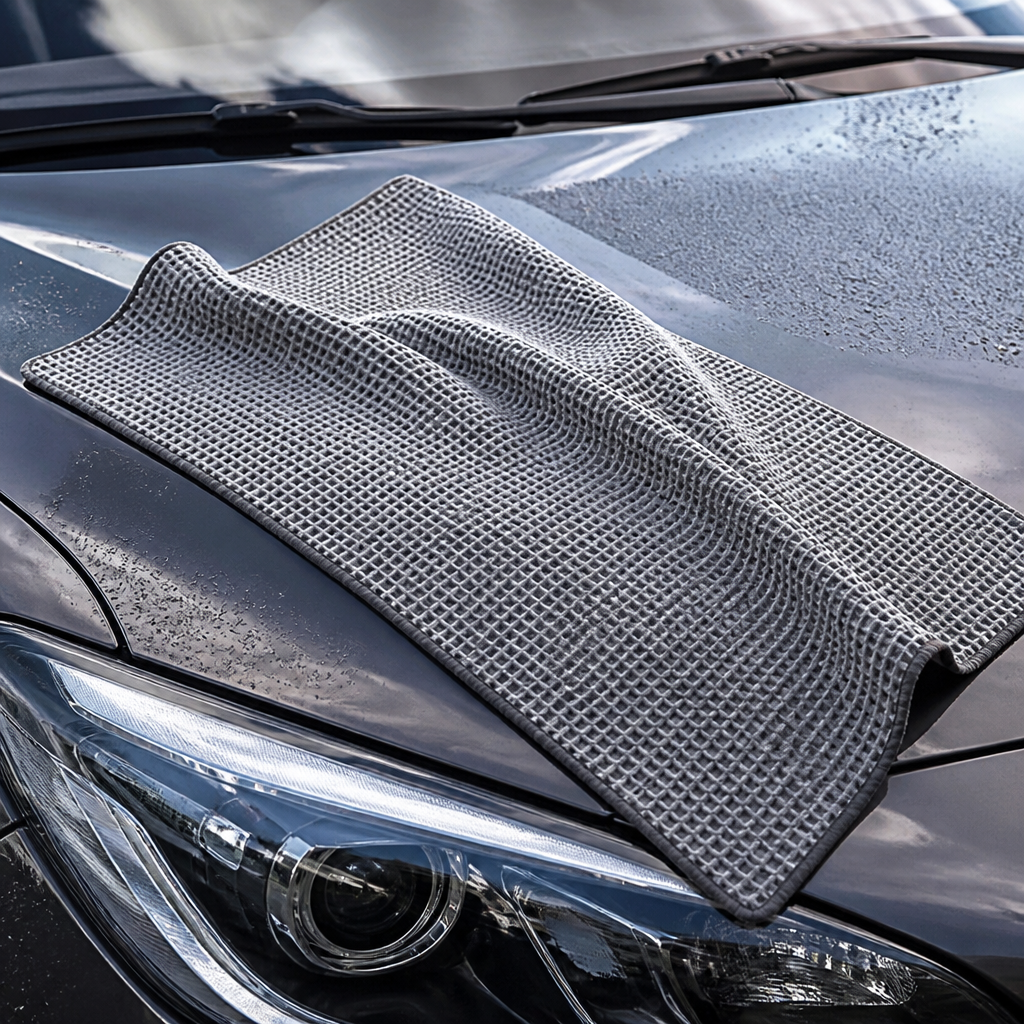
In my experience, if you ask any pro, they'll likely rave about microfiber drying towels. These aren't your average bath towels! They often come in special "waffle weave" or "twisted loop" patterns and are famous for being incredibly absorbent, able to soak up 7-10 times their own weight in water (8, 9). The unique material of microfiber, usually a blend of 80% polyester and 20% polyamide, has tiny fibers that work like miniature straws, using "capillary action" to draw water away from the surface without you having to rub hard. High-quality microfiber towels are often rated by their GSM (grams per square meter), which tells you how dense and plush they are. Higher GSM ratings, usually from 350 to a super fluffy 1200, mean more absorbency and a softer touch, which helps prevent friction on your paint (14).
Another fantastic option is using forced air dryers, like electric blowers. This method is what we call "touchless drying," meaning nothing physically touches your car's paint, which completely eliminates any chance of scratching (10). Forced air is brilliant for blasting water out of all those tricky spots like around mirrors, door handles, grilles, emblems, and other tiny nooks and crannies that towels just can’t reach. Mike Phillips, who’s been training detailers for over 30 years at Autogeek, suggests a smart combo: "The best drying tool is one that minimizes contact with the paint. I recommend a combination approach: use a blower to remove 80-90% of water, then finish with a quality microfiber towel for remaining moisture" (13). This hybrid method gives you the best of both worlds for a flawless result.
While you might have seen old-school detailers use them, traditional "chamois leather" isn't generally recommended anymore by today's experts. Chamois can easily trap tiny abrasive particles, and they need to be rinsed constantly to work well, which just increases the chance of scratching your paint (11). Silicone squeegees, made specifically for cars, can quickly push off most of the water. However, _you need a very careful technique to use them without scratching_, because any little piece of grit caught between the squeegee and your paint could cause damage (12). For an extra layer of protection and to make drying smoother, you can apply special "drying aids" like spray detailers or quick detailers. These products act like a lubricant, helping your towels glide easily while also giving your paint a little boost of shine or protection (15). Ultimately, choosing a smart set of drying tools will make your car drying routine much safer and more effective.
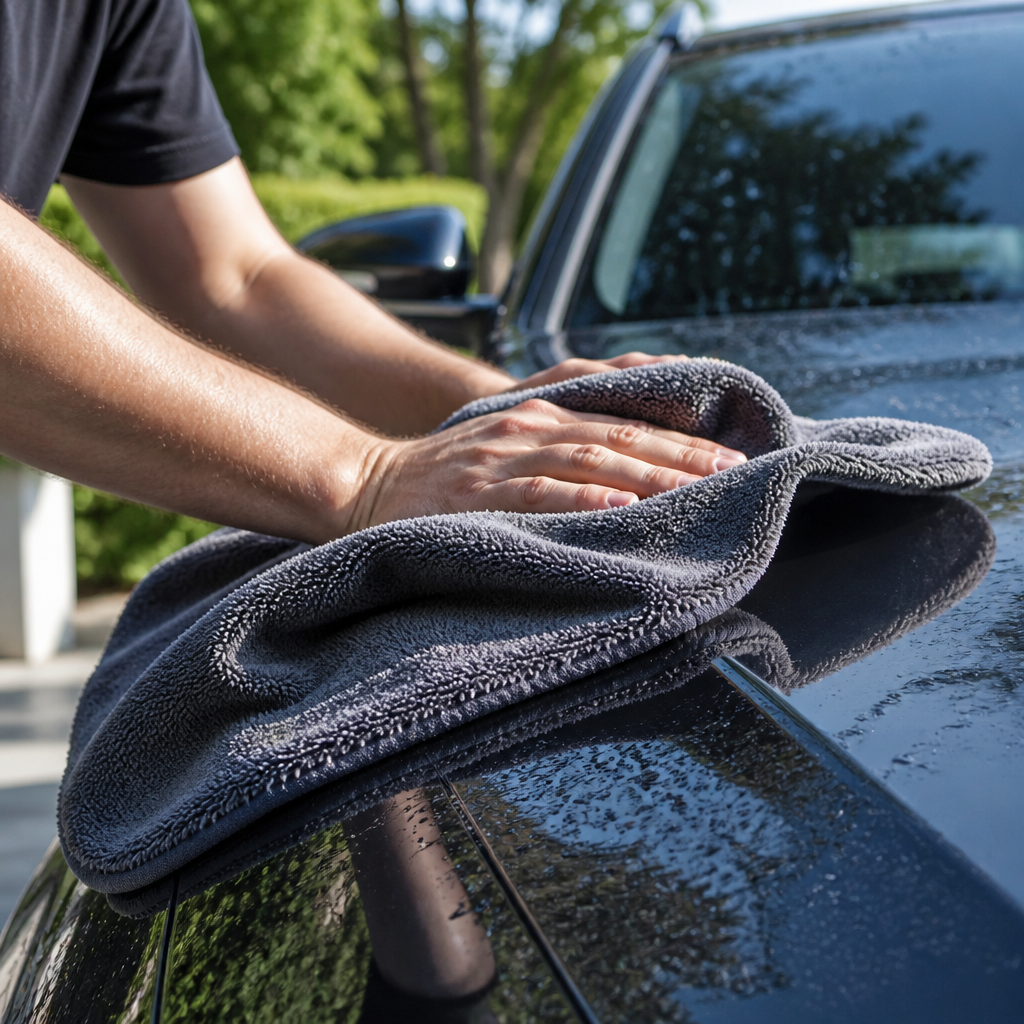
Best Tools to Dry a Car After Washing
Picking the absolute best tools for drying your car is a crucial step in keeping it looking perfect and avoiding common paint problems. How well your drying process works really depends on the quality and type of tools you decide to use.
| Drying Tool | Pros | Cons |
|---|---|---|
| Microfiber Towel | Highly absorbent, very safe on paint, soft, and reusable. | Can trap dirt if dropped; requires proper washing. |
| Forced Air Dryer | 100% touchless (no scratches), fast, and excellent for crevices. | Can be expensive; requires a power source. |
| Chamois Leather | Traditional tool. | Not recommended; can trap grit and scratch paint. |
| Silicone Squeegee | Removes bulk water very quickly. | High risk of scratching if any dirt is trapped under the blade. |
Microfiber drying towels are a top recommendation. These are made from super-soft synthetic fibers, typically a blend of 80% polyester and 20% polyamide. This special material allows them to absorb water using "capillary action" without scratching your car's paint (16). Their absorbency is often measured by their GSM (grams per square meter) rating. Higher GSM towels (like 350-1200 GSM) are thicker, softer, and can hold a lot more water (14). "Waffle weave" and "twisted loop" designs are especially popular because their textured patterns increase their surface area, allowing them to soak up a huge amount of water—up to 7-10 times their own weight (8, 9).
For a completely touchless drying experience, forced air dryers, like electric blowers, are an excellent choice. These devices shoot out air at really high speeds, typically between 150-250 MPH, blowing water right off your car's surface (24). The biggest benefit is that nothing physically touches the paint, so there's absolutely no chance of creating scratches or swirl marks (10). They're incredibly good at getting water out of intricate spots like grilles, emblems, and door jambs, places where towels just can't reach (26).
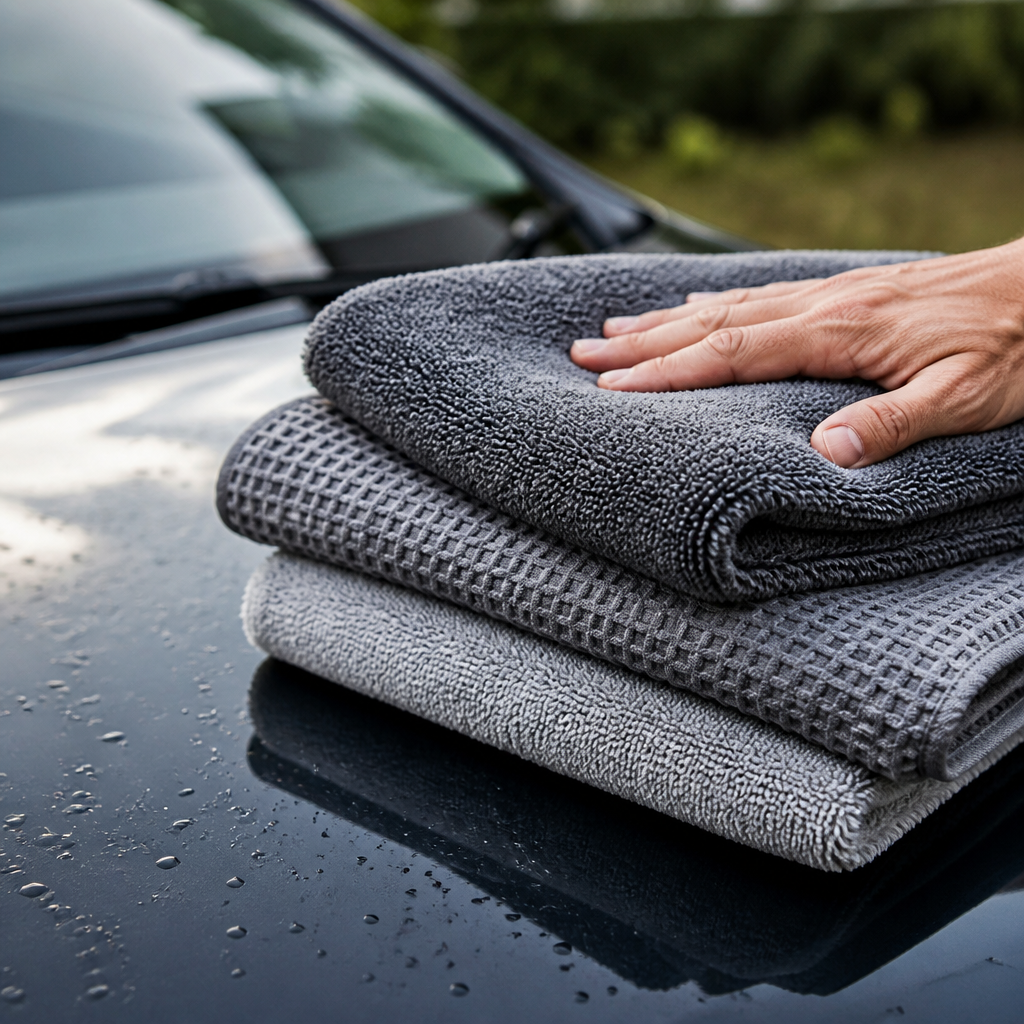
How to Dry a Car After Washing with a Microfiber Towel
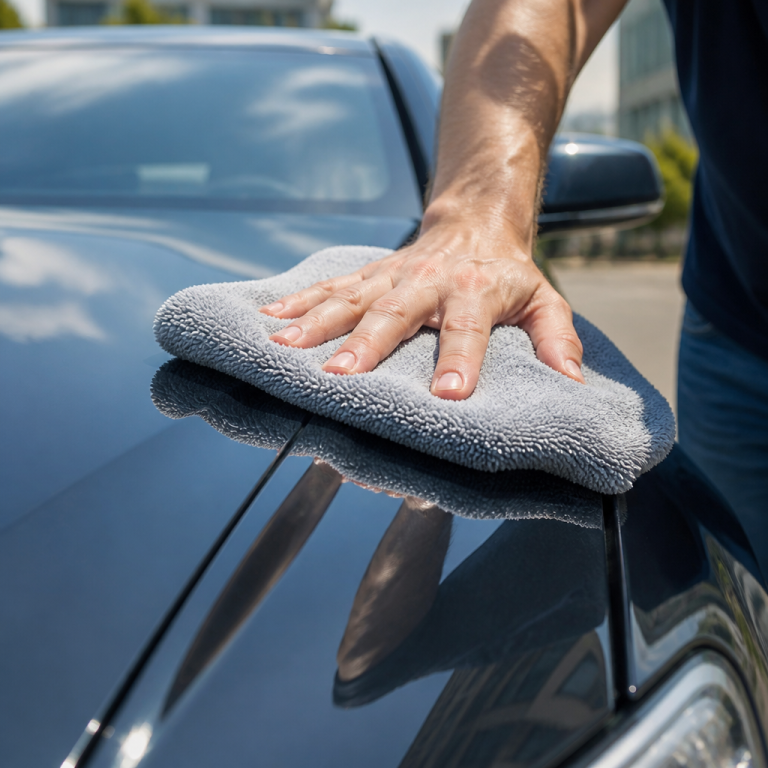
Drying a car with a microfiber towel is a popular technique because it's so effective at soaking up water without damaging the paint. This method relies on ultra-soft synthetic towels that absorb water through "capillary action" (16). Unlike regular cotton towels, the tiny fibers in microfiber are very gentle on your car's "clear coat" and are much less likely to cause scratches or swirl marks if you use them correctly.
The secret to successful microfiber towel drying is the technique. Instead of rubbing the towel in circles, which creates swirl marks, the correct way is to lay the towel flat on the surface and gently drag it across the panel (17). This "pat and drag" method allows the towel to soak up water efficiently without unnecessary rubbing or friction. "Waffle weave" microfiber towels are especially great for drying because their textured pattern gives them a larger surface area, meaning they can hold more water than flat towels (18).
To get the most out of each towel, fold it into quarters. This gives you eight separate, clean surfaces to use (19). Always start from the very top of your car—the roof, windows, hood, and trunk—then move down to the doors and lower panels (20). This "top-to-bottom" approach is important because gravity pulls water downwards, and the lower parts of your car are usually dirtier.
Even the most absorbent towels will get soaked. Wring them out when they feel heavy with water, usually after you’ve dried 2-3 panels (21). For a full and safe drying process on a typical sedan, you might need 2-3 large microfiber towels to make sure you have enough clean, dry surfaces (22). A crucial rule is to never let microfiber towels touch the ground. _If a towel drops, put it aside immediately and grab a fresh, clean one_ to avoid picking up abrasive particles that could easily scratch your paint (23).
How to Dry a Car After Washing Using a Leaf Blower
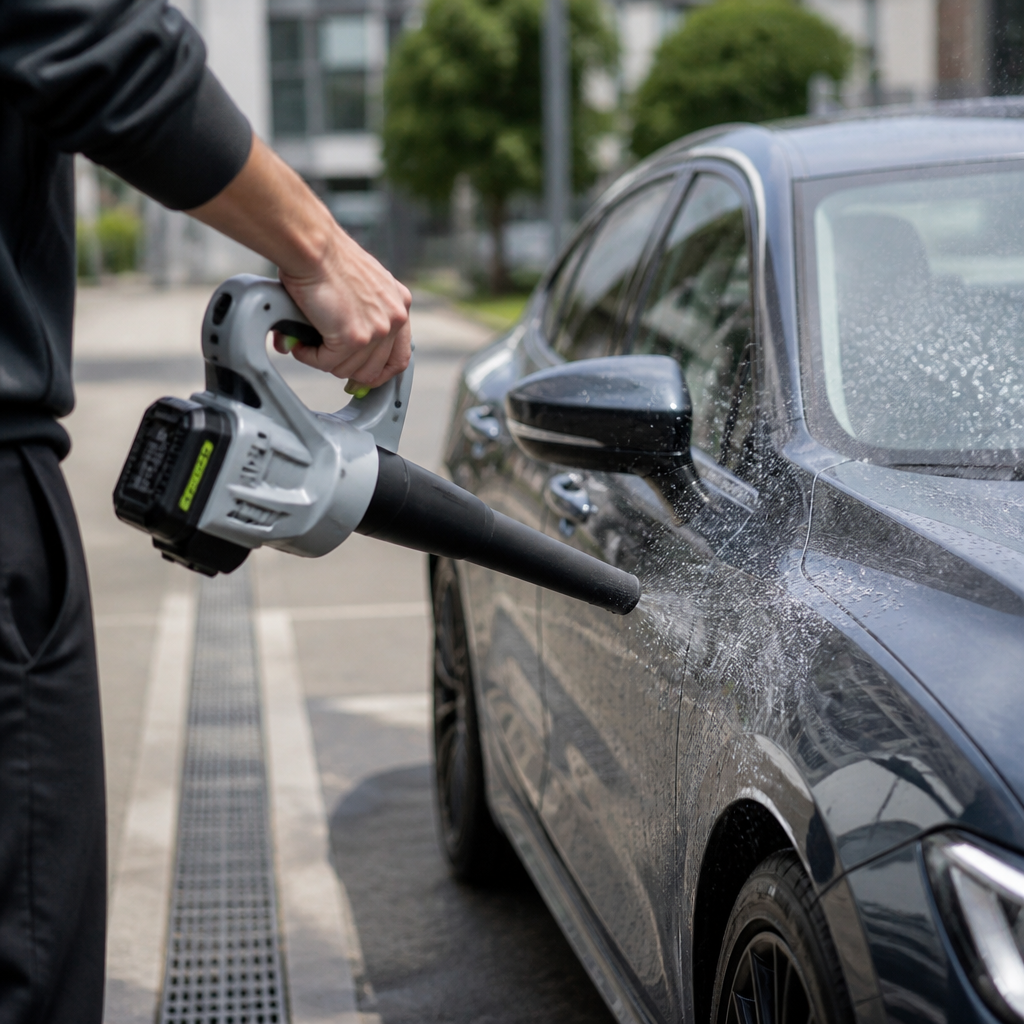
Using a leaf blower to dry a car after washing has caught on among car enthusiasts because it’s "touchless" and super-efficient. This method involves using powerful blasts of air, typically moving at speeds from 150-250 MPH, to blow water off your car's surface (24). This completely avoids any physical contact that could cause scratches or swirl marks.
When picking a leaf blower for car drying, an electric model is better than a gas-powered one. Electric leaf blowers produce clean air, free from the exhaust fumes that gas models can pump out (25). This method is incredibly effective for getting water out of tricky spots like mirrors, door jambs, grilles, and emblems (26).
The best way to use a leaf blower is to hold the nozzle about 6-12 inches from the surface at a 45-degree angle. It's important to move systematically from the top of the vehicle downwards, pushing the water off the panels rather than just scattering it (27). Leaf blowers can seriously cut down the overall drying time compared to just using towels (28). By minimizing physical contact with the paint, this method greatly reduces the risk of introducing swirl marks. Jason Rose, founder of Forensic Detailing, confirms this: "Using a leaf blower or dedicated car dryer is the safest method for drying because there's zero contact with the paint" (29). While a leaf blower can get rid of 80-90% of the water, it's a good idea to follow up with a quick pass using a high-quality microfiber towel to absorb any tiny water beads that remain (31).
How to Dry a Car After Washing Step by Step
Drying a car well after washing is a multi-step process that, when done correctly, can stop water spots, swirl marks, and help keep your car's paint looking great. The main goal is to get all the water off quickly and gently, making sure no streaks or residue are left behind.
How to Dry a Car After Washing by Hand
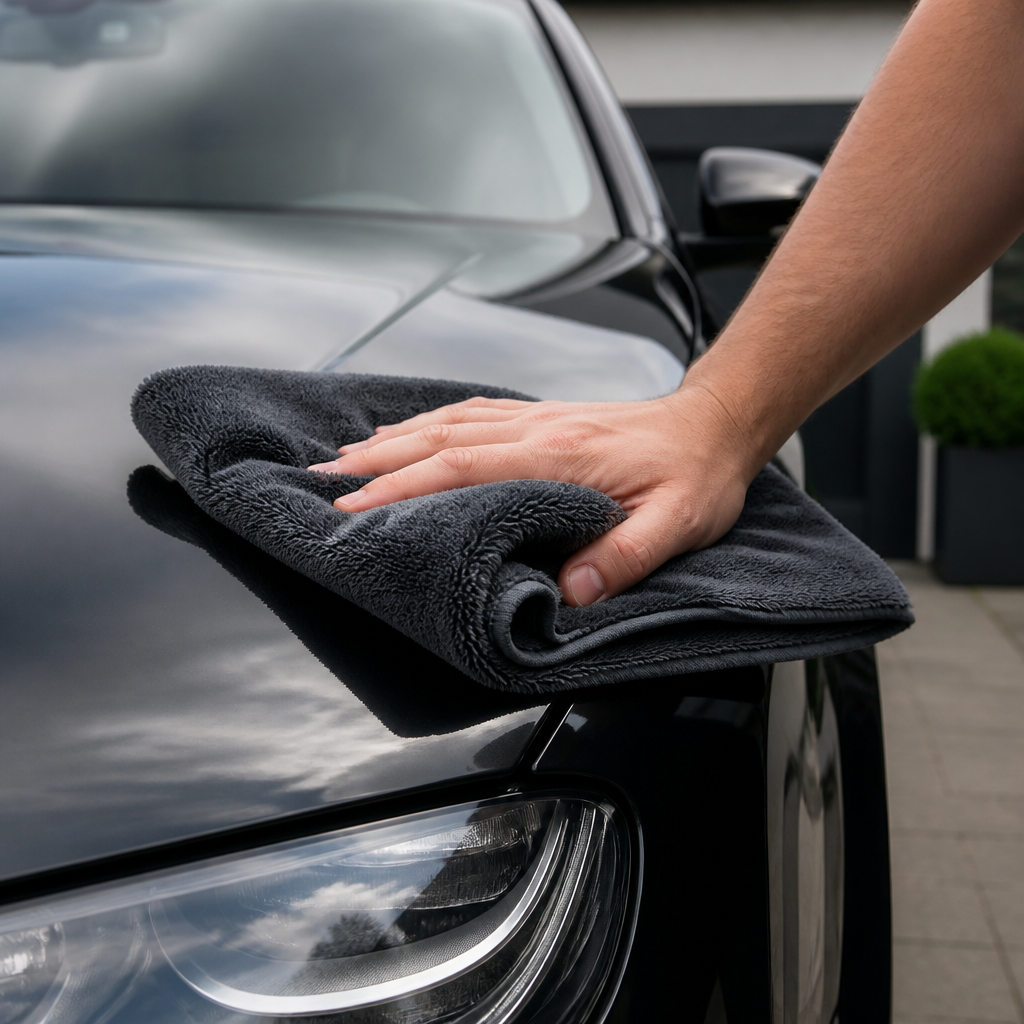
"Hand drying a car" means manually removing water using absorbent materials and specific physical techniques, which is different from using machines or forced air (32). This method allows you to be meticulous and is often preferred for a truly spotless finish.
Here is a step-by-step guide for the ideal hand-drying technique:
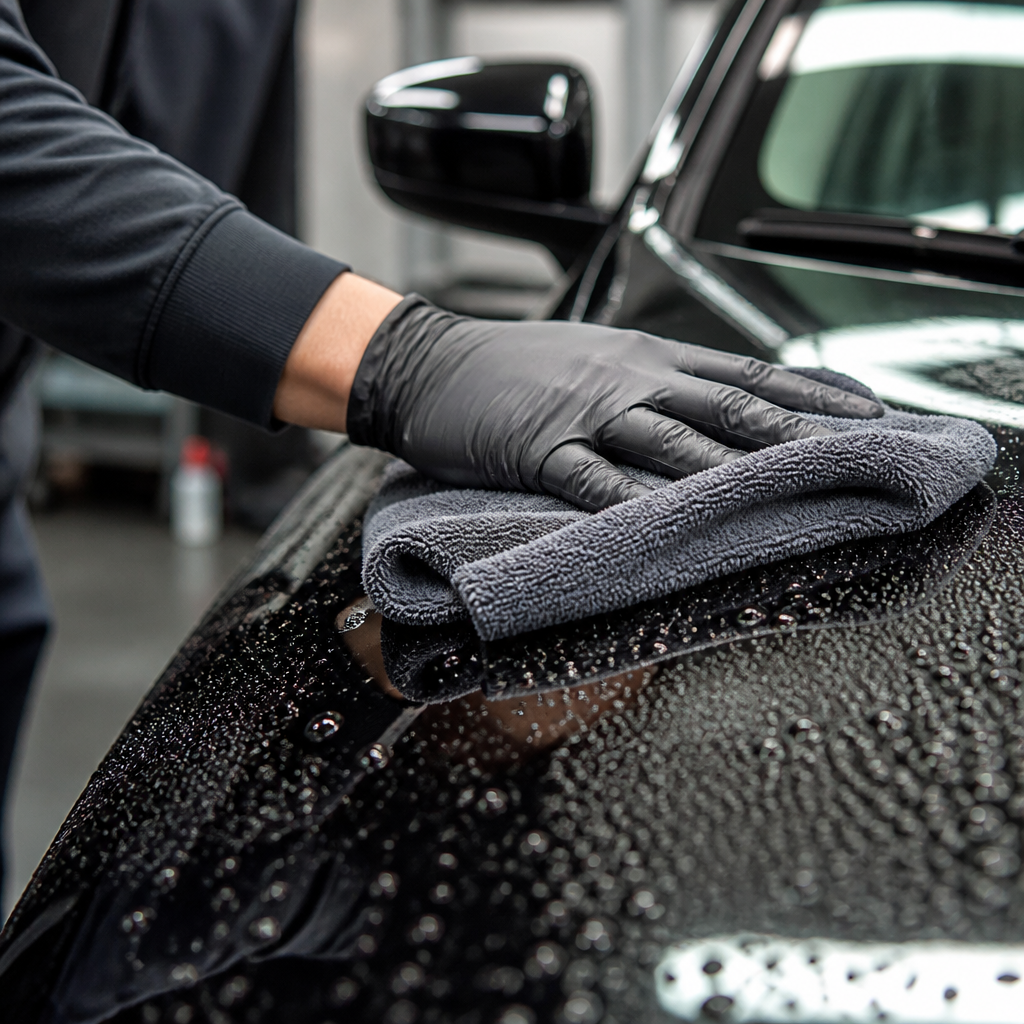
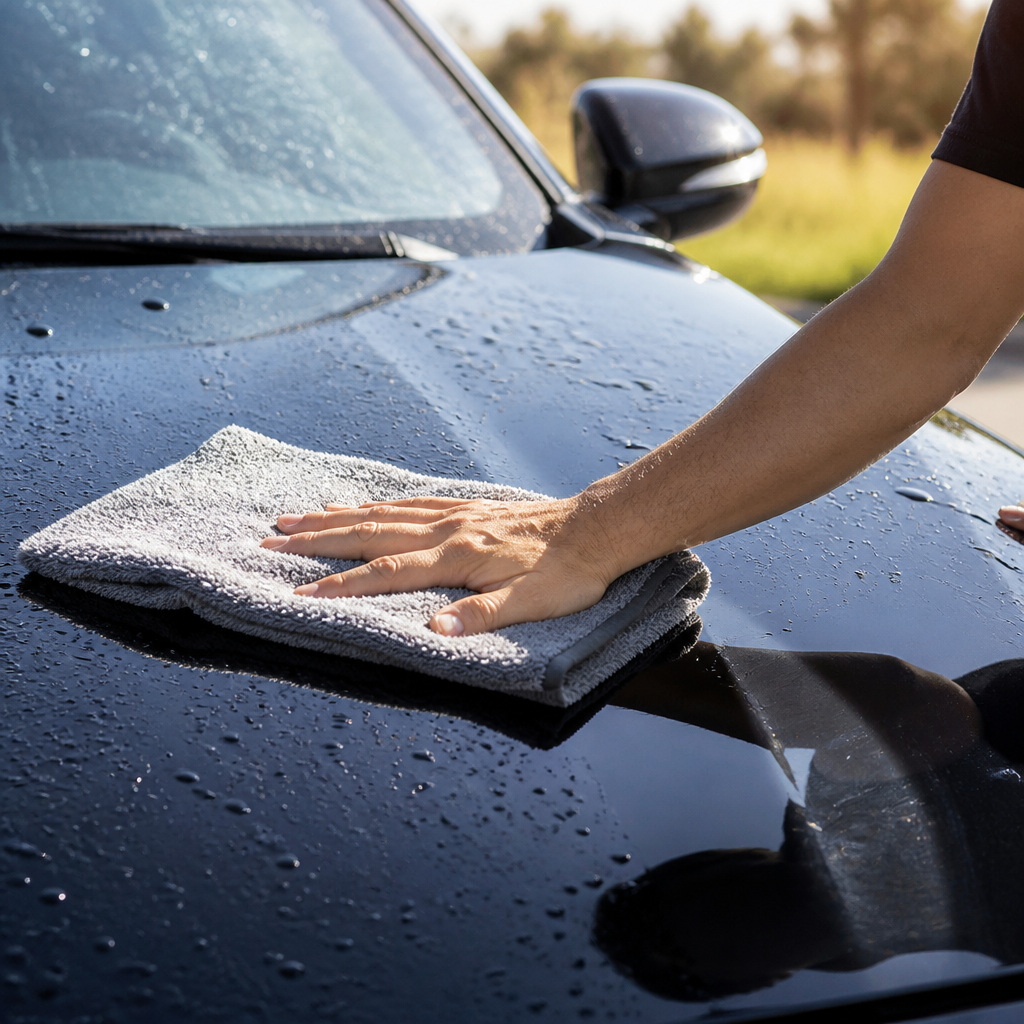
- Use the "Pat and Drag" Method: Start by gently laying a clean, high-quality microfiber towel flat onto a wet panel. Lightly pat it to soak up water, then, without pressing hard, slowly drag the towel in straight lines, following the car's natural curves (33). This prevents swirl marks and lets the towel's absorbency do the work (37).
- Work from Top to Bottom: Always start with the roof, then move to the windows, the hood, the trunk, and finally the side panels and lower parts. This order ensures that dripping water doesn't re-wet sections you’ve already dried.
- Dry Glass Surfaces Separately: Use special glass towels for windows and mirrors to prevent streaking and avoid transferring any wax or sealant from the paint onto the glass (34).
- Dry Hidden Spots: Don't forget often-missed areas like door jambs, trunk seals, and around the fuel door. Use a separate, smaller towel for these areas to prevent spreading dirt back onto the main exterior panels (35).
A thorough hand-drying process on a typical mid-size sedan usually takes about 10-15 minutes (36). By following these steps, you can achieve a comprehensive and safe hand dry, leaving your car with a brilliant, streak-free shine.
How to Dry a Car After Washing Without Water Spots
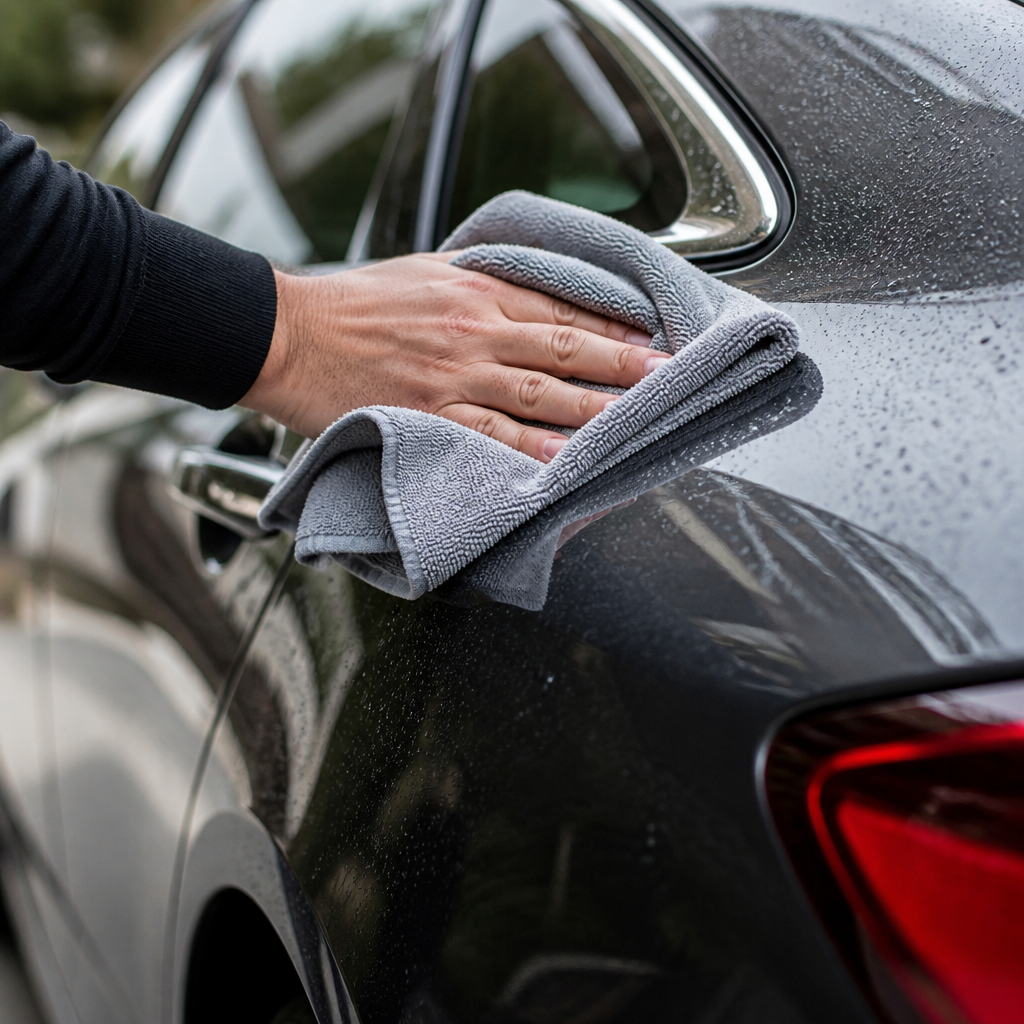
Stopping water spots is a huge part of car drying because these mineral deposits can quickly ruin a perfect finish and can "etch" into your car's clear coat (38). Preventing them means using a mix of techniques and products designed to stop these deposits from forming.
One of the most effective ways to prevent water spots is to use deionized (DI) or distilled water for the final rinse (39). Regular tap water has lots of dissolved minerals like calcium and magnesium, but a deionization system can bring that down to almost zero (46). By rinsing with this purified water, you get rid of the minerals that cause water spots.
The environment where you dry your car also plays a huge role. I always recommend drying in the shade or inside a garage (40). Direct sunlight makes water evaporate extremely fast, which concentrates minerals on the surface, causing water spots to form rapidly—sometimes in under 2 minutes! If you have to dry in direct sunlight, working extra fast and in small sections is critical.
A smart strategy is to wash and rinse just one panel at a time to stop water from sitting on the surface for too long (42). As you dry, consider applying a spray detailer or quick detailer as a "drying aid" (41). These products add lubrication, helping your drying towel glide more smoothly and trapping minerals to reduce water spots. Finally, applying protective measures like ceramic coatings or synthetic sealants creates "hydrophobic" (water-repelling) surfaces that make water bead up and roll off more easily, leaving less water behind (45).
Mistakes and Tips for Drying a Car After Washing
The drying phase of car care is often underestimated, but it holds significant potential for both making your car look amazing and damaging its finish. Avoiding common mistakes and using professional tips can make a major difference in how long your car's paint looks good.
What are Common Mistakes When Drying a Car After Washing?
Stop making these common drying errors that can lead to swirl marks, scratches, and annoying water spots. Recognizing these mistakes is the first step toward getting that perfect finish.
Perhaps the most common mistake is using the wrong drying materials. Regular bath towels, old t-shirts, or household rags are made of coarse cotton fibers that are not soft enough for car paint (47). These materials can easily scratch your clear coat. Instead, use dedicated automotive microfiber drying towels.
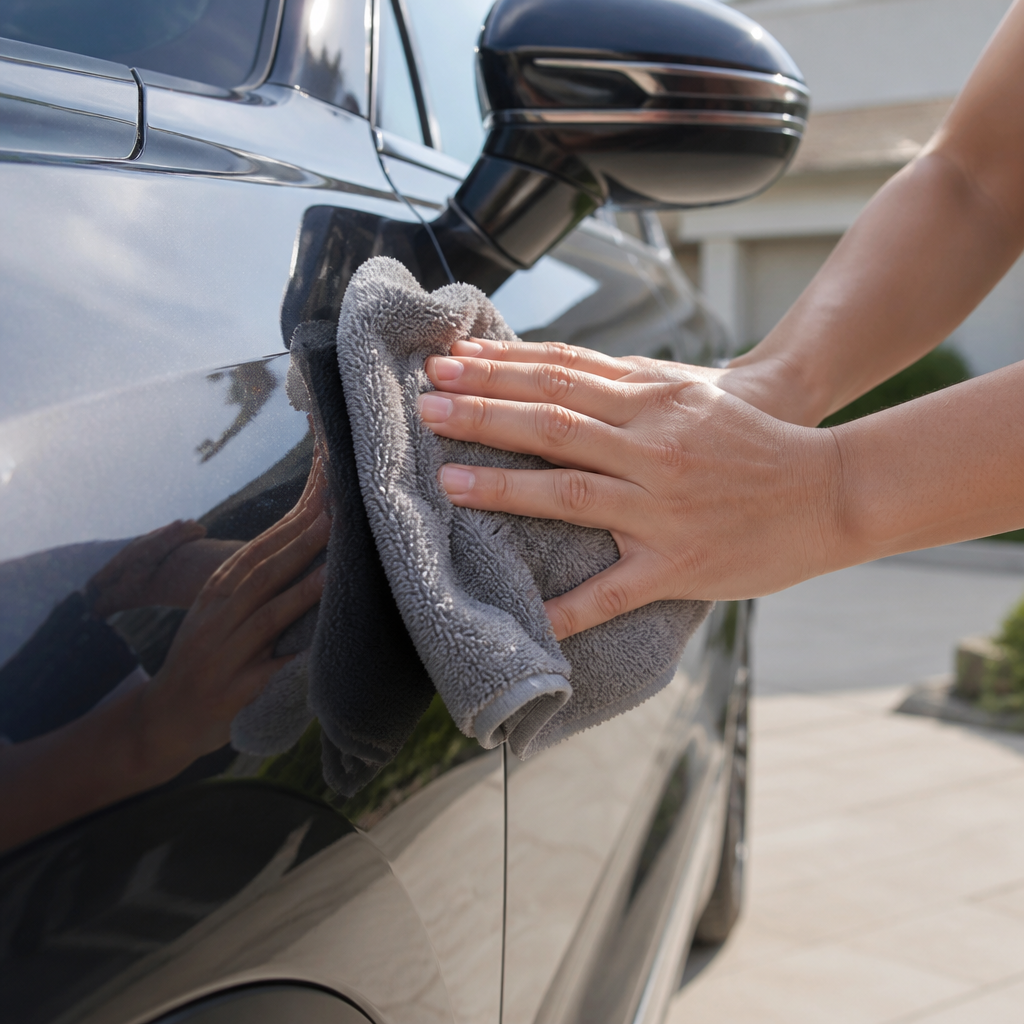
Another big error is rubbing in circles while drying (48). This technique is a primary culprit for creating swirl marks. Instead, a straight-line "pat and drag" motion is what I always recommend to minimize friction.
Allowing the car to simply "air dry" is a frequent oversight, especially in areas with hard water. When water evaporates naturally, it leaves behind mineral deposits that form unsightly water spots (49). Drying in direct sunlight only makes this problem worse (50).
Using a single towel for the entire car is another mistake that can lead to "cross-contamination" (51). The lower panels and wheels are usually dirtier. If you use the same towel for these areas and then for the cleaner upper panels, you risk dragging abrasive particles across the paint.
Applying too much pressure while drying can also be very damaging (52). It can grind any microscopic dirt particles still on the surface into the clear coat. Let the towel's absorbency do the work.
Neglecting to dry door jambs, trunk seals, and the gaps between panels is a common oversight (53). Water trapped in these areas will drip out later, creating streaks.
Yvan Lacroix, founder of IGL Coatings, warns against rushing: "The biggest mistake I see is people rushing the drying process. They'll spend 30 minutes washing carefully, then grab any towel and quickly wipe down the car, undoing all their careful work. Drying deserves the same attention as washing" (54).
Finally, improper care of your drying towels themselves can cause problems. _Microfiber towels should always be washed separately with a special microfiber detergent and then air-dried or tumble-dried on low heat without fabric softener._ Reusing dirty towels is a major cause of scratching; always inspect and wash your towels after each use (56).
—
Properly drying your car after washing isn't just about making it look nice; it's a fundamental practice in keeping your vehicle's paint in top condition. By understanding the science behind water spots, choosing the right tools, and using careful techniques, you can avoid common mistakes that lead to swirl marks and permanent etching. Whether you prefer the gentle absorbency of high-quality microfiber towels, the touchless efficiency of a leaf blower, or a smart combination of both, a methodical approach will give you a spotless, streak-free finish every time. Investing a little extra time and care in the drying process ensures that your car not only looks its absolute best but is also protected.
FAQ
Q1: Why is drying my car immediately after washing so important?
A1: Drying your car immediately after washing is crucial to prevent water spots. When water evaporates, especially in warm weather or direct sunlight, minerals (like calcium and magnesium) found in tap water are left behind, forming visible spots that can "etch" into your car's clear coat over time (2, 5). Prompt drying minimizes the chance for these minerals to settle and cause damage.
Q2: What are the best tools to use for drying a car safely?
A2: The most recommended tools for safe car drying are high-quality microfiber drying towels (especially "waffle weave" or "twisted loop" designs) and "forced air dryers," like electric leaf blowers (8, 10). Microfiber towels absorb water gently without scratching, while forced air dryers offer a completely touchless method (16, 24). A combination of both often yields the best results (13).
Q3: How can I prevent swirl marks when drying my car by hand?
A3: To prevent swirl marks when hand drying, avoid rubbing in circular motions. Instead, use the "pat and drag" technique: lay a clean microfiber towel flat on the surface, pat gently to soak up water, then slowly drag it in straight lines (17, 33). Always use very light pressure and ensure your towels are completely clean (37, 56).
Q4: Can I use a leaf blower to dry my car, and what's the best way to do it?
A4: Yes, a leaf blower can be a very effective and safe way to dry your car since it’s a touchless method (24, 29). It's best to use an electric leaf blower to avoid exhaust residue (25). For the best results, hold the nozzle 6-12 inches from the surface at a 45-degree angle and move systematically from the top of the car downwards, pushing water off the panels (27).
Q5: What are some common mistakes to avoid when drying my car?
A5: Common mistakes include using regular household towels, rubbing in circular motions, and allowing the car to air dry, which leads to water spots (47, 48, 49). Other errors include drying in direct sunlight, using just one towel for the entire car (which can spread dirt), applying too much pressure, and forgetting to dry door jambs and panel gaps (50, 51, 52, 53). Also, never wash microfiber towels with fabric softener, as it ruins their absorbency (55).

Jake Morrison writes about DIY car care at CarCareNote. He’s been detailing cars in his Ohio driveway for over a decade and shares what actually works at home.