How to clean car windows without streaks: 10 Easy Tips
I vividly remember pulling out of my driveway one particularly sunny Saturday morning, excited for a weekend drive, only to be utterly frustrated by the streaks covering my windshield. It wasn't just annoying; it actually made it harder to see. For years, I struggled with car windows that always seemed to have a hazy film or stubborn smudges, no matter how much I scrubbed. That frustration eventually pushed me to figure out the secrets to truly crystal-clear glass. What I learned, often through trial and error, completely changed my driving experience. This guide shares those hard-won lessons, from the right tools and products to the step-by-step methods that work, so you can finally enjoy perfect visibility and a sparkling car.
Tools and Products for Streak-Free Car Windows
Cleaning car windows effectively and without leaving streaks begins with selecting the right tools and products. The quality of your materials can make a substantial difference in the final outcome. Investing in appropriate equipment and understanding its proper use is a foundational step toward achieving that coveted streak-free shine.
What Tools are Needed to Clean Car Windows Without Streaks?
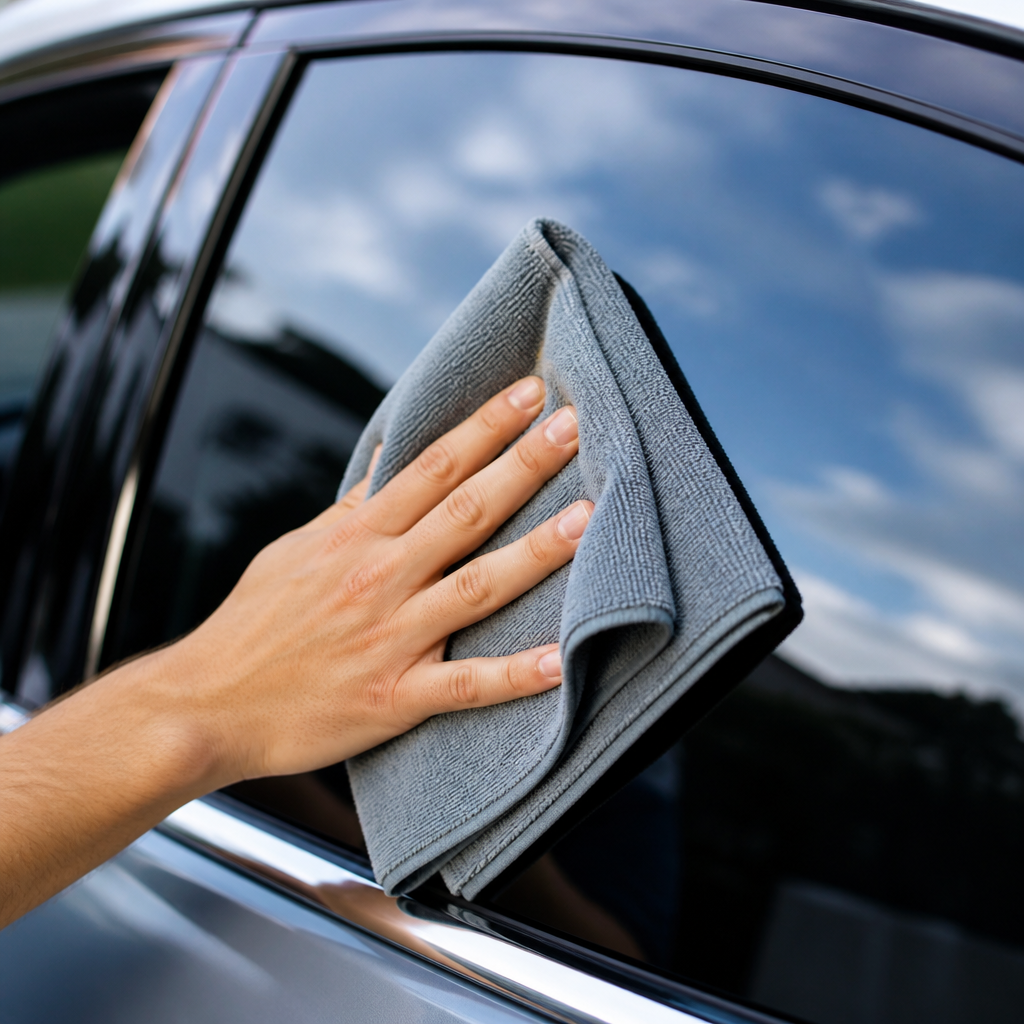
To achieve truly streak-free car windows, a specific set of tools is highly recommended. Using the right equipment prevents frustration and ensures a better result. Essential items include:
- High-quality microfiber cloths
- Spray bottles
- Waffle-weave towels for final buffing
- Optional: A squeegee with a soft rubber blade
- Optional: A clay bar or glass polish for tough contaminants
Microfiber cloths, in particular, are a game-changer compared to traditional paper towels. Their unique composition contains hundreds of thousands of tiny fibers per square inch, allowing them to effectively trap dirt and absorb moisture without leaving behind lint or causing scratches. Using separate microfiber towels for applying cleaner and for drying prevents dirt from just being moved around. Using distilled water in your spray bottles instead of tap water can also significantly reduce the likelihood of streaking because it contains no minerals that can cause spots.
What are the Best Products to Clean Car Windows Without Streaks?
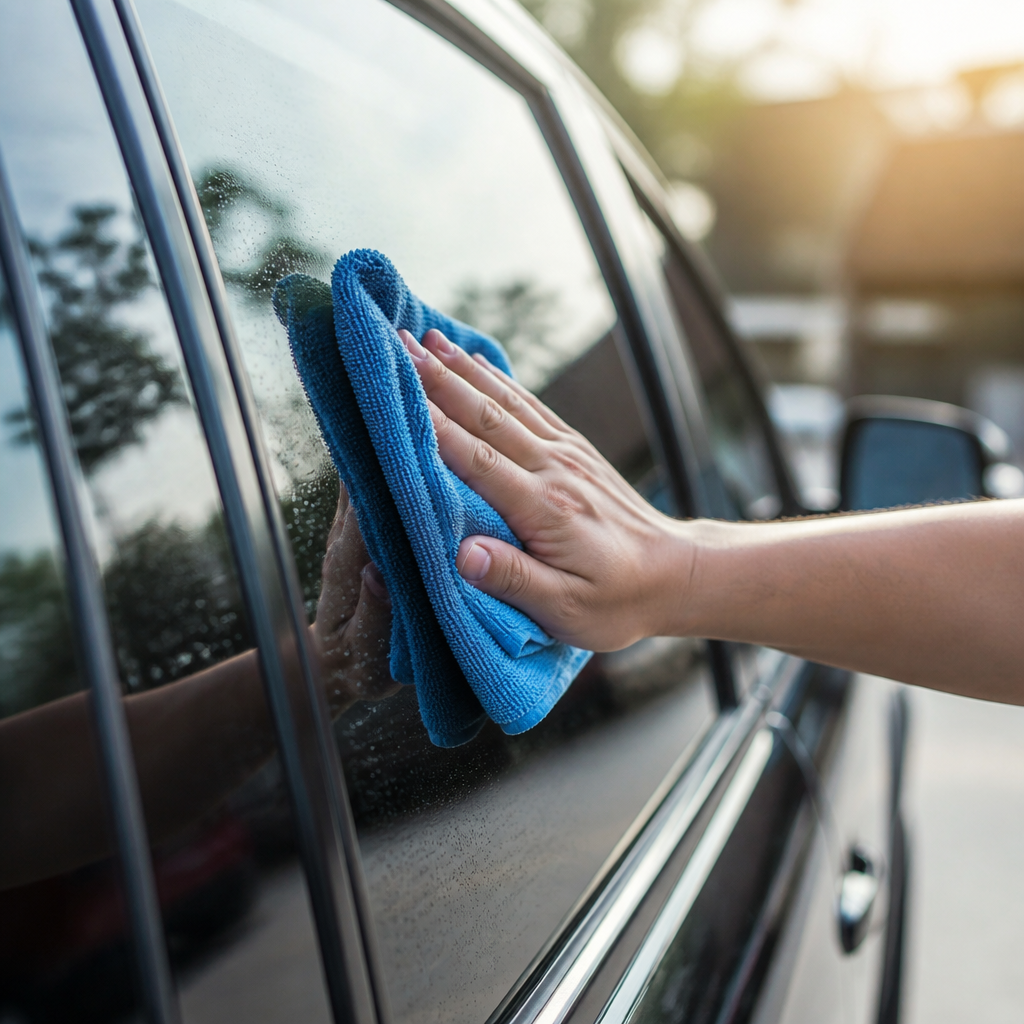
Beyond the right tools, selecting an effective cleaning solution is equally important. The market offers a variety of commercial products alongside highly effective DIY alternatives. Top-rated commercial products include Invisible Glass, Stoner Glass Cleaner, and Meguiar's Perfect Clarity Glass Cleaner. A critical consideration for modern vehicles, especially those with tinted windows, is to opt for ammonia-free formulas. Ammonia can be detrimental to window film, potentially causing damage and discoloration over time. Foam-based cleaners offer a distinct advantage because they stick to vertical surfaces longer, allowing the cleaner to work more effectively on stubborn grime.
For those who prefer a more economical or natural approach, a homemade solution can perform comparably. A simple mixture of 50% distilled water and 50% white vinegar works well.
| Feature | Commercial Glass Cleaners | DIY Vinegar Solution |
|---|---|---|
| Formula | Ammonia-free options available (e.g., Invisible Glass) | 50/50 Distilled Water & White Vinegar |
| Effectiveness | High on grime and residues | Excellent for mineral deposits and grease |
| Cost | Approx. $4-$8 per bottle | Approx. $0.15 per 16 oz. |
| Best For | Convenience and tough, specific grime | Eco-friendly, cost-effective regular cleaning |
"Avoid products with added wax or rain repellent if you want truly streak-free results. These additives leave residue that creates hazing under certain light conditions."
— Mike Phillips, Director of Training at Autogeek
How to Clean Car Windows Without Streaks with Microfiber Cloth
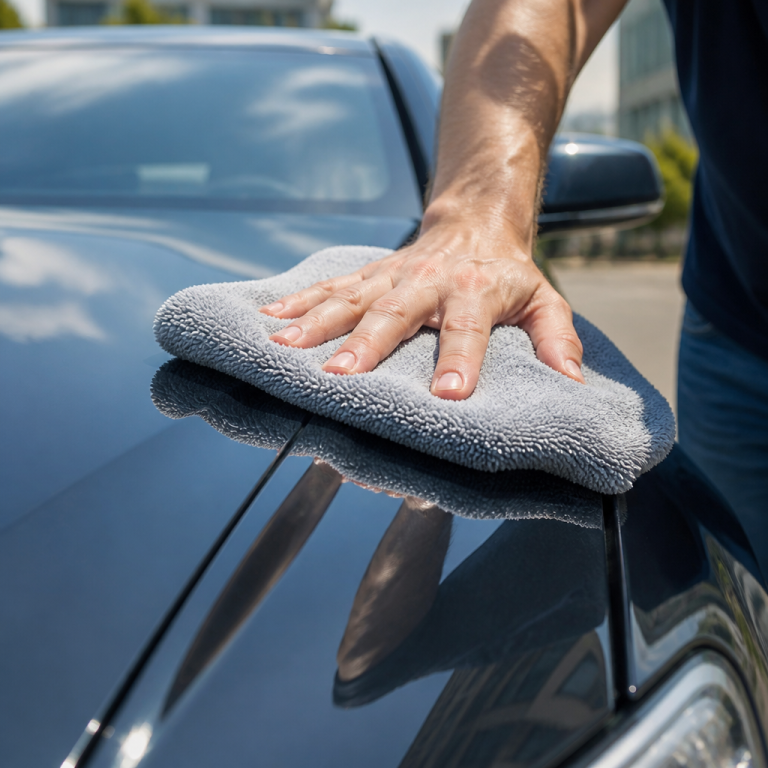
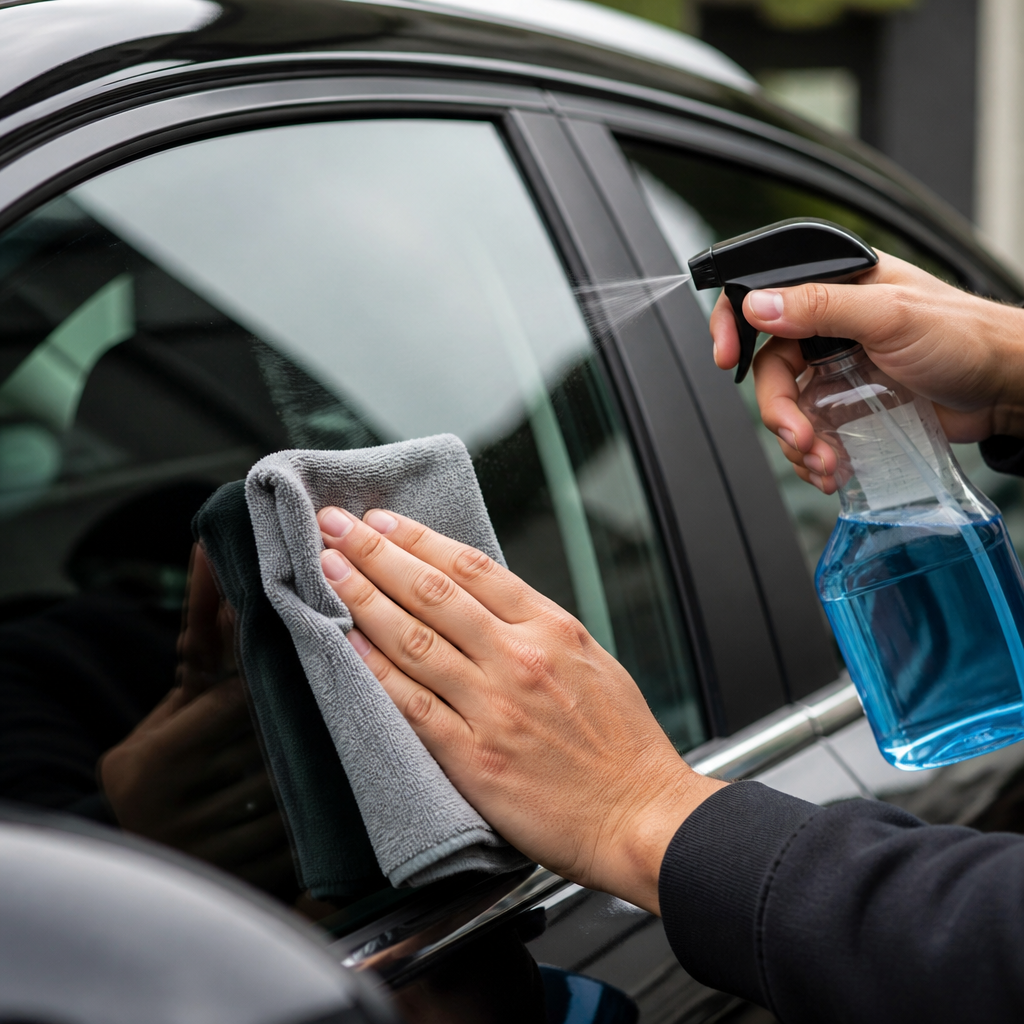
The microfiber cloth method is one of the most effective ways to achieve streak-free car windows. This technique involves using two separate microfiber cloths: one slightly damp for cleaning and a second, dry cloth for buffing. To maximize effectiveness, apply the cleaning solution directly to the cloth rather than spraying it onto the glass. This gives you better control and stops drips onto other parts of the car.
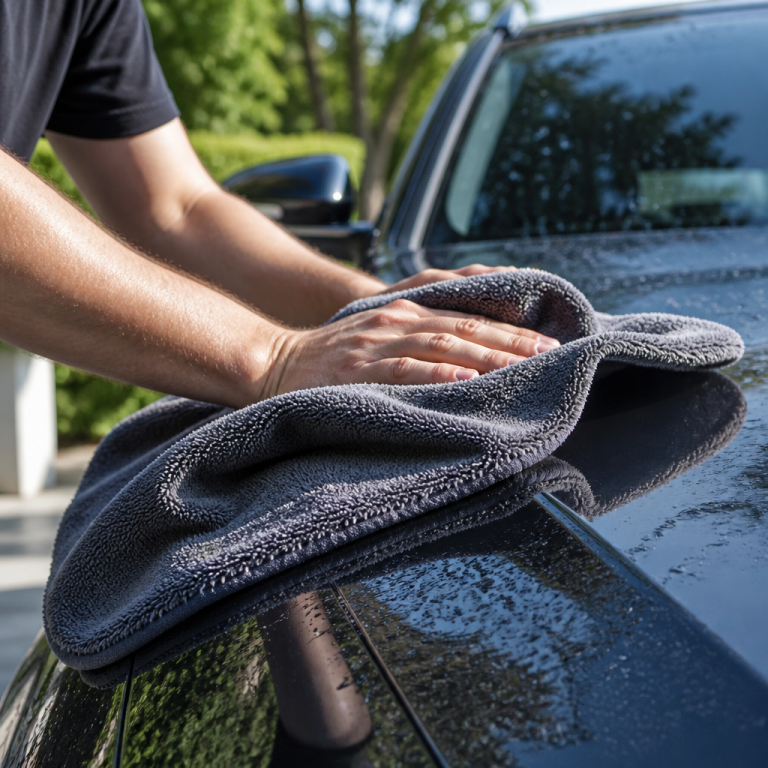
The "two-towel method" is a cornerstone of professional glass cleaning. The first towel, damp with cleaner, cleans the window. Immediately following, the second, dry towel buffs the glass in straight, overlapping motions. For optimal glass cleaning, a GSM (grams per square meter) rating of 300-400 is recommended. Proper care for your microfiber cloths is crucial to maintain their performance; they should always be laundered separately from other items and, importantly, without fabric softener or dryer sheets. When cleaning, begin with overlapping horizontal strokes, then follow with overlapping vertical strokes to ensure a uniformly clear surface.
How to Clean Car Windows Without Streaks Using Vinegar
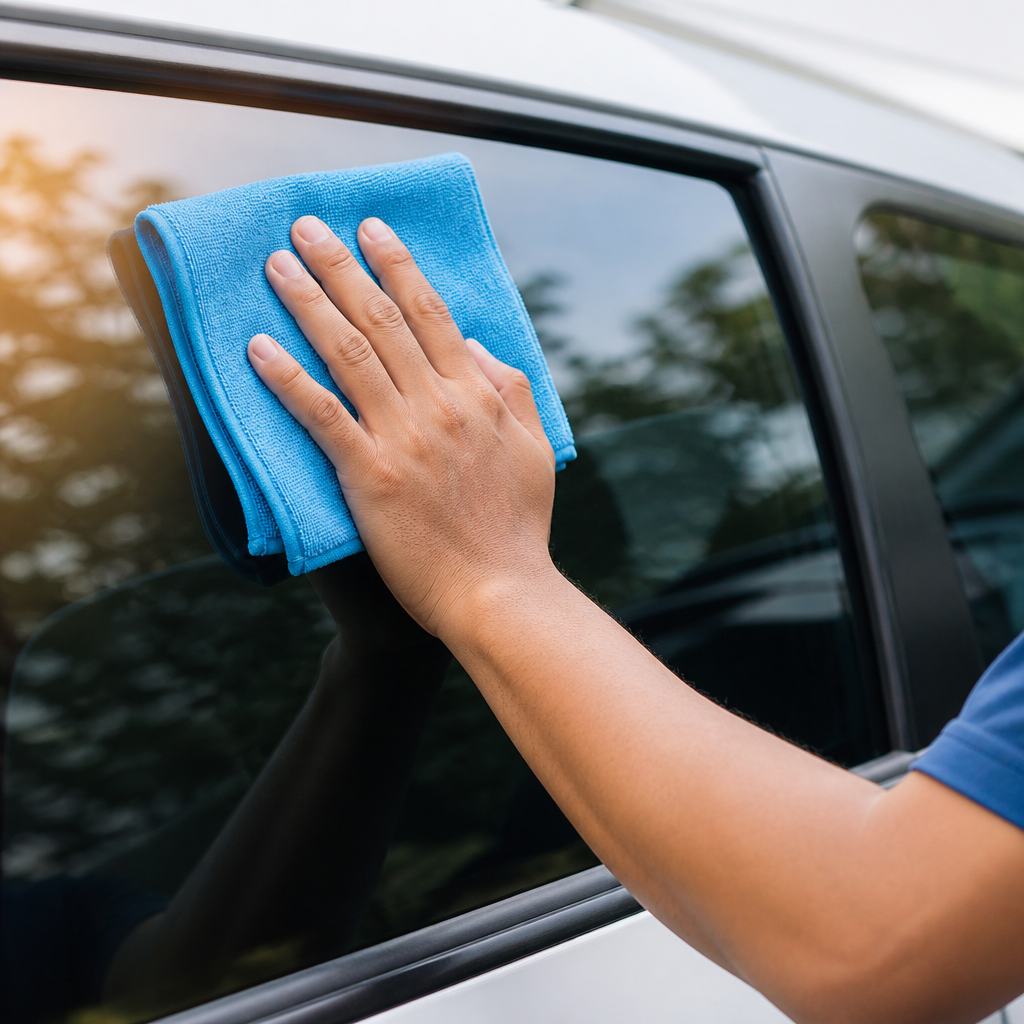
For an effective, natural, and cost-efficient alternative, white distilled vinegar offers an excellent solution. Vinegar’s power comes from its acetic acid content, which effectively dissolves mineral deposits and cuts through grease without harsh chemicals.
The optimal formula for a vinegar-based cleaning solution is a 1:1 ratio of distilled white vinegar to distilled water. For heavier buildup, a stronger 2:1 vinegar-to-water ratio may be more effective. Spray the solution onto the glass, let it sit for 30-60 seconds, then wipe with a clean microfiber cloth and buff dry with a separate one. While the vinegar odor disappears as it evaporates, adding a few drops of essential oil can mask the smell. While vinegar is versatile, it should not be used on windows that have _special factory-applied coatings_ or ceramic treatments, as its acidity can potentially damage these protective layers.
Step-by-Step Methods for Cleaning Car Windows Without Streaks
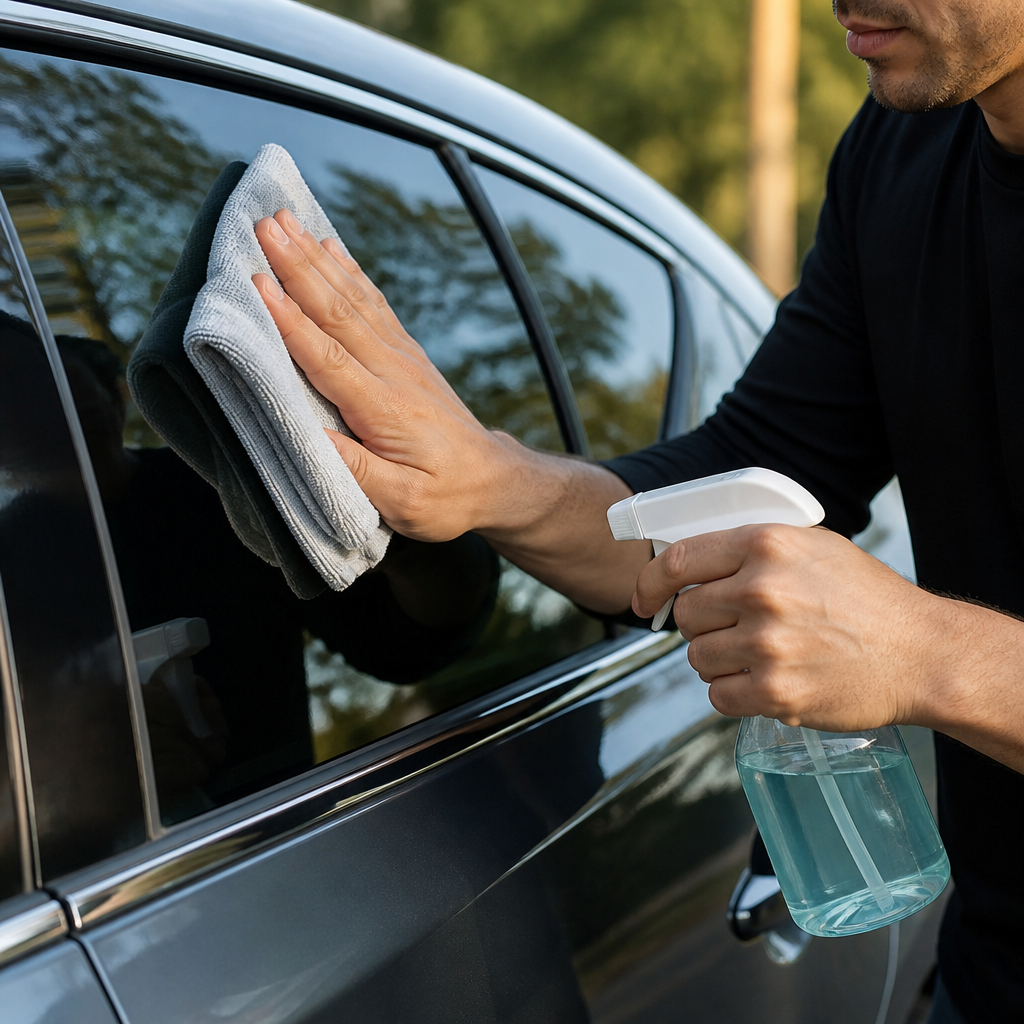
Cleaning car windows effectively requires different approaches for the interior and exterior, as well as special considerations for challenging conditions like direct sunlight. Each area presents unique types of grime and environmental factors that necessitate specific techniques.
How to Clean Car Windows Without Streaks Inside
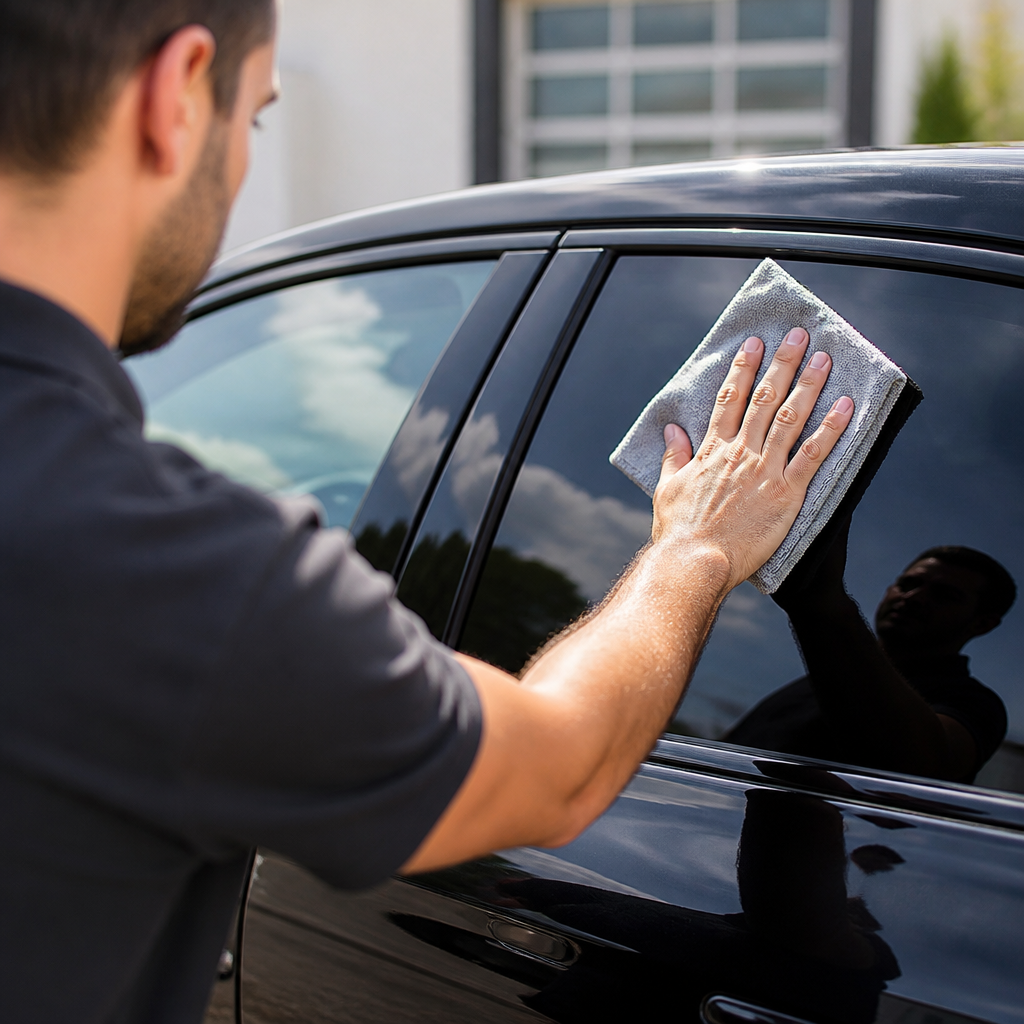
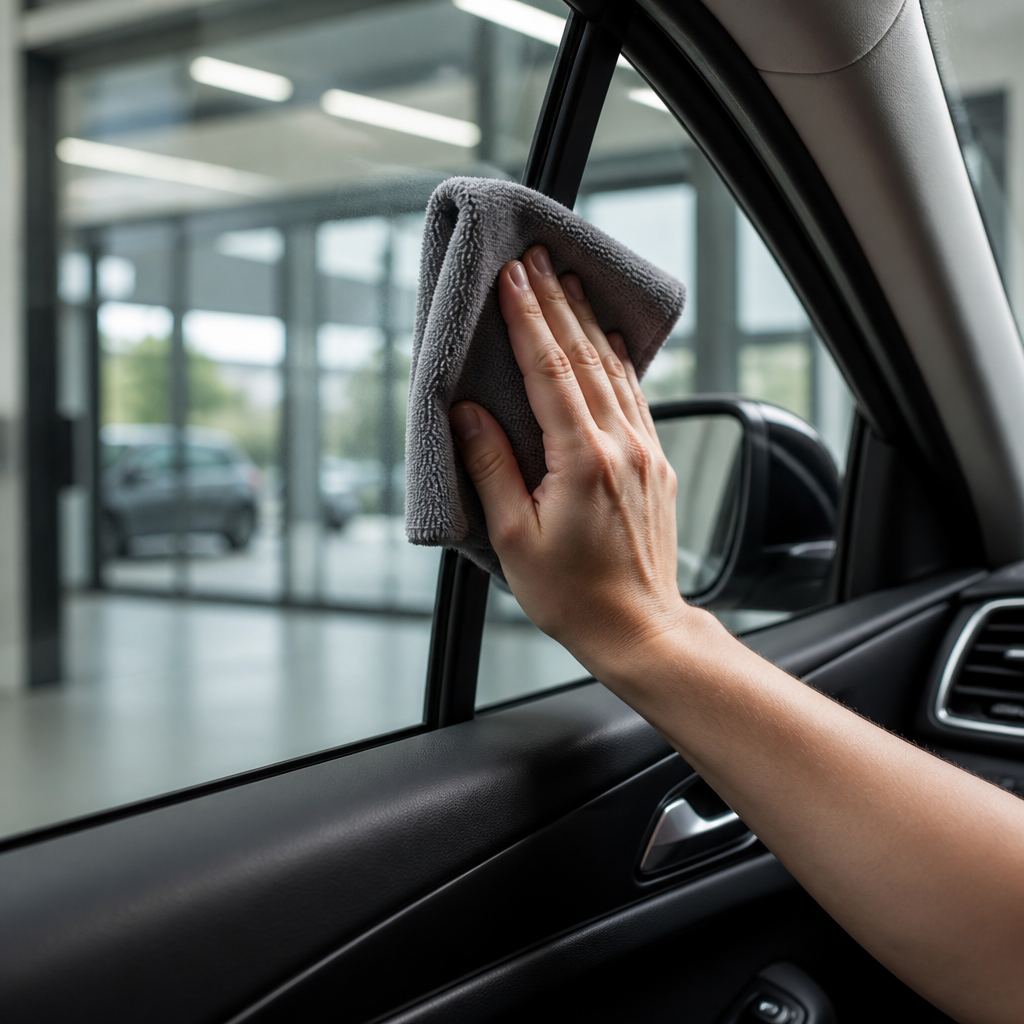
Cleaning the interior of car windows presents distinct challenges, primarily the hazy film that results from off-gassing from plastics and vinyl. To begin, roll your car windows down about 2-3 inches to access and clean the top edge of the glass. When applying your cleaner, always spray it directly onto your microfiber cloth, not onto the glass itself. This prevents overspray onto the dashboard, which could damage electronics or leave spots.
Clean the glass using vertical strokes, working from the top down. Immediately after cleaning a section, buff it dry with a separate, clean microfiber towel. To cut through stubborn oily film, consider using a dedicated interior glass cleaner or adding about 1 teaspoon of rubbing alcohol per cup of your solution. A microfiber mop with an extendable handle can be invaluable for reaching all corners of the windshield. Placing a towel along the dashboard edge will catch any drips and protect sensitive materials.
How to Clean Car Windows Without Streaks Outside
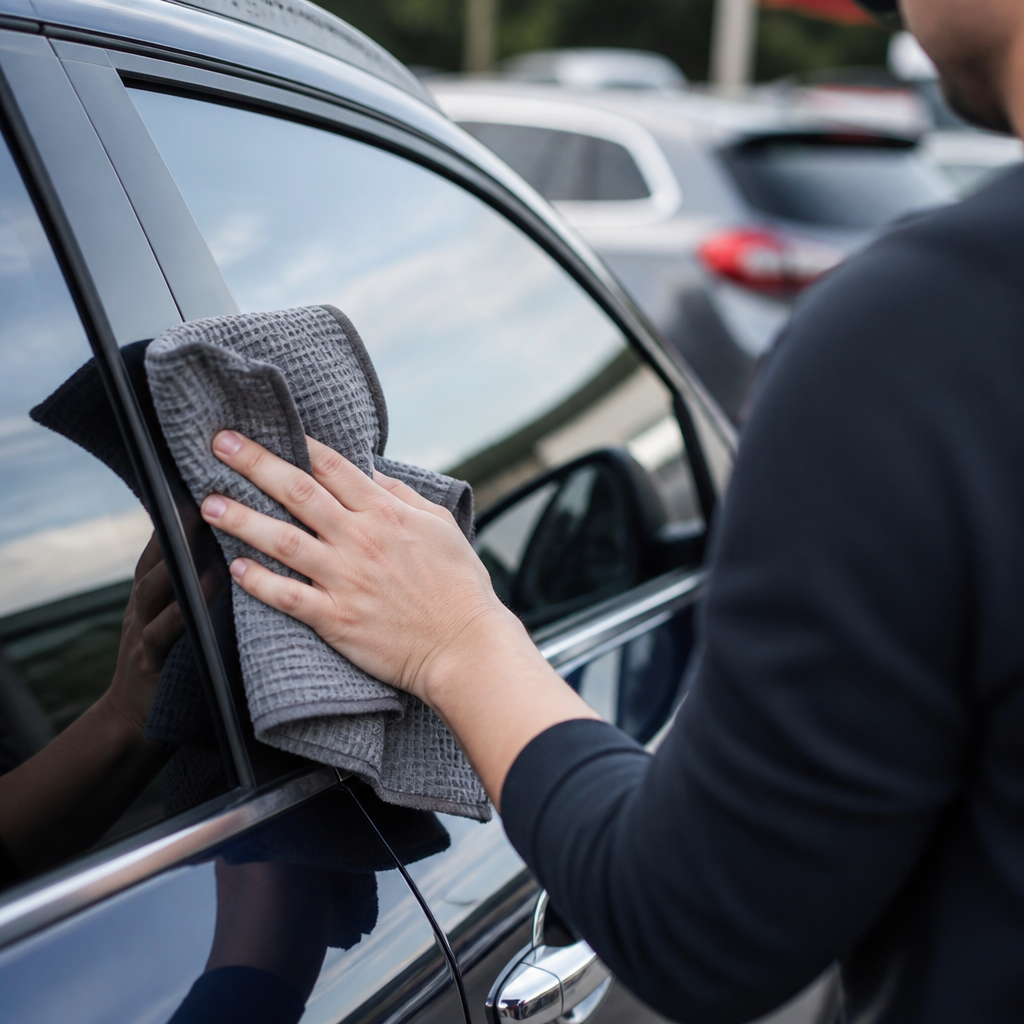
Cleaning the exterior requires a focus on removing environmental contaminants such as bug splatter, tree sap, and hard water spots. The first step is a thorough pre-rinse with plain water to remove loose dirt and prevent scratching. Work from the top of the window downwards, cleaning one entire window before moving to the next. This prevents the cleaning solution from drying on the glass, a common cause of streaking.
For stubborn bug splatter, pre-soak the areas with your cleaning solution for 2-3 minutes to soften them. Hard water spots often require more aggressive treatment, such as a vinegar solution or a dedicated water spot remover. In severe cases, a fine-grade glass polish or even super-fine 0000 steel wool can be used, but use it _very_ carefully. It is highly advisable to avoid cleaning in direct sunlight or when the glass temperature exceeds 85°F (29°C). For the final touch, use a dry waffle-weave microfiber towel, buffing with horizontal and then vertical strokes to achieve maximum optical clarity.
How to Clean Car Windows Without Streaks in Sunlight
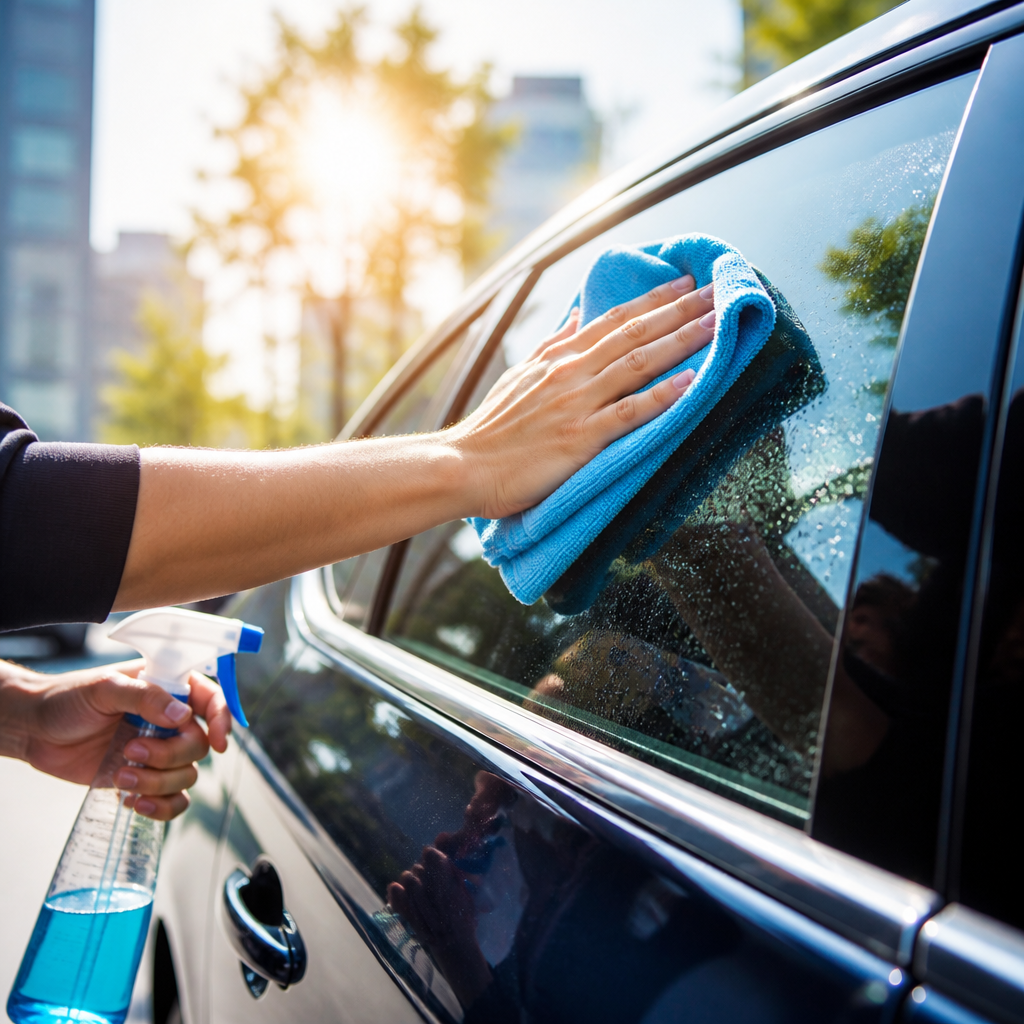
Cleaning car windows in direct sunlight is challenging because of the rapid evaporation of cleaning solutions. To counteract this, work on very small sections, roughly 12×12 inches, at a time. Apply a minimal amount of cleaning solution and buff immediately. Alcohol-based cleaners can be effective in sunny conditions as they promote uniform evaporation.
If possible, clean your windows in the early morning or late afternoon when the sun angle is lower and glass temperatures are cooler. Alternatively, create your own shade by parking the car strategically or using a large umbrella. When cleaning in sunlight, speed is your ally; use a continuous spray-and-wipe motion without pausing.
"Cleaning in direct sunlight is the number one cause of streaking complaints. If you absolutely must clean in sun, use significantly less solution than normal and work at double speed."
— Chris Fix, automotive DIY expert
Common Mistakes When Cleaning Car Windows Without Streaks
Achieving streak-free car windows can be frustrating if common mistakes are not avoided. Understanding these pitfalls is as important as knowing the correct methods, as rectifying these errors can significantly improve your results.
One of the most prevalent errors is using paper towels or newspaper. These materials are notorious for leaving behind lint, ink residue, and can even cause tiny scratches. High-quality microfiber cloths are specifically designed to be lint-free and gentle on glass. Another common misstep is spraying cleaner directly on the glass. This often leads to oversaturation and uneven distribution. Always spray your cleaning solution onto your microfiber cloth first, which allows for much better control and even application.
Cleaning in circular motions is a technique many instinctively use, but it can create noticeable swirl patterns. Professional detailers consistently recommend using straight, overlapping strokes. Perhaps one of the most counterproductive errors is using dirty or contaminated cloths. A cloth that has already picked up dirt and oils will simply redistribute these contaminants back onto the glass.
Skipping the crucial buffing step is a direct path to streaky windows. It is essential to follow up wet cleaning with immediate, thorough dry buffing using a separate, clean microfiber towel. Any remaining moisture will evaporate and leave behind residues. Another timing-related error is cleaning windows last during a car wash, as soap residue and water spots can dry on the glass.
Using glass cleaners with added wax, silicone, or rain repellent can also lead to streaks. While these additives might offer other benefits, they often leave a film on the glass that appears as hazing or streaks _under certain lighting conditions_. Neglecting to clean window edges and seals is a subtle but significant oversight, as dirt can transfer back onto the clean glass. By being mindful of these common errors, you can significantly improve your chances of achieving perfectly clear, streak-free car windows.
FAQ
Q1: Why do my car windows always have streaks after I clean them?
A1: Streaks often result from several common mistakes, including using paper towels or dirty cloths, applying too much cleaning product, cleaning in direct sunlight, or not buffing the glass dry immediately after cleaning. Mineral deposits from tap water can also contribute to streaking.
Q2: Are ammonia-based glass cleaners safe for car windows?
A2: Ammonia-based glass cleaners are generally not recommended for car windows, especially if your vehicle has aftermarket window tint. Ammonia can damage window film, causing discoloration and potentially voiding the tint's warranty. It's best to use ammonia-free formulas.
Q3: Can I use household vinegar to clean my car windows?
A3: Yes, a homemade solution of white distilled vinegar and distilled water (typically a 1:1 ratio) can be a very effective and economical streak-free car window cleaner. Vinegar's acetic acid helps dissolve mineral deposits and cut through grease. However, avoid using it on windows with factory-applied hydrophobic coatings or ceramic treatments, as it may degrade them.
Q4: What is the "two-towel method" for cleaning car windows?
A4: The "two-towel method" involves using two separate microfiber cloths: one slightly damp with cleaning solution for wiping the glass, and a second, completely dry microfiber cloth for immediately buffing the surface to remove any remaining moisture and achieve a streak-free finish. This prevents the redistribution of dirt and ensures thorough drying.
Q5: How can I clean my car windows in direct sunlight without getting streaks?
A5: Cleaning in direct sunlight is challenging due to rapid evaporation. To minimize streaks, work on small sections (about 12×12 inches) at a time, use minimal cleaning solution, and buff immediately. Consider using alcohol-based cleaners, or, if possible, clean during cooler times of the day (early morning or late afternoon) or create temporary shade for your vehicle.

Jake Morrison writes about DIY car care at CarCareNote. He’s been detailing cars in his Ohio driveway for over a decade and shares what actually works at home.