how to remove water spots from car: 7 Easy, Safe Methods
I’ll never forget the first time I meticulously washed my new Mazda 3 back in 2018. I spent hours drying it, only to walk out the next morning and see it covered in tiny, stubborn white rings. It was frustrating, to say the least! These weren’t just annoying smudges; they were water spots—pesky mineral deposits left behind when water evaporates from your car’s surface. Think of them like hard water stains on your shower door, but on your car’s paint. They’re primarily made up of calcium, magnesium, and other dissolved minerals that can leave visible marks or even etch into the paint, glass, and other parts of your car. Understanding what these spots are and where they come from is the crucial first step to getting rid of them for good.
Water spots are typically sorted into three types, depending on their severity. Type I spots are simply mineral bits sitting on the surface, making them the easiest to deal with. Type II spots mean the minerals have started to eat into the car’s top clear coat layer, creating tiny craters. Then there are Type III spots, where the etching has gone deep, sometimes even through the clear coat. Hard water—water with lots of dissolved minerals, usually over 120-180 milligrams per liter (mg/L)—makes these spots far more likely than soft water, which has less than 60 mg/L. The etching itself acts like a slow-motion chemical attack. It happens when water that’s either highly acidic or highly alkaline sits on your car, especially when it’s hot or sunny. Warning: This combination can cause permanent damage in as little as 24-48 hours _if you don’t act fast_.
According to Larry Kosilla, a professional car detailer and founder of AMMO NYC with over 15 years of experience:
“The biggest mistake car owners make is letting water spots sit in direct sunlight—the heat accelerates the etching process exponentially, turning a simple mineral deposit into permanent paint damage.”
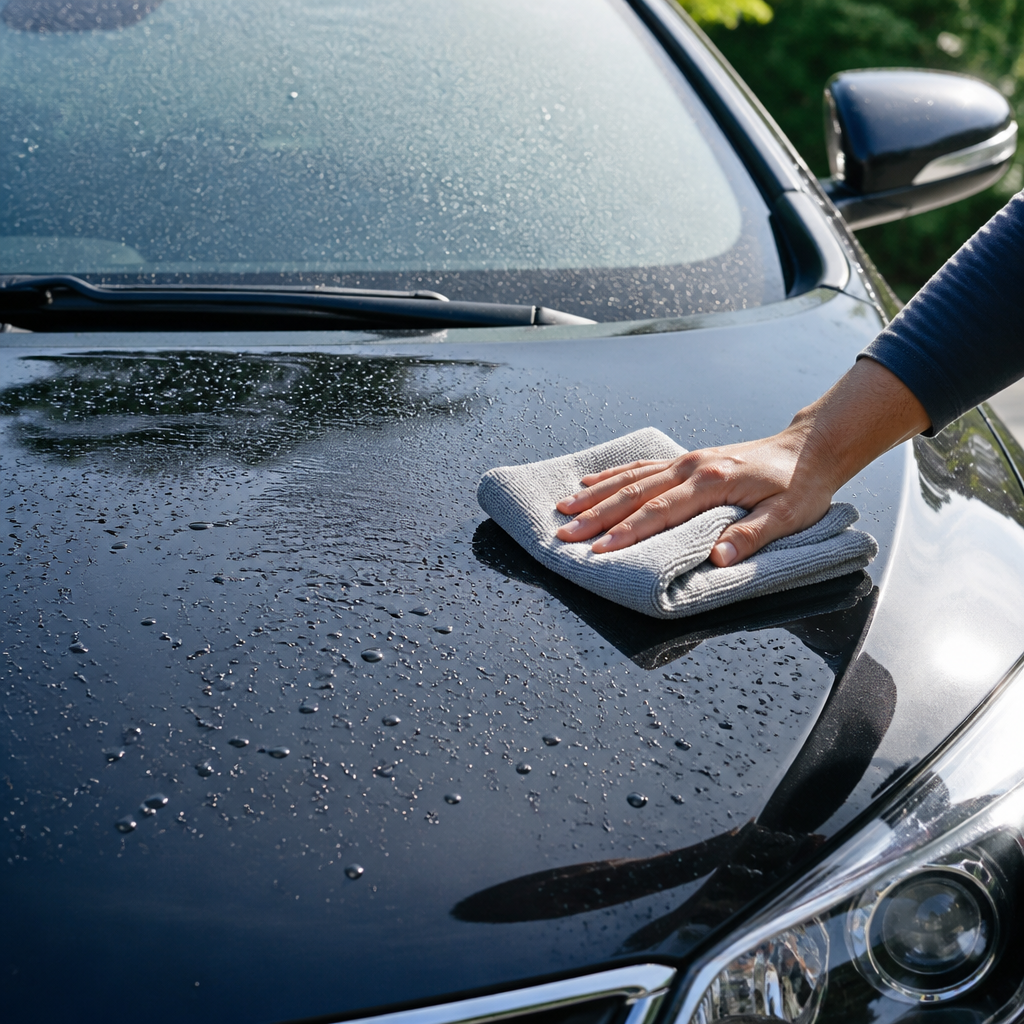
This really highlights why you can’t just let them sit there. The single most effective way to avoid these spots is to dry your car immediately after washing it or after it rains. Using good quality, soft microfiber towels works wonders and practically eliminates water spots compared to letting your car air dry. It’s also super important to remember that the older these spots get, the harder they are to remove. Addressing water spots right away will save you a lot of time, effort, and potentially expensive repair bills in the long run.
What Should You Know About Water Spots on Cars?
Water spots are a common headache for car owners, but their appearance and severity can change a lot based on where the water came from and how long it sat on the car. Knowing the different kinds of water spots and what causes them is key to picking the best way to get rid of them and stop them from happening again. From the regular hard water spots you see every day to the trickier ones from sprinklers or even after washing your car, each kind needs a specific plan to treat and prevent it.
| Spot Type | Description | Common Removal Method |
|---|---|---|
| Type I | Fresh mineral deposits sitting on the surface. | Chemical cleaners like vinegar solution or a dedicated water spot remover. |
| Type II | Minerals have begun to etch into the clear coat, creating small craters. | A clay bar treatment followed by machine polishing with a compound. |
| Type III | Severe etching that has gone deep, sometimes through the clear coat. | Wet sanding followed by polishing, or professional paint correction. |
how to remove hard water spots from car
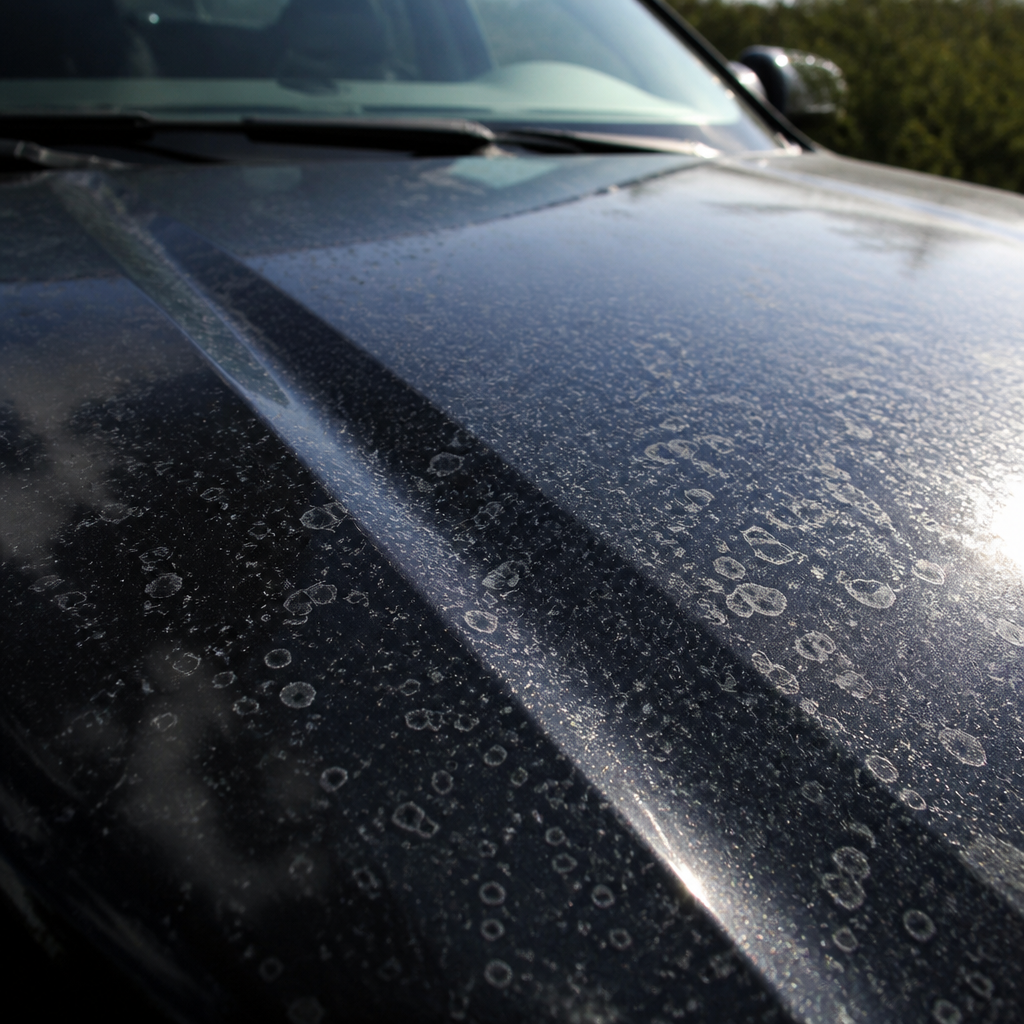
Hard water spots are a very common problem, appearing as mineral deposits when water with high amounts of calcium carbonate (CaCO3) dries on your car. These minerals crystallize, leaving distinct white or cloudy marks that a regular car wash just won’t touch. The United States Geological Survey (USGS) states that about 85% of homes in America have hard water, making this a widespread issue for car owners.
For surface-level hard water spots, a 50/50 mix of distilled white vinegar and distilled water is an effective solution. The acetic acid in vinegar works by dissolving the calcium carbonate deposits in a chemical reaction that turns them into a rinseable substance. This method is usually safe for your car’s clear coat and windows, _as long as you use it correctly_ by letting it sit for only a short time and rinsing it off thoroughly.
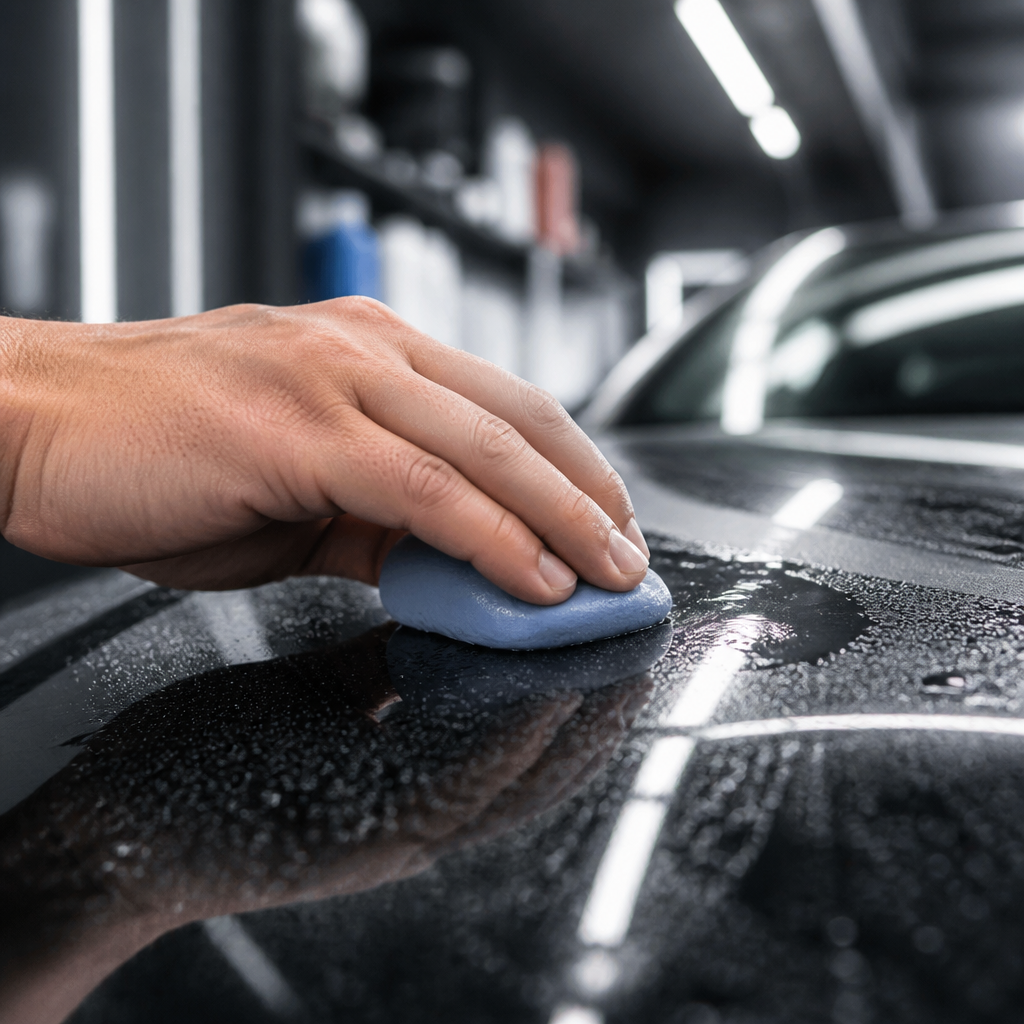
However, when you’re dealing with more serious hard water etching (Type II spots), you’ll need something stronger. A clay bar treatment can pull off surface grime, followed by a machine polisher and a medium-cut compound. This process removes a microscopic layer of the etched clear coat to make the surface smooth again. As expert detailer Mike Phillips explains, etched hard water spots cannot be removed by cleaning alone; you must mechanically level the surface through polishing to eliminate the crater left by mineral etching.
how to remove sprinkler water spots from car
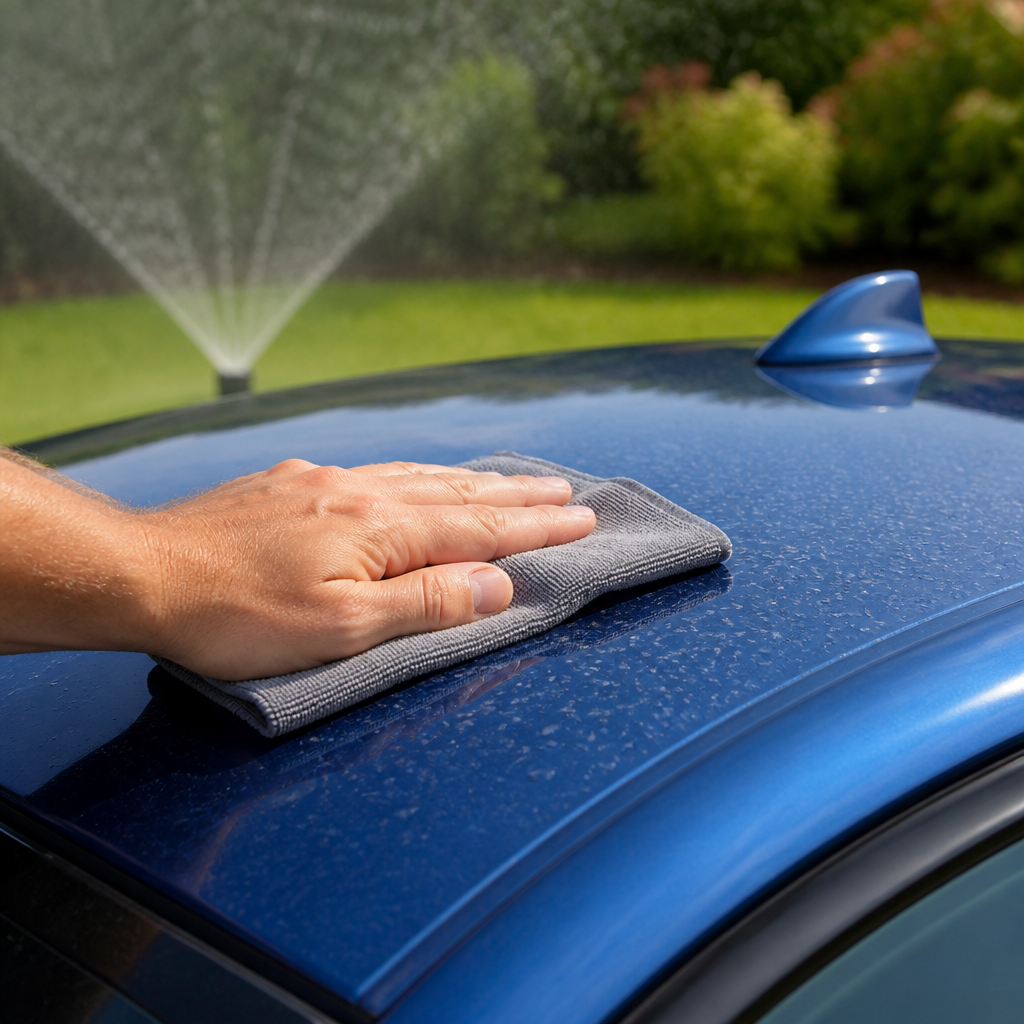
Sprinkler water spots are a different beast and can be particularly nasty. These mineral deposits occur when automated sprinkler systems, which often use water with high mineral concentrations from wells or recycled sources, repeatedly spray your car. This can lead to aggressive, deeply embedded spots.
Unlike typical hard water spots, sprinkler water often contains iron and manganese, which can leave behind rust-colored or brownish stains. For these iron-based stains, specialized iron remover products are incredibly effective. These products contain thioglycolic acid, which chemically breaks down iron contamination. You’ll know it’s working because the solution turns purple when it contacts iron particles, showing it’s dissolving the iron so you can rinse it away. The simplest solution is to park your car away from any automated sprinklers. If you can’t, using a car cover during irrigation times is a great physical barrier. Also, applying a spray wax or sealant creates a hydrophobic barrier that makes water bead up and roll off, making it much harder for minerals to stick.
How Can You Remove Water Spots from a Car After Washing?
It’s incredibly frustrating to spend time washing your car, only to have water spots pop up afterward. These post-wash spots happen when tap water evaporates from the surface before you can dry it completely, leaving behind dissolved minerals and soap residue. This is especially common in areas with hard water or when washing a car in direct sunlight.
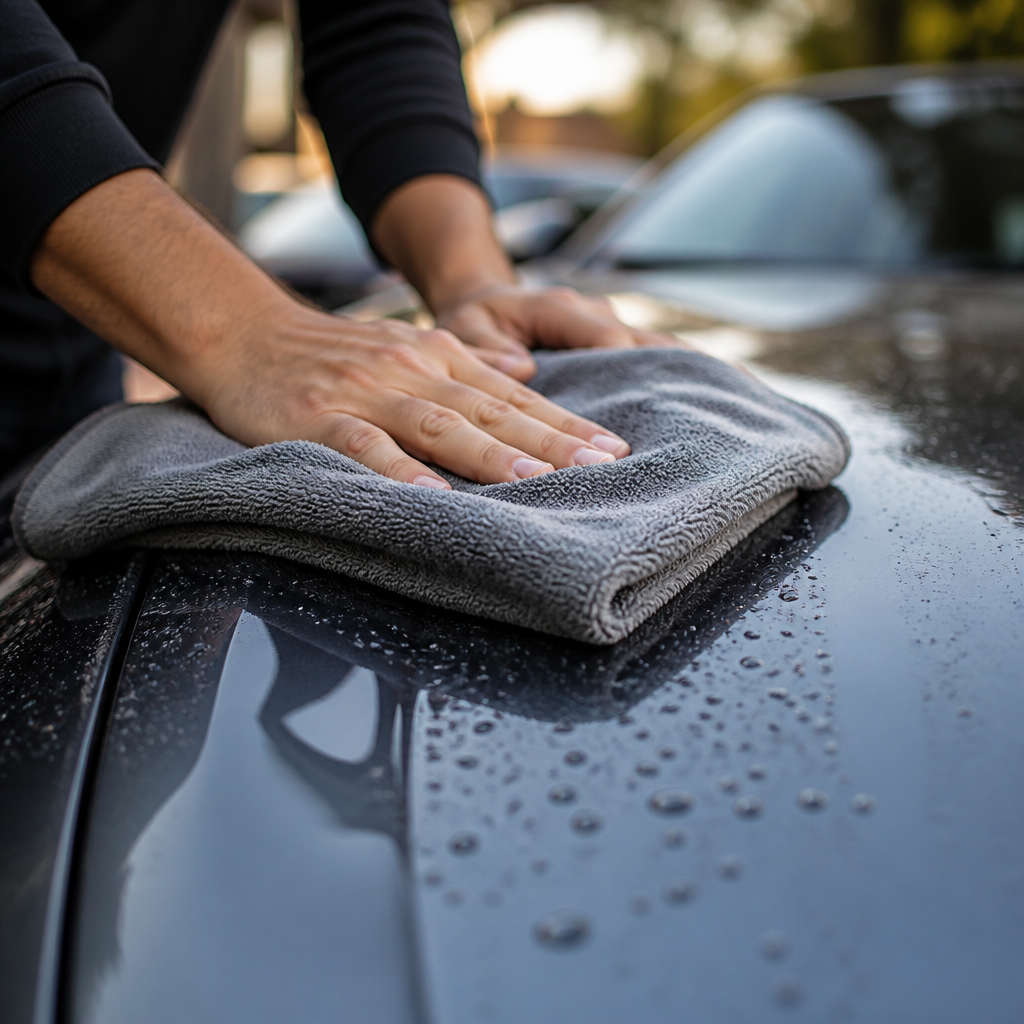
One of the most effective ways to prevent these post-wash spots is by using purified water for the final rinse. Deionized (DI) or reverse osmosis (RO) filtered water has a dramatically lower mineral content, which nearly eliminates the chance of spots forming. Another key step is to act quickly during the drying process. Applying a quick detailer spray while the surface is still slightly damp helps encapsulate minerals, preventing them from bonding to the surface. When used with a clean microfiber towel, this lifts remaining water and minerals for a streak-free shine. The “two-towel method” is also highly effective: use one damp microfiber towel to absorb most of the water, then follow up with a second, dry one for a final buff.
How to Remove Water Spots from Car Surfaces
Water spots can show up differently on various parts of your car, and each surface needs its own special approach for effective removal. The delicate clear coat on your car’s paint, the tough surface of the windows, and the various materials of your interior seats all react uniquely to mineral deposits. Understanding these differences is essential for picking the right products and methods to make your car look perfect again without causing accidental damage.
how to remove water spots from car paint
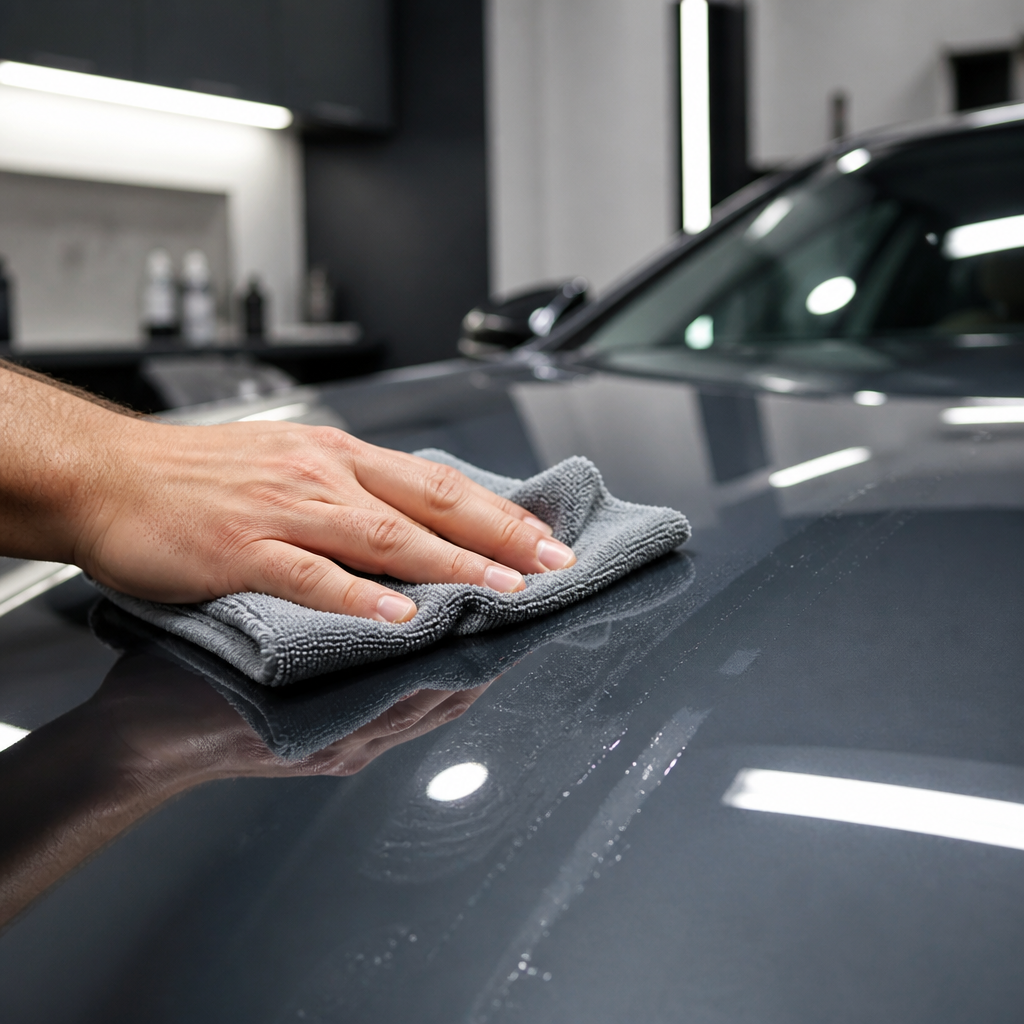
Water spots on car paint are mineral deposits that can etch the clear coat, the transparent protective layer on top of the color. You can assess the damage with a “fingernail test”: if you can feel the spot when you run your fingernail over it, it’s likely Type II or III etching that requires mechanical correction. If the surface feels smooth, it’s usually a Type I surface deposit that can be removed with cleaning.
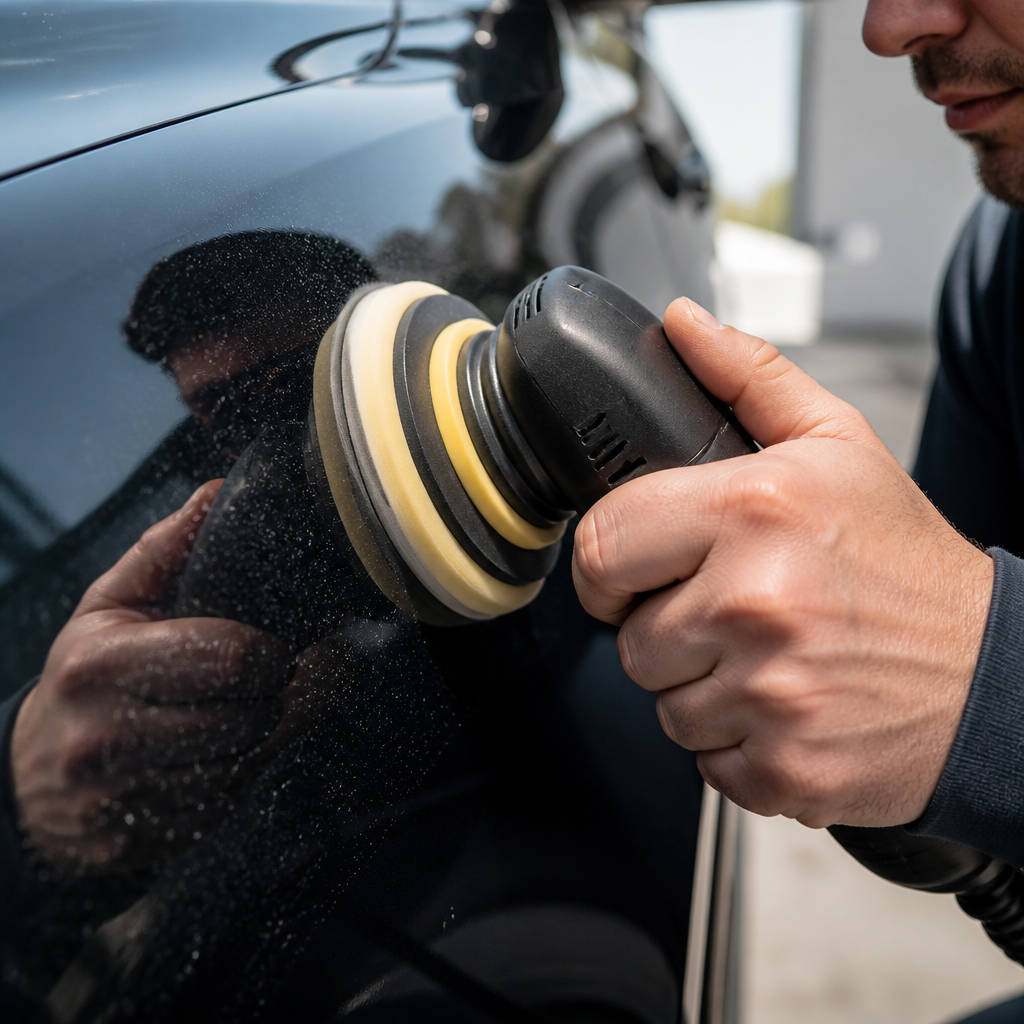
For Type I spots, pH-balanced water spot removers are great for chemically dissolving the minerals without harming your clear coat. For etched spots, you’ll usually need a more aggressive approach like machine polishing to physically level the surface. Using a dual-action polisher with a medium-cut polish and a foam pad can effectively remove the damaged layer by taking off about 0.1-0.3 mils of clear coat to smooth out the etching. According to Master Detailer Todd Cooperider:
“Clear coat is only 1.5-2 mils thick total, and safe polishing removes 0.2-0.3 mils per session—you can only safely polish a car 3-4 times in its lifetime before risking burn-through, which is why prevention is infinitely better than correction.”
This expert advice highlights why it is so important to prevent spots in the first place. After successful removal, applying a ceramic coating or paint sealant creates a hydrophobic surface that greatly reduces future water spot formation.
how to remove water spots from car windows
Water spots on car windows consist of mineral deposits that bond strongly to the glass, creating cloudy or hazy areas that can impair visibility. Because glass is harder and more porous than paint, minerals can stick to it more aggressively, often requiring both chemical and mechanical removal.
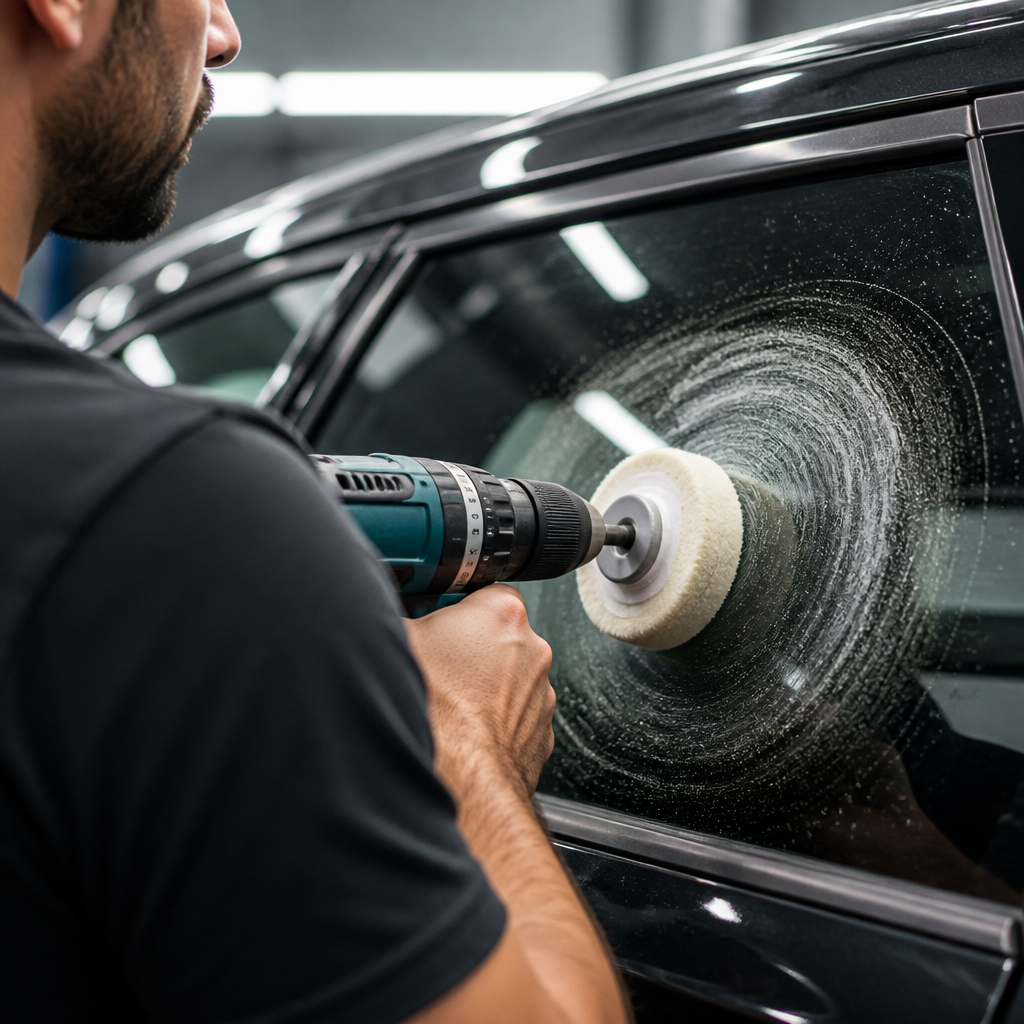
For chemical removal, white vinegar or commercial glass cleaners containing phosphoric acid can help dissolve calcium deposits. For stubborn mineral deposits, mechanical removal often works much better. A cerium oxide polishing compound, mixed with water to make a paste and applied with a drill-mounted felt pad, can effectively remove embedded minerals through micro-abrasion. Automotive expert Chris Fix highlights that glass is much harder than paint, allowing for stronger acids and more abrasive compounds, but you should _always test any aggressive cleaning method in an inconspicuous corner first._ After removal, applying a hydrophobic glass treatment like Rain-X creates a water-repellent coating that causes water to bead up and roll off, reducing future spots.
how to remove water spots from car seats
Water spots on car seats are discolored marks caused by minerals and dirt in water that soaks into upholstery. The removal process is completely different for fabric versus leather seats. It is crucial to use cleaning methods specific to the material, whether fabric or leather, to avoid causing permanent damage.
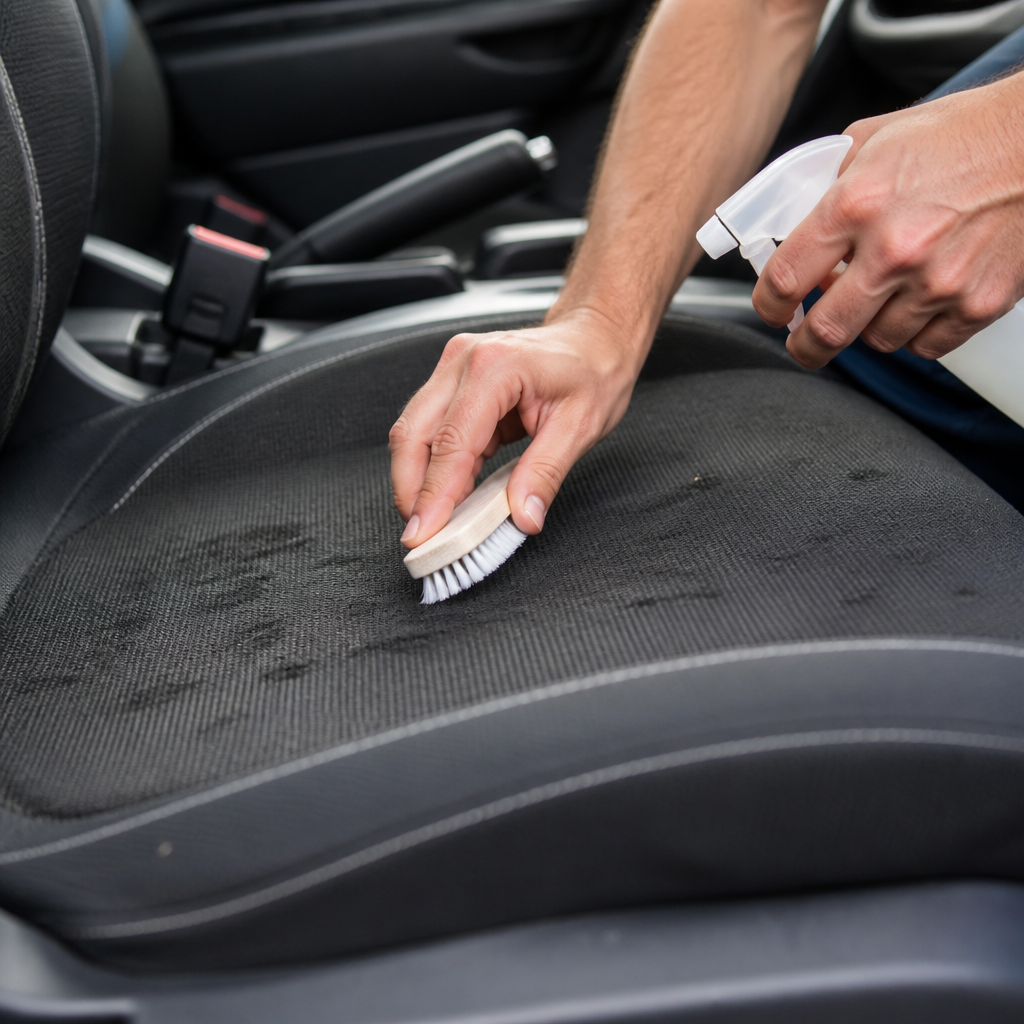
For fabric seats, a mix of distilled water, white vinegar, and a bit of dish soap can be effective. Spray the solution on the spot, gently scrub with a soft brush, and then extract the moisture with a wet/dry vacuum or blot with absorbent towels. For leather seats, a more delicate approach is needed. Use a pH-balanced leather cleaner with a soft microfiber cloth in gentle, circular motions. Afterward, apply a leather conditioner to restore natural oils and prevent cracking. Professional detailer Larry Kosilla warns against using too much water when cleaning seats, as it can simply create new water spots. The key is minimal moisture and thorough extraction for the best results.
DIY Methods and Solutions for Water Spot Removal
For many car owners, dealing with water spots using everyday household items is an attractive and budget-friendly choice. Among these, distilled white vinegar stands out as a popular and often effective solution. Understanding how it works chemically, knowing the right way to use it, and recognizing its limitations are all key to successfully removing water spots without accidentally damaging your car’s surfaces.
how to remove water spots from car with vinegar
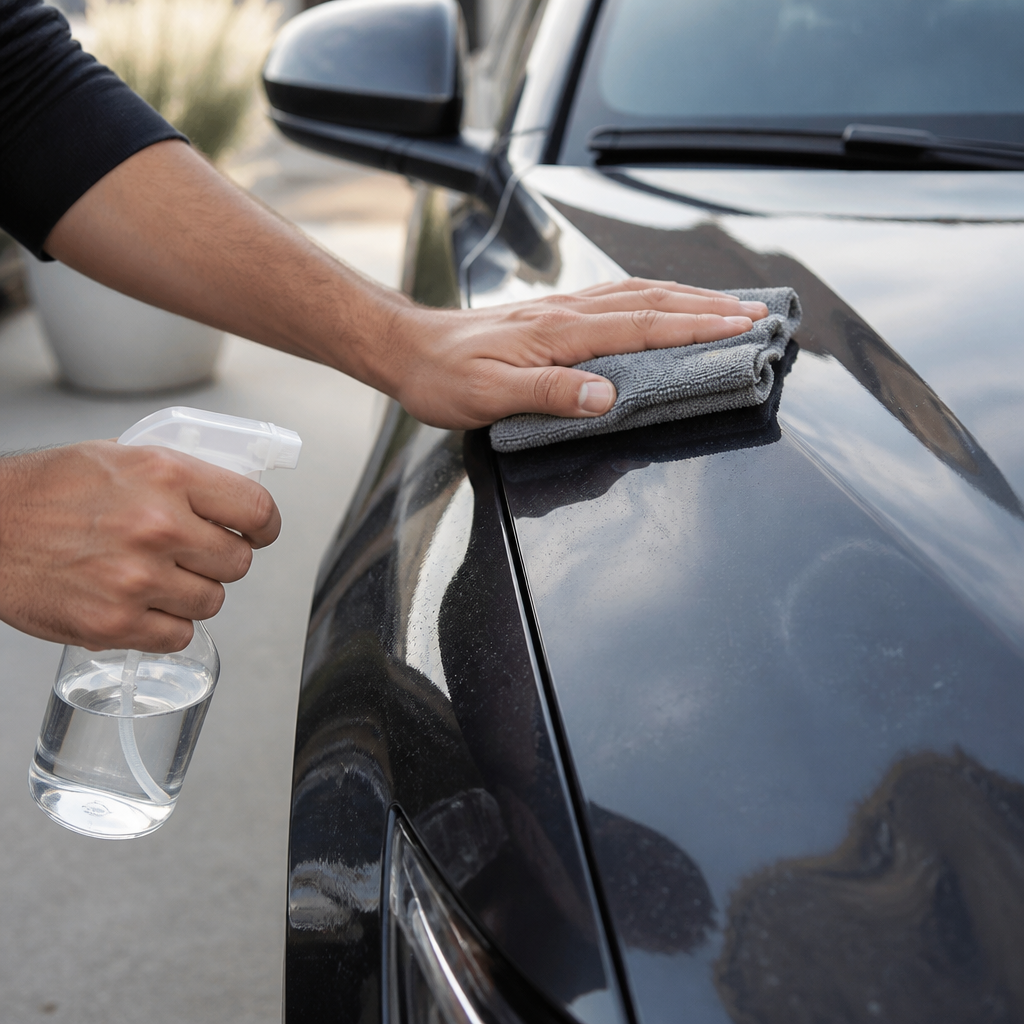
Using vinegar to get rid of water spots is a well-known DIY method because the acetic acid in distilled white vinegar chemically dissolves alkaline mineral deposits. The acetic acid in vinegar works by chemically dissolving the alkaline mineral deposits that form hard water spots. This reaction changes the solid, hard-to-remove minerals into a soluble substance that can be easily rinsed away. Here is a safe and effective way to apply it:
- Create a solution by mixing equal parts distilled white vinegar and distilled water in a spray bottle.
- Spray the solution generously onto the water spots, ensuring the entire affected area is wet.
- Let the solution sit for 5-10 minutes. Crucially, do not let the vinegar solution dry on the surface, as this can cause further damage to the finish.
- While the solution is still wet, gently rub the area with a clean microfiber cloth in circular motions.
- Rinse the area thoroughly with distilled water to remove all traces of vinegar and the dissolved minerals.
- Immediately dry the surface with a clean, dry microfiber towel to prevent new spots from forming.
A vinegar solution works well on Type I (surface) water spots and can help lessen new Type II (light etching) spots. However, vinegar is generally ineffective on severe etching, iron-based rust stains, or stubborn mineral deposits on glass, which require stronger methods like polishing. While generally safe, _always test it on an inconspicuous area first to ensure it doesn’t harm the finish_, especially if using a stronger concentration.

Jake Morrison writes about DIY car care at CarCareNote. He’s been detailing cars in his Ohio driveway for over a decade and shares what actually works at home.